

Quick answer: 10-minute dog enrichment games can add meaningful sniffing, learning or problem-solving to a busy day without requiring an hour of setup. Ten focused minutes of sniffing, searching, training or problem-solving can add useful variety to a busy routine.
The trick is to keep setup simple. Pick activities you can start in under a minute, use materials you already own and stop before the game becomes frustrating.
How to use this guide
Choose one activity per busy period rather than trying to complete the whole list. On a very full day, one ten-minute game plus a normal sniff-friendly walk is a realistic target for many households.
1. Five-treat search
Setup: Ask your dog to wait or have someone hold them while you place five treats in easy locations around one room.
Make it easier: leave the treats partly visible. Make it harder: increase distance or use a second room.
2. Three-minute scatter search
Scatter part of a measured meal across a snuffle mat, clean rug or safe patch of grass. Let your dog use their nose rather than pointing out every piece.
3. Hand-target circuit
Ask for nose touches to your palm in several positions: left, right, low and a step away. This combines simple thinking with controlled movement.
4. Toy-choice game
Offer two familiar toys and let your dog choose. Play with the selected toy for a few minutes, then pause. Choice can add novelty without adding equipment.
5. Three-box search
Put three open boxes on the floor and hide food in one. After your dog finds it, reset the boxes. Skip cardboard for dogs that ingest it.
6. Hallway recall
Two people can take turns calling and rewarding the dog across a safe, non-slip space. Keep energy controlled so it does not become indoor sprinting around furniture.
7. Teach one tiny piece of a trick
Do not aim to teach a complete trick in ten minutes. Reward one small step—looking at a target, touching a box or putting one paw on a mat.
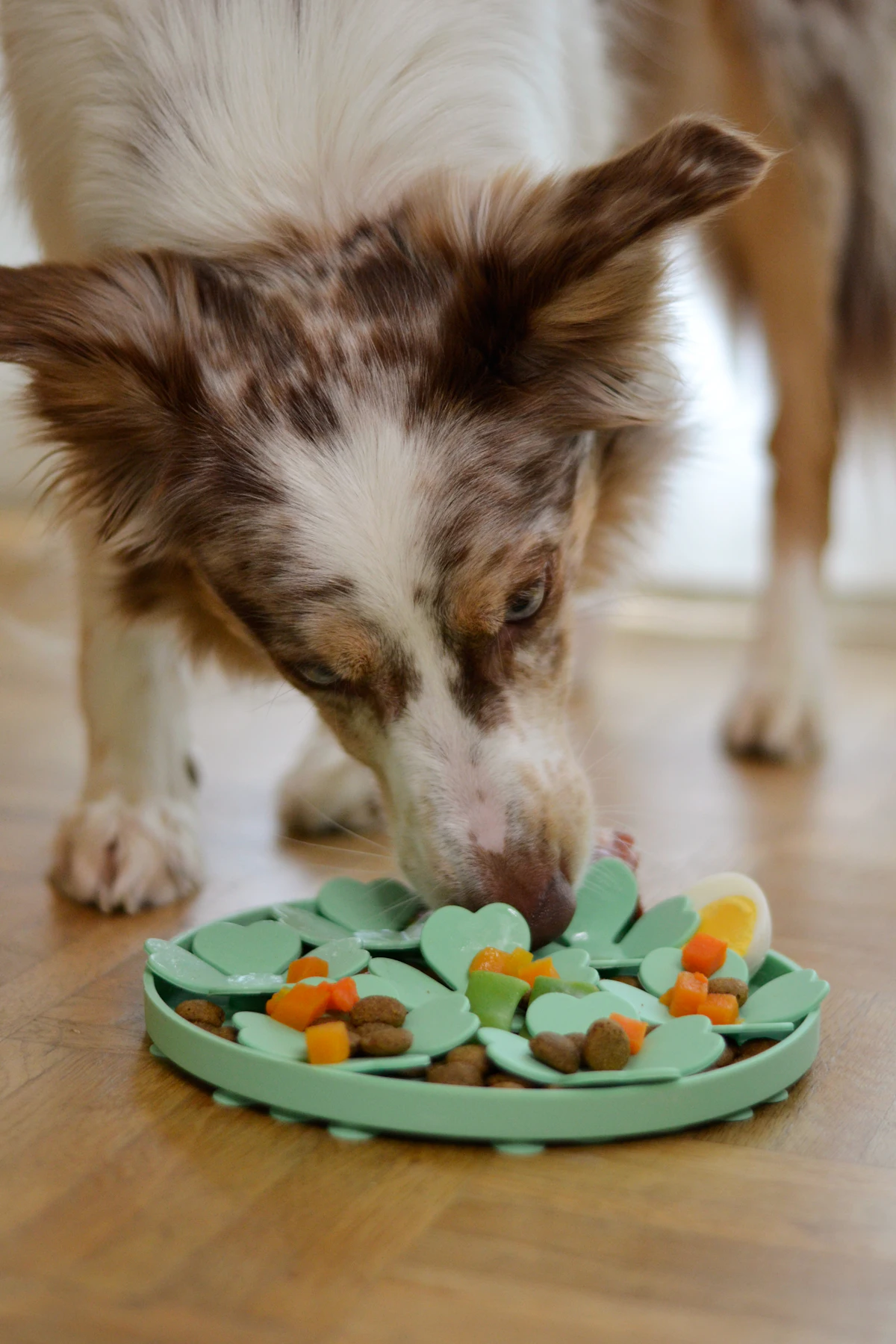
8. Easy food toy
Fill an appropriate toy loosely with part of your dog’s meal. If the dog is new to food toys, make the reward easy to remove rather than freezing it solid.
9. Mini scent trail
Create a short line of food rewards leading to a hidden final treat or favorite toy. Once your dog understands the pattern, make the trail less obvious.
10. Settle-and-chew routine
Not every short session needs to increase excitement. Pair a mat with an appropriate chew or food toy and reward calm behavior.
11. Name one toy
Say the toy’s name, present it and reward your dog for touching or picking it up. Repeat for only a few minutes. Consistent short sessions are more useful than one long drilling session.
12. Backyard sniff loop
If you have a secure yard, slowly walk the perimeter with your dog and allow them to investigate. A yard becomes more enriching when the dog explores with you instead of simply being sent outside alone.
A no-thinking-required weekly rotation
| Day | 10-minute activity |
|---|---|
| Monday | Five-treat search |
| Tuesday | Hand-target circuit |
| Wednesday | Food toy |
| Thursday | Toy-choice game |
| Friday | Mini scent trail |
| Saturday | Short trick session |
| Sunday | Calm mat routine |
What if 10 minutes is not enough?
Enrichment is only one part of a dog’s day. A restless dog may need more physical exercise, toileting opportunities, sleep, social interaction or a different routine. If behavior changes suddenly or your dog seems unable to settle despite normal needs being met, consider veterinary or qualified behavior advice.
Use difficulty, not duration
You do not have to make a game longer to make it more engaging. Once your dog understands an activity, slightly increase difficulty by adding one hiding spot, changing the room or asking for a little more problem-solving.
Quick safety checklist
- Use non-slip surfaces for movement games.
- Supervise cardboard, fabric and food toys.
- Count food rewards toward normal daily intake.
- Keep sessions easy enough that the dog continues to succeed.
- Stop if the dog becomes frantic, guarded or frustrated.
Related guides
When you have more time, use 17 Indoor Dog Activities for Rainy Days, 15 Sniffing Games for Dogs or our main Dog Enrichment Ideas guide.
Frequently asked questions
Can 10 minutes of enrichment really help?
Yes. Short, focused activities can add useful mental work, especially when they involve scent, learning or problem-solving. Ten minutes is not meant to replace walks, exercise, sleep or social needs; it is a realistic way to add quality to a busy day.
Should I do the same game every day?
You can repeat successful games. Dogs do not need constant novelty. Rotate a small set of activities and change one detail at a time, such as the room, number of hiding spots or reward type.
What if my dog finishes in two minutes?
That is fine. If the dog understands the game and remains engaged, slightly increase difficulty next time instead of adding large amounts of food or extending the session artificially.
What if my dog is not food-motivated?
Use toy searches, tug, hide-and-seek with a person, hand targeting or exploration as the reward. Enrichment is broader than food puzzles.
How to build enrichment into an ordinary workday
Attach activities to routines you already have. Scatter part of breakfast while coffee brews, practice hand targets before attaching the leash, hide a toy before an afternoon call or offer a calm food toy while you make dinner. The easiest enrichment plan is the one that does not require a separate lifestyle.
Why short enrichment sessions can work
A ten-minute session is not valuable because ten is a magic number. It is valuable because short sessions are easier to fit into a normal day and easier to stop while the dog is still succeeding. Training and scent work both demand attention, so quality often matters more than duration.
The AKC guide to giving dogs jobs at home emphasizes using everyday routines to provide dogs with appropriate tasks. That is the same principle behind this article: enrichment works best when it can live inside breakfast, leash-up time, a short break between meetings or the period before dinner.
Choose the game based on the dog you have today
A dog that has already had a long walk may not need another movement-heavy game. Try a scent search or settle routine instead. A dog that has spent much of the day sleeping may enjoy hand targeting, recall practice or a toy search. A dog that is frustrated or overexcited may need something easier—not something harder.
Three ways to make a 10-minute game better
- Prepare before calling the dog: set up the boxes, food or toys first so the session begins cleanly.
- Use one clear goal: search, learn, move or settle. Do not combine five new skills at once.
- Finish on success: stop after a good repetition rather than extending the game until the dog loses interest.
That approach makes quick dog enrichment repeatable, which is more useful than a complicated idea you only try once.
Keep the setup repeatable
The best quick enrichment game is one you can repeat without turning it into a project. Store the few materials you use most often together, keep food portions measured and reuse familiar games instead of inventing something new every day.