
Quick answer: the best puzzle toy is not the hardest one. It is the toy your dog can understand, use safely and remain interested in without becoming frustrated.
Choose puzzle toys based on your dog’s play style, food motivation, chewing habits and experience level rather than the difficulty number printed on the box.

What counts as a dog puzzle toy?
Dog puzzle toys are products that require the dog to manipulate, sniff, lick, roll, slide or otherwise interact with something to access food or another reward.
Main types of puzzle toys
Stuffable toys
Food goes inside a hollow toy and the dog removes it by licking, chewing or moving the toy.
Treat dispensers
Dry food drops out as the toy rolls, wobbles or is pushed around.
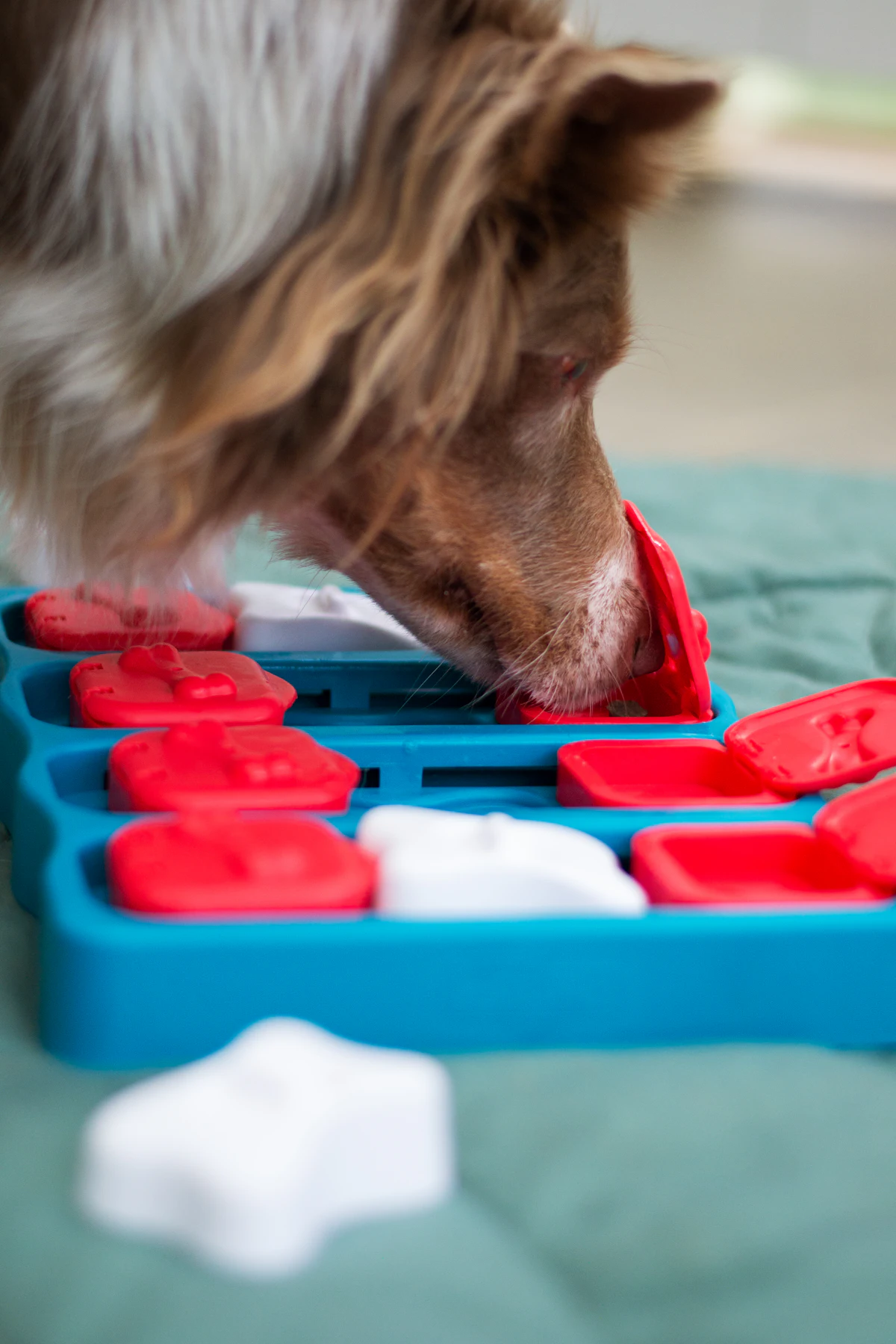
Sliding puzzles
Dogs move lids, panels or pieces to uncover food.
Snuffle products
Food is hidden among fabric strips or folds and located mainly through scent.
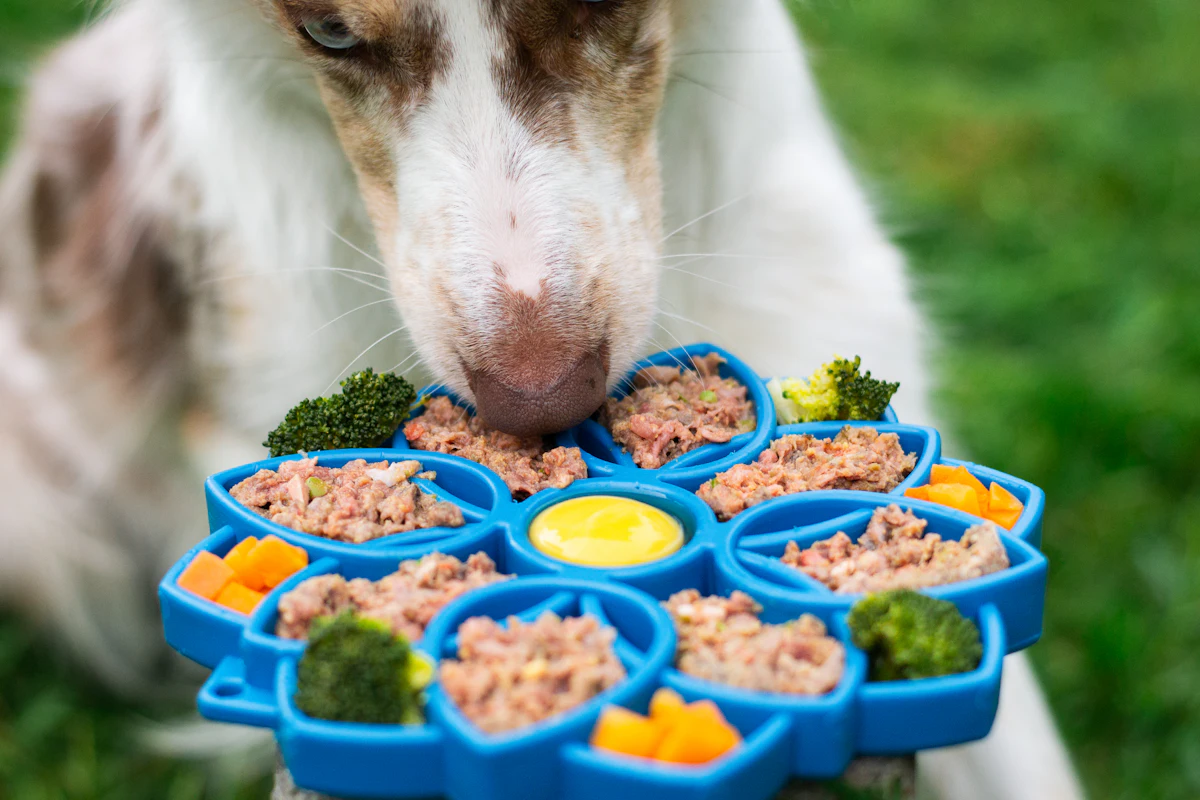
Lick mats
Soft food is spread across a textured surface and removed through licking rather than active object manipulation.
How to choose a first puzzle toy
- Choose a simple mechanism.
- Select an appropriate size for your dog.
- Use food the dog already values.
- Make the first session easy.
- Supervise until you understand the dog’s interaction style.
Difficulty level 1: beginner
Look for open food toys, simple treat dispensers or shallow snuffle activities where the dog can discover the reward quickly.

Difficulty level 2: intermediate
Once your dog understands cause and effect, introduce a toy that requires one extra action such as sliding a lid or moving a piece.
Difficulty level 3: advanced
Multi-step puzzles can be useful for experienced dogs, but only when the dog already enjoys this style of problem-solving. Advanced should not mean frustrating.
Signs the puzzle is too difficult
- Walking away repeatedly
- Barking at the toy
- Frantic biting
- Flipping the toy without learning
- Escalating destructive behavior
How to make a puzzle easier
- Leave compartments partly open.
- Use larger or more fragrant rewards.
- Demonstrate one mechanism.
- Remove one puzzle step.
- Shorten the session.
How to make a puzzle harder
- Reduce visible food.
- Use slightly larger food pieces.
- Freeze suitable fillings in a familiar toy.
- Add one extra mechanism at a time.
Choose by play style
| Dog preference | Puzzle style to consider |
|---|---|
| Sniffing | Snuffle mat or search toy |
| Licking | Lick mat or stuffable toy |
| Pushing and pawing | Sliding puzzle or treat dispenser |
| Carrying | Durable stuffable toy |
| Gentle problem-solving | Simple compartment puzzle |
Safety and durability
Puzzle toys are not automatically chew toys. Choose a size and material appropriate for your dog and remove damaged products. Always follow the manufacturer’s guidance.
Should puzzle toys replace a food bowl?
They can be used for some meals if your dog enjoys them and the setup is appropriate, but there is no need to make every meal difficult. Bowls, scatter feeding and food toys can all have a place.
How many puzzle toys does a dog need?
Usually fewer than people think. Two or three different mechanisms can provide plenty of variety if you rotate them and change difficulty gradually.
What to buy first
If your dog has never used a puzzle, start with a simple food-dispensing or stuffable toy rather than a multi-step board. Once that is easy, add a different mechanism.
Related guides
Compare food-enrichment styles in Snuffle Mat vs Lick Mat, or try no-cost alternatives in DIY Dog Enrichment.
Frequently asked questions
What puzzle level should a beginner dog use?
Start with the easiest available mechanism, even if your dog seems clever. Understanding how rewards appear is more important than beginning at an impressive difficulty level.
Are puzzle toys good for puppies?
They can be, when appropriately sized and easy enough for the puppy to succeed. Supervise chewing and keep sessions short.
Can puzzle toys frustrate dogs?
Yes. Persistent barking, frantic biting, walking away or repeatedly looking to you for rescue are signs the task may need simplifying.
Should I freeze every food toy?
No. Freezing is a difficulty increase. Let the dog learn the toy with loose or soft food before making access harder.
Are expensive puzzle toys better?
Not necessarily. Mechanism, safety, durability and fit for your dog matter more than price.
What to evaluate before buying
- Size: appropriate for your dog’s mouth and body size.
- Material: suitable for the dog’s chewing style.
- Food compatibility: dry, wet or both.
- Cleaning: easy enough to wash properly.
- Difficulty: adjustable or appropriate for current skill.
- Noise: rolling hard plastic may be unpleasant in some homes.
A future “best puzzle toys” buyer guide can compare specific products, while this page remains the informational guide to choosing the right type and level.
How to compare two puzzle toys
Ignore marketing claims for a moment and compare the practical details: how food goes in, how it comes out, whether difficulty can be adjusted, how the toy is cleaned, the smallest removable part, noise level on your flooring and whether the material suits your dog’s chewing habits.
When to retire a puzzle toy
Replace a toy when cracks, loose pieces, sharp edges or worn components appear. A puzzle that has become too easy does not necessarily need to be discarded—you can rotate it back in later or use it for faster meals.
How to teach a dog to use a new puzzle
Load the toy with easy-to-access rewards and let your dog see the first success happen. If the mechanism involves sliding or lifting, leave pieces partly open. Gradually restore the full difficulty only after your dog understands how rewards are released.
Do smart dogs need hard puzzles?
Not necessarily. Intelligence and puzzle preference are not the same thing. A dog may be highly trainable and still prefer scent searches or simple food toys. Choose the activity the dog enjoys, not the one that seems most impressive.
A five-part framework for choosing dog puzzle toys
- Mechanism: does the dog lick, roll, slide, sniff or paw?
- Difficulty: can a beginner reach food quickly enough to understand the task?
- Durability: is the material appropriate for the way your dog mouths and chews objects?
- Cleaning: can you realistically wash every food-contact surface?
- Food fit: does the toy work with the dry, wet or mixed food you actually use?
Preventive Vet’s interactive toy guide strongly emphasizes matching difficulty to skill level. PetMD’s enrichment-toy overview similarly places puzzle toys inside a wider enrichment routine rather than treating them as a complete solution by themselves.
Why harder is not always better
A toy is only cognitively useful if the dog can make progress. When the mechanism is too difficult, some dogs stop using it while others switch to biting, flipping or destroying the product. That behavior is often interpreted as the dog being “stubborn” or “too rough,” when the real issue may be that the puzzle no longer offers a clear route to the reward.
When a simple toy is the right long-term choice
There is no requirement to graduate to an advanced board puzzle. A dog that happily uses a simple stuffable toy or treat dispenser can continue using it for years. Variety can come from fillings, location, timing and rotation rather than constant increases in mechanical difficulty.
What to record when testing a new puzzle
For the first few sessions, note how long it takes your dog to understand the mechanism, whether they stay relaxed, which body part they use most and whether they can disengage when the activity ends. Those observations are more useful than a manufacturer difficulty label because they reflect how the individual dog actually interacts with the toy.