


Quick answer: To learn how to use a lick mat for dogs, begin with a small, accessible patch of familiar dog-safe food on an intact mat. Place it on a stable surface, supervise the entire session and remove it safely when finished. Start unfrozen, account for the food and follow the specific product’s cleaning instructions.
A lick mat can offer a different way to access a small food portion. It is not a chew toy, a guaranteed calming treatment or something every dog should be left alone with. The useful question is whether your dog can lick comfortably without biting the material, becoming frustrated or consuming unsuitable food.
What a lick mat does
A textured mat spreads suitable food across grooves or raised patterns. The dog accesses the food mainly by licking. Pattern depth, food consistency, portion size and temperature all influence how difficult the task becomes.
That makes a mat different from a snuffle mat, where a dog usually searches through material for pieces of food. Our snuffle mat versus lick mat comparison explains the difference. Neither tool is universally better; they support different interactions and cleaning needs.
Some dogs appear content during a licking activity, but eating is not proof that a dog is relaxed. A dog may continue eating in an uncomfortable situation. Do not assume a loaded mat resolves fear, separation distress or aversion to grooming.
Use the mat as an optional feeding activity within a balanced enrichment routine. It should fit alongside rest, movement, sniffing and social interaction rather than replace those needs.
Choose a mat your dog can use safely
Check the manufacturer’s guidance for size, material, use and cleaning. The surface should be intact, with no missing pieces, cracks or lifted edges. A damaged mat is not suitable because food can conceal wear and encourage further biting.
Think about how your dog interacts with objects. Dogs who tear soft items apart or swallow pieces may be poor candidates, even with a rigid-backed product. “Durable” does not mean indestructible, and suction cups do not turn a feeding mat into safe unsupervised equipment.
Choose a pattern that lets the dog reach food comfortably. A deep, dense surface may be harder for a beginner than broad, shallow grooves. Mouth shape, tongue movement, dental comfort and food texture all affect access.
For medical diets, swallowing concerns, dental disease or repeated vomiting, ask your veterinarian before experimenting. It may be better to use a conventional feeding method while those issues are assessed.
How to use a lick mat for dogs in nine steps
This sequence starts with a deliberately easy introduction. Freezing, larger portions and more challenging textures are optional adjustments, not required milestones.
Step 1: Inspect and clean before loading
Wash a new mat according to its instructions and rinse appropriately. Check both sides for damage or manufacturing remnants. Place it on a clean preparation surface before adding food.
Repeat the inspection before every use. A dog may have damaged an edge in a previous session without leaving an obvious hole. Do not cover suspect areas with food and hope they hold together.
Step 2: Measure the food first
Set aside a small portion of suitable food rather than filling every groove automatically. Use part of the dog’s normal complete diet when that works with the product. Count any extra toppings within the day’s intake.
The WSAVA treat guidance advises that treats should provide no more than 10 percent of daily calories. Individual medical diets may need tighter restrictions or no additions. A teaspoon of an energy-dense topping can matter more than its small appearance suggests.
Step 3: Use a familiar, dog-safe ingredient
A little of the dog’s usual wet food is a straightforward starting point when suitable. Another option is properly softened normal kibble prepared and handled according to the food’s guidance. Avoid introducing several unfamiliar ingredients at once.
Human foods need separate checks for ingredients, fat content, tolerance and dietary suitability. Peanut butter must contain no xylitol, which the FDA identifies as dangerous to dogs. Do not assume a “natural” or “sugar-free” label means safe.
Step 4: Make a small, easy patch
Put the food in a central area where the dog can reach it without licking around the edges. Leave the first serving accessible rather than pressing a thin layer deep into every groove.
The LickiMat introduction instructions similarly emphasize an easy initial food area and supervision of licking rather than chewing. That advice applies to the named products; check your own mat’s instructions for any differences.
Step 5: Choose a quiet, stable location
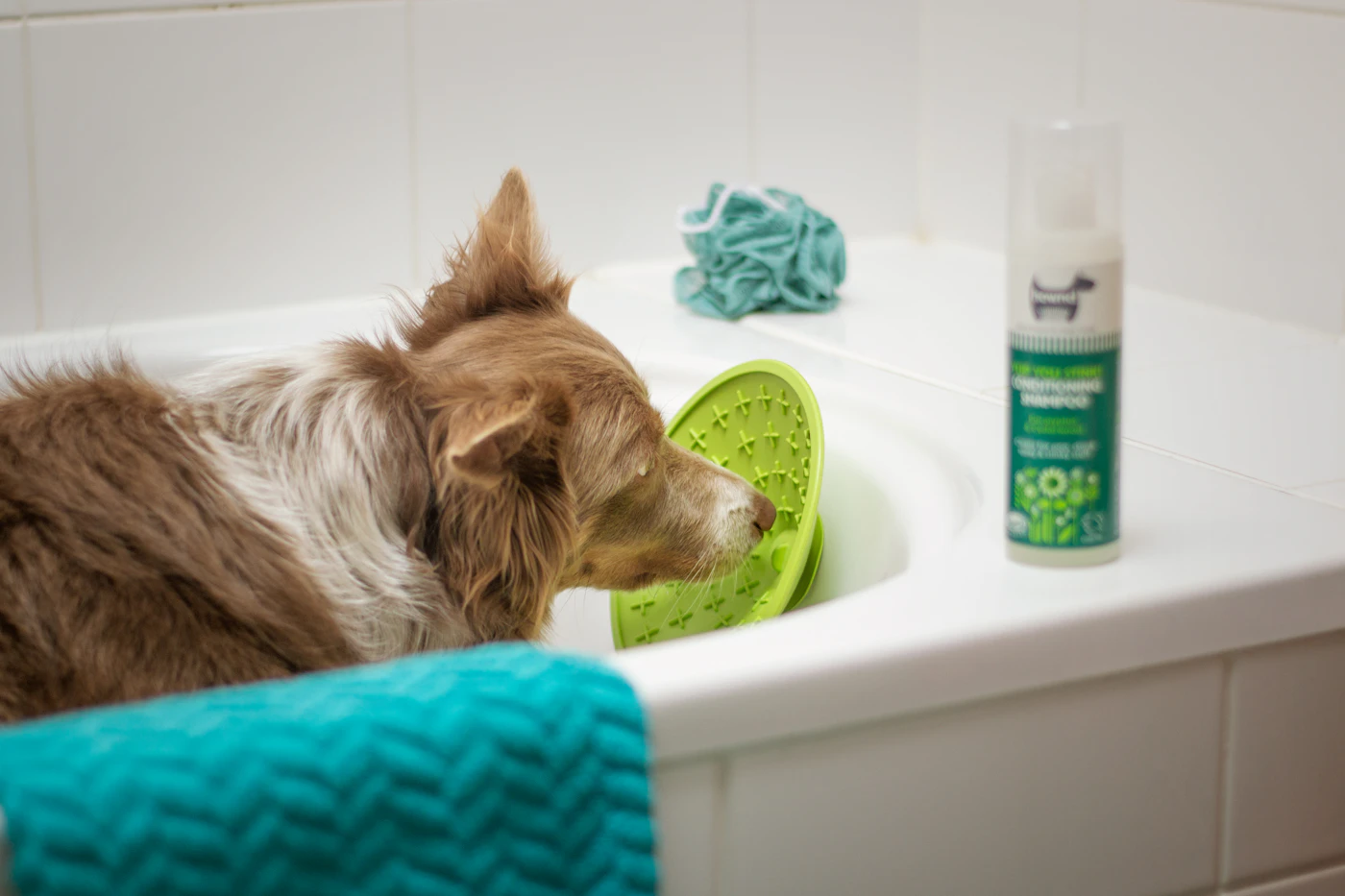
Put the mat where your dog already feels comfortable. Use a suitable surface so it does not slide, and separate dogs during food activities. Keep children from approaching or touching the loaded mat.
Avoid using the first session during a bath, nail trim or departure. You need to learn how the dog interacts with the mat without another challenge competing for attention. Familiarity should come before more complicated use.
Step 6: Watch the whole interaction
Stay close enough to observe the mouth and the material, while giving the dog space. Look for licking, comfortable posture and accessible food. Do not repeatedly move the mat or reach into the food.
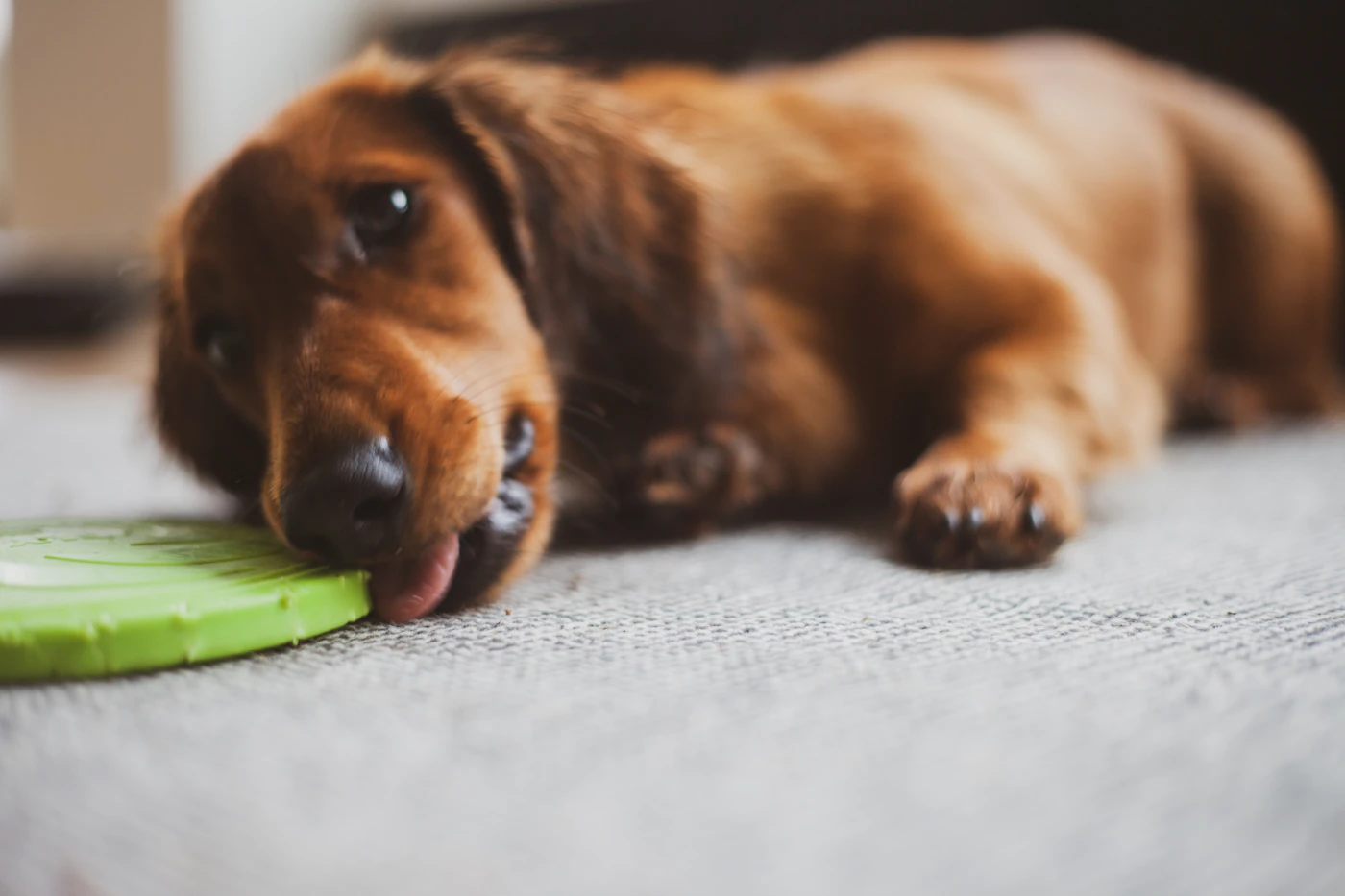
If the dog bites, lifts or tears the mat, end safely and choose another feeding activity. Avoid correcting the dog while leaving the same unsafe setup in place. The material or difficulty may simply be wrong for them.
Step 7: Adjust only one feature
After several comfortable uses, you might spread food over a slightly wider area or try another familiar food texture. Keep the portion controlled. Watch how the change affects licking, frustration and cleanup.
Freezing is not the default first step. If the product allows it and your dog can use it comfortably, introduce a modest change rather than a densely frozen full meal. A longer-lasting mat is not automatically a better experience.
Step 8: Finish and remove safely
When the planned portion is gone, invite the dog to another comfortable spot using a familiar cue or a small reward. Collect the mat when the dog has moved away. Do not snatch it from beneath a guarding dog.
Repeated difficulty ending the session is useful information. Use smaller, easier servings next time, improve the finish routine or pause the activity while obtaining professional help for guarding.
Step 9: Wash, dry and store
Remove food residue promptly and follow the specific care instructions. Grooves, corners, suction cups and backing surfaces can retain food. Inspect again once clean, then dry and store out of reach.
Do not assume all lick mats are dishwasher-safe. The LickiMat cleaning guidance distinguishes between product types. Follow the instructions for the actual mat, not a generic claim about rubber or silicone.
Choose food by function, not novelty
A small, simple ingredient list makes it easier to understand what your dog tolerates. The mat does not require a colorful recipe or a large number of toppings to provide a different feeding experience.
| Food option | Potential use | Check first |
|---|---|---|
| Usual complete wet food | Familiar, spreadable base | Diet suitability and portion |
| Softened normal kibble | Uses part of a measured meal | Preparation, texture and storage |
| Plain pumpkin puree | Small optional addition | Not pie filling; individual tolerance |
| Plain unsweetened yogurt | Small optional addition | Dairy tolerance and ingredients |
| Xylitol-free peanut butter | Tiny optional topping | Ingredients, fat and calorie content |
These are options to discuss or assess, not a prescription for every dog. Dogs with allergies, digestive concerns, pancreatitis history or prescribed diets may need to avoid common toppings. Do not substitute a collection of treats for a complete meal.
Use one new ingredient at a time and in a small amount if it is appropriate at all. If digestive signs or other illness appear, stop the ingredient and contact your veterinarian as warranted.
When a lick mat may fit—and when it does not
A mat may fit a supervised quiet break, a short food activity after a walk or an opportunity to practice calm independent engagement while you remain nearby. It may also be unnecessary if your dog prefers another feeder.
During grooming, the dog’s comfort still matters. Introduce the mat separately, keep care brief and stop when the dog shows distress. Food should not be used to push through procedures the dog cannot tolerate. A veterinarian or qualified cooperative-care professional can help plan gradual training.
Do not use a mat to conceal severe separation distress. If a dog panics when alone, enrichment may be one small part of a broader plan, but it is not treatment by itself. A dog who ignores food after you leave may be communicating discomfort, not a need for a tastier recipe.
Troubleshoot before increasing difficulty
When learning how to use a lick mat for dogs, most problems are easier to solve by simplifying. Change the food access, product or setting before deciding that the dog needs more persistence.
My dog chews the mat
Remove it safely and stop using that setup. Check whether food was hard to reach or the dog usually chews flexible objects. A different product may still be unsuitable; choose a safe alternative based on the dog’s actual behavior.
My dog loses interest with food left
The pattern may be too deep, the food too difficult or the dog simply finished with the activity. Reveal the food or use less next time. Do not assume every groove must be polished clean.
The mat slides or flips
Change to a stable surface permitted by the manufacturer and check any suction mechanism. If the dog continues lifting or biting it, end the session. Holding it down near the mouth is not a reliable safety solution.
My dog gets frustrated when it is frozen
Return to unfrozen, accessible food. Freezing changes both texture and difficulty. It is optional, and some dogs are happier with a short, easy licking activity.
My dog guards the mat
Give space, do not grab and avoid repeating the situation without a plan. Seek advice from a veterinarian or qualified reward-based behavior professional. Managing dogs separately is important even when no guarding has occurred before.
Build a realistic cleaning and storage routine
A mat that is inconvenient to clean may be a poor fit for daily use. Check whether you can remove residue from all patterns and dry the item fully. Choose a simpler texture if food repeatedly stays trapped.
The FDA pet-food handling resource advises cleaning feeding equipment and dealing promptly with leftover wet food. Apply the food’s own storage directions when preparing toppings. Do not leave a loaded mat at room temperature all day.
Prepare only what you can store safely. If making portions ahead, use clean containers, follow food labels and keep ingredients identifiable. Freezing does not make an unsuitable or spoiled food appropriate.
Frequently asked questions
Can I use a lick mat every day?
Possibly, if the mat suits the dog, sessions are supervised, food fits the diet and equipment is cleaned. Daily use is not necessary. Vary activities according to the dog’s interests rather than treating a mat as a required routine.
Can puppies use lick mats?
Some can use an easy, supervised version with puppy-appropriate food. Puppies who bite or swallow the material need another option. Reassess as chewing behavior and body size change.
Should I always freeze it?
No. Begin unfrozen and easy. Freezing may be suitable for certain products and dogs, but it adds difficulty and is not proof of better enrichment. Follow product guidance and the dog’s response.
Does licking cure anxiety?
No. A dog may enjoy a licking activity, but a mat is not a cure for anxiety or a substitute for treatment. Seek professional assessment for persistent fear, panic or distress.
Is a lick mat better than a stuffed food toy?
They provide different access patterns. A shallow mat may suit some dogs; a suitable food toy may suit others. Compare food type, mouth shape, chewing behavior, cleaning and supervision rather than choosing by popularity.
Start with a small, supervised serving
The simplest answer to how to use a lick mat for dogs is also the most repeatable: inspect, measure, load an easy patch, supervise and clean. Keep the food familiar and the task accessible. If the dog bites the material or the activity creates conflict, change the tool rather than forcing the habit.
Editorial note: This is a general usage guide, not a hands-on product test or veterinary nutrition plan. Manufacturer information is used for product handling; discuss individual dietary and behavior concerns with an appropriate professional.