

Quick answer: A useful dog enrichment routine does not require a packed schedule or a cupboard full of toys. Build it around three things: one opportunity to sniff or search, one short thinking or play activity, and enough time to rest. Rotate the activity—not the goal—so your dog gets variety without becoming overstimulated.
The best routine is the one that fits your dog and your real life. Ten focused minutes can be more valuable than an hour-long activity that is too difficult, too exciting or impossible to repeat consistently.
A simple daily formula
- Explore: a sniff walk, scent search or new safe environment.
- Engage: a brief training game, food puzzle or interactive play.
- Settle: quiet chewing, licking, mat time or uninterrupted rest.
These are options, not a rigid checklist. Adjust the mix to your dog’s age, health, confidence and energy level.
What does a balanced dog enrichment routine look like?
A balanced routine gives a dog safe outlets for natural behavior without trying to entertain them all day. Depending on the individual dog, those outlets may include sniffing, searching, chewing, licking, carrying, digging, exploring, learning, playing and choosing where to rest.
Variety matters, but constant novelty does not. Dogs often enjoy familiar activities because they know how to succeed. You can create variety by changing one small detail: move a scent search to another room, take a familiar puzzle outdoors, walk a route in reverse or use part of dinner during a training session.
Enrichment also needs an off-switch. Dogs require sleep and quiet time, and some become more restless—not calmer—when every moment is filled with stimulation. A good routine helps a dog engage and then settle.
If you are new to the subject, begin with our practical guide to what dog enrichment means. If you want a larger menu of individual activities, see 30 dog enrichment ideas.
Seven types of enrichment to rotate
1. Sniffing
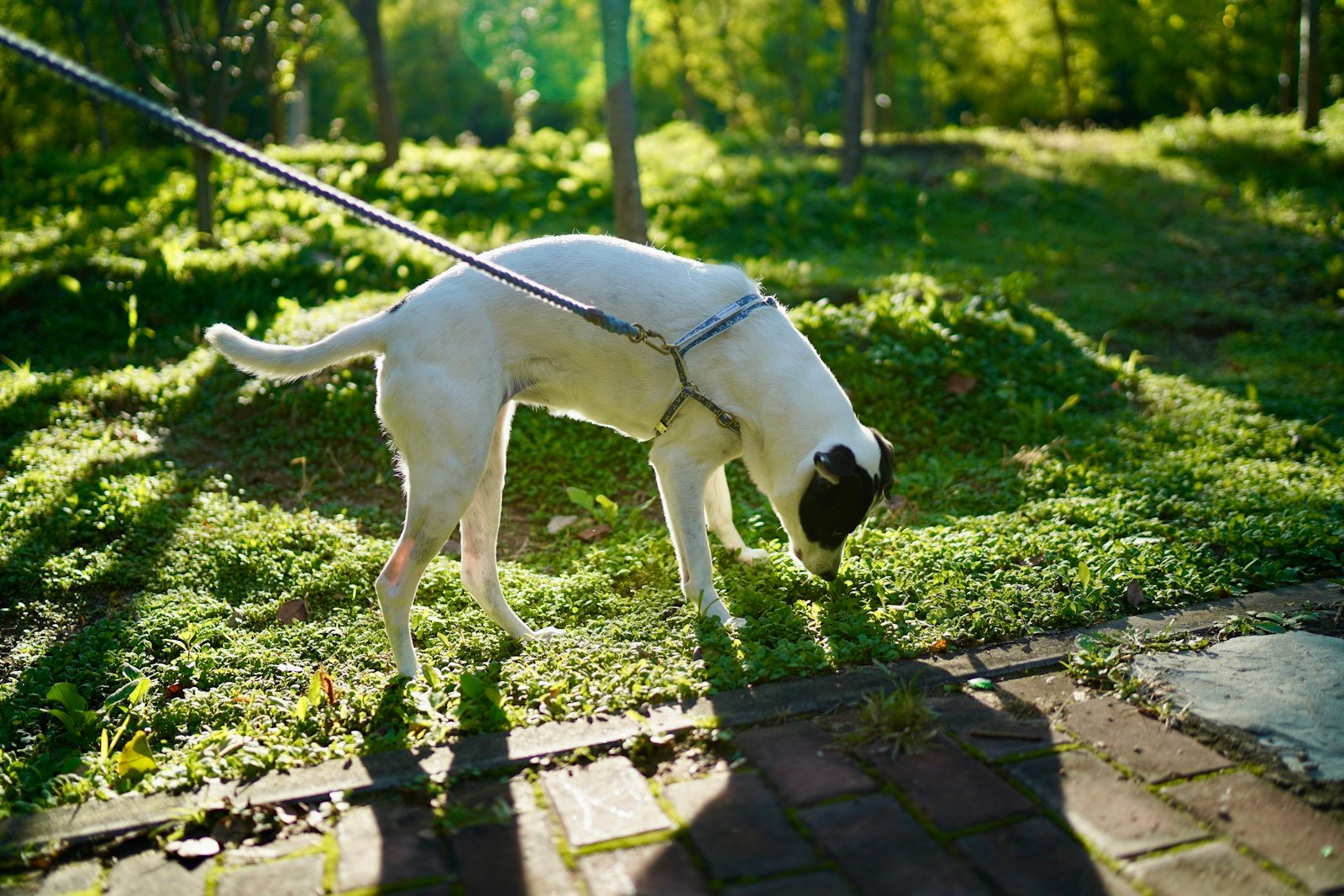
Sniffing lets dogs gather information at their own pace. It can happen on a slow walk, during a scent trail or through a simple “find it” game at home. For many dogs, allowing time to investigate smells is more meaningful than covering extra distance.
Easy starting point: scatter five pieces of kibble in a small, clean patch of grass and let your dog search. Keep the area obvious for the first attempt.
2. Searching and foraging
Searching adds a goal to scent work. Food can be hidden in an open box, sprinkled through a snuffle mat or placed in easy locations around one room. A favorite toy can replace food for dogs who are not food-motivated.
Easy starting point: place a treat where your dog can see it, say “find it,” and repeat. Make the hiding place more difficult only when your dog understands the game.
For step-by-step options, explore our sniffing games for dogs.
3. Problem-solving and training
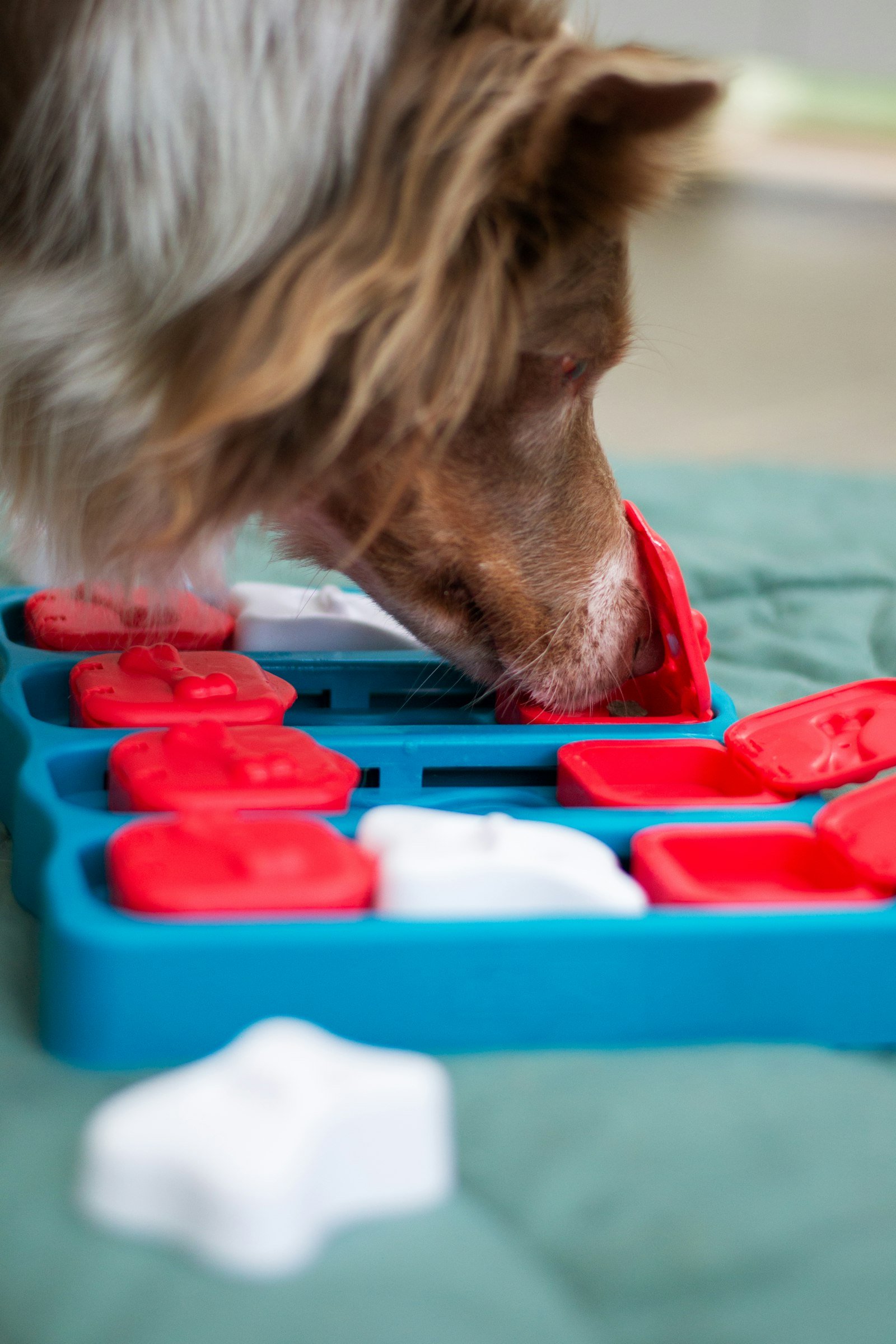
A dog can work their brain through a commercial puzzle, a homemade game or a two-minute training session. Useful beginner activities include hand targeting, stepping onto a mat, choosing the correct cup or learning the name of a toy.
Difficulty should produce curiosity, not frustration. If a dog paws, bites or barks at a puzzle without making progress, simplify it. An easy win builds confidence and gives you room to increase the challenge later.
4. Licking and appropriate chewing
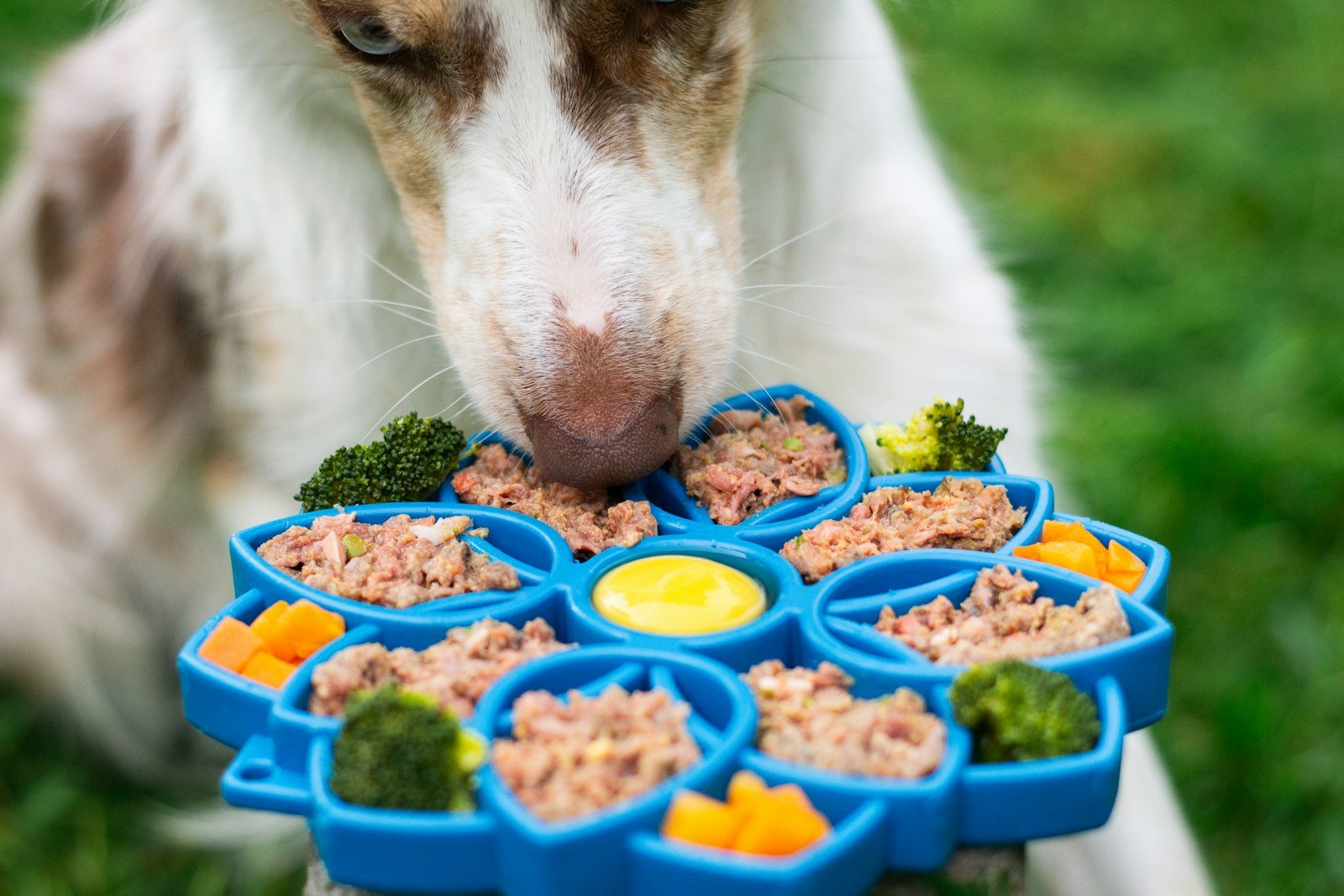
Licking and chewing can provide slower, quieter engagement. Options include a thinly spread lick mat, an appropriately sized stuffed toy or a veterinarian-approved chew suited to the dog’s chewing style.
These activities still require judgment. Remove damaged items, supervise anything new and choose a size the dog cannot swallow. A lick mat should be taken away if the dog begins tearing or eating the material.
5. Interactive play and movement
Tug, fetch variations, recall games and low-impact obstacle routes combine movement with attention and cooperation. The goal is not to exhaust the dog through endless repetition. Short sessions with pauses are easier to control and often leave the dog more settled.
Use non-slip surfaces indoors, avoid sharp turns or high jumps, and adapt movement for puppies, seniors and dogs with orthopedic concerns.
6. Environmental exploration
A different walking route, a quiet visit to a new place, a backyard treasure hunt or time observing the world from a comfortable distance can all provide new sensory information. The environment should feel interesting rather than overwhelming.
Watch your dog’s body language. If they become tense, try to leave, stop taking food or cannot disengage from something, create more distance or return to a familiar setting.
7. Choice, social connection and rest
Enrichment can be as simple as offering two safe toys and letting the dog choose, allowing a choice between two walking directions or providing several comfortable resting places. Choice gives the dog some control over their day.
Calm social interaction also counts. Gentle grooming for a dog who enjoys it, cooperative training, quiet time together or a game with clear start-and-stop cues can support the relationship without demanding constant excitement.
How to build a routine that fits your dog
Step 1: Start with the need
Ask what your dog appears to need today. A dog who has been resting may enjoy movement and exploration. A dog returning from an exciting outing may need quiet chewing or sleep. A dog who seems bored but is physically tired may prefer an easy search game to another fast walk.
| What you notice | Activity to consider | Keep it manageable |
|---|---|---|
| Restless wandering | Short scent search | Use one room or a small yard area |
| Needs movement | Sniff walk or interactive play | Add pauses and avoid repetitive high-impact exercise |
| Interested but mentally fresh | Training or beginner puzzle | Finish after a few successful repetitions |
| Physically tired | Licking, chewing or mat time | Choose a calm activity and allow sleep afterward |
| Overwhelmed by novelty | Familiar activity | Reduce noise, difficulty and environmental pressure |
Step 2: Match the difficulty
Make the first attempt easier than you think it needs to be. Leave part of a food puzzle uncovered, hide treats in visible places or reward one small behavior during training. When your dog succeeds quickly and remains relaxed, increase only one variable at a time.
Step 3: Use normal routines
You do not need to add an entirely new event to the day. Use part of breakfast for a two-minute search, add sniffing time to the usual walk, practice a hand target before clipping on the leash or rotate a familiar toy in the evening.
Step 4: Observe the result
After the activity, ask three questions:
- Did my dog understand how to participate?
- Did they appear relaxed and interested while doing it?
- Could they stop and settle afterward?
If the answer is no, shorten the session, lower the difficulty or choose another activity type next time.
Dog enrichment plans for 10, 20 or 30 minutes
If you have 10 minutes
- Two minutes of easy “find it.”
- Three minutes of hand-target or mat training.
- Five minutes to settle with a familiar chew or quiet rest.
If you have 20 minutes
- Ten-minute sniff-focused walk or backyard search.
- Five-minute puzzle using part of a meal.
- Five minutes of calm decompression.
If you have 30 minutes
- Fifteen-minute exploration walk at the dog’s pace.
- Five minutes of reward-based training.
- Five minutes of tug, toy search or another preferred game.
- Five minutes to settle.
These plans are examples, not exercise prescriptions. Health, weather, age and individual fitness all affect what is appropriate.
A simple 7-day enrichment schedule
| Day | Main focus | Example |
|---|---|---|
| Monday | Sniffing | Slow sniff walk on a familiar route |
| Tuesday | Problem-solving | Beginner food puzzle |
| Wednesday | Training | Five-minute hand-target session |
| Thursday | Foraging | Supervised box or towel search |
| Friday | Play | Short tug session with start-and-stop cues |
| Saturday | Exploration | New route or backyard treasure hunt |
| Sunday | Calm engagement | Lick mat, chew or mat time |
You do not need to follow the days exactly. The table is a reminder to rotate activity types rather than repeat the most intense game every day. On wet-weather days, use our indoor dog activity guide. For simple homemade setups, see DIY dog enrichment ideas.
Adjust the routine for age and ability
Puppies
Keep sessions brief, easy and supervised. Puppies need considerable sleep, so stop before the activity becomes frantic. Avoid forced repetitive exercise, high jumps and difficult food puzzles. Gentle exploration, simple scent searches and short reward-based training are useful starting points.
Healthy adult dogs
Adults may enjoy a wider range of physical and mental activities, but energy level and preferences vary greatly. A high-energy dog does not always need more speed; sniffing, problem-solving and controlled play can add quality without relying only on intense exercise.
Senior dogs
Choose comfortable surfaces, low-impact movement and puzzles that are easy to manipulate. Scent work can remain enjoyable even when mobility changes. Adjust for hearing, vision, dental health and medical needs, and ask your veterinarian when you are unsure.
Common dog enrichment mistakes
Making every activity harder
Progress does not always mean greater difficulty. Repeating an activity your dog enjoys can be valuable. Familiar success often builds confidence better than constant escalation.
Using food without adjusting meals
Measure the food used in searches, training and puzzles. Whenever practical, use part of the dog’s normal ration rather than adding an untracked supply of treats.
Choosing the activity for its appearance
A complicated puzzle may look impressive but offer little value if the dog cannot understand it. Choose based on the individual dog’s engagement, not how the setup looks in a photo.
Ignoring frustration or stress
Walking away, freezing, frantic biting, repeated barking, guarding or inability to settle are reasons to change the activity. Enrichment should not require a dog to “push through” distress.
Forgetting rest
A busy dog is not automatically a fulfilled dog. Quiet time and adequate sleep are part of a healthy routine, especially for puppies, seniors and dogs who become overstimulated easily.
Dog enrichment safety checklist
- Supervise unfamiliar toys, food puzzles, cardboard and fabric.
- Choose items that are appropriately sized and cannot be swallowed.
- Remove damaged toys and loose pieces promptly.
- Avoid toxic foods, unsafe plants, sharp edges and unstable equipment.
- Use a harness and safe handling practices with a long line.
- Prevent slips during indoor movement games.
- Count food rewards toward normal daily intake.
- Modify activities for medical, dental, mobility or behavior needs.
If your dog suddenly loses interest in familiar activities, appears painful or shows a marked behavior change, contact a veterinarian. General enrichment guidance cannot diagnose or treat a health or behavior problem.
Frequently asked questions
Does my dog need enrichment every day?
Most dogs benefit from daily opportunities to sniff, explore, learn or make choices, but enrichment does not need to be a formal session every day. A relaxed sniff walk, a small food search or a short training game can be enough.
How long should an enrichment session last?
There is no universal duration. Begin with a few minutes and stop while the dog is still comfortable and successful. A short session that ends calmly is more useful than a long one that creates frustration.
Can a walk count as enrichment?
Yes. A walk can provide scent, movement, environmental information and choice. Allowing safe sniffing and adjusting the pace to the dog can make an ordinary walk much more enriching.
What if my dog is not food-motivated?
Use toys, praise, access to sniffing, gentle social interaction or environmental exploration. Food is convenient, but it is only one possible reward and one type of enrichment.
Do I need to buy puzzle toys?
No. Training, sniff walks, hide-and-seek, toy searches and carefully supervised household setups can all provide mental engagement. If you do buy a puzzle, choose an appropriate size and beginner difficulty; our dog puzzle toy guide explains what to look for.
Sources and further reading
- Dogs Trust: Enrichment activities to keep your dog entertained
- American Kennel Club: Indoor scent games for dogs
Editorial note: This article provides general educational information. Adapt every activity to your dog and consult your veterinarian or a qualified behavior professional when health, mobility, anxiety or safety is a concern.