
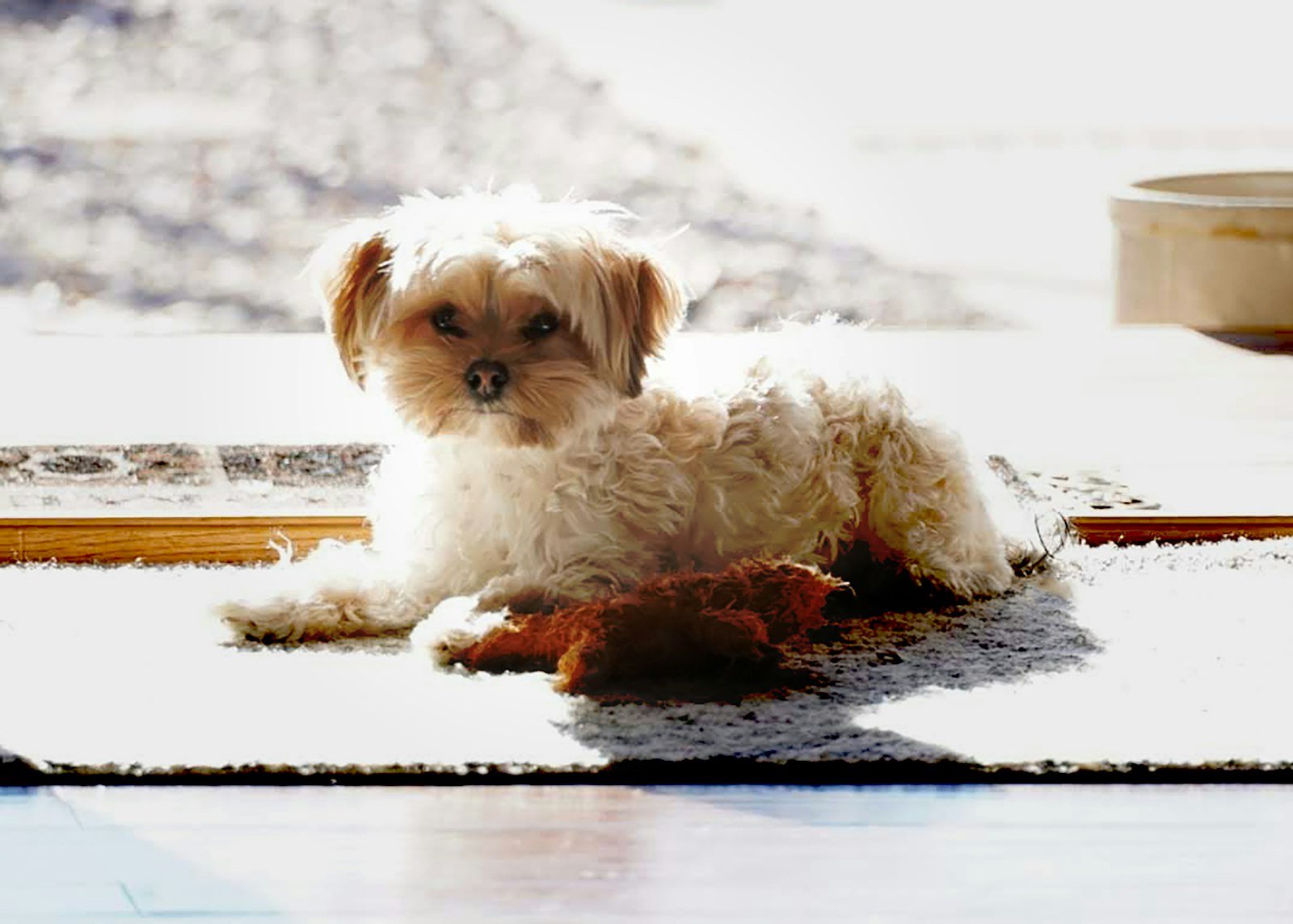

Quick answer: To keep your dog entertained indoors, rotate three kinds of activity: something to sniff or search for, something to learn or solve, and something calming such as licking, chewing or settling on a mat. Add short, controlled movement games when your space and your dog’s health allow. Most sessions can last 5–15 minutes; the goal is focused engagement, not nonstop stimulation.
Indoor time can become difficult when bad weather, apartment living, illness, a busy workday or limited daylight changes the usual routine. The solution is not to exhaust your dog inside. This guide explains how to keep your dog entertained indoors with a safe rhythm of exploration, thinking, play and rest that matches the individual dog.
The indoor entertainment formula
- Sniff: let the nose do useful work.
- Solve: offer an achievable training task or puzzle.
- Move: use brief, low-risk play suited to the space.
- Settle: finish with quiet engagement or genuine rest.
You do not need all four in every session. Choose what fits your dog’s energy, mobility and mood.
Start with what your dog needs—not the most exciting game
A dog pacing after a quiet morning may benefit from a scent search or controlled play. A dog who has already had an exciting outing may need a chew, lick mat or uninterrupted nap. A dog who becomes frustrated by puzzles may enjoy an easier search game where the path to success is obvious.
Before setting up an activity, ask:
- Does my dog need movement, mental work, sensory exploration or calm?
- Can my dog understand this task at the current difficulty?
- Is the activity safe for their age, mobility and chewing style?
- Can I supervise the materials involved?
- Will my dog be able to stop and settle afterward?
| What you notice | Try indoors | Avoid |
|---|---|---|
| Restless but able to focus | Scent trail, “find it,” short training | Making the first attempt too difficult |
| Physically energetic | Controlled tug, hallway recall, low obstacle route | Slippery floors, tight turns and repeated jumping |
| Mentally fresh | Toy-name game, shaping or beginner puzzle | Long drilling after concentration fades |
| Already excited | Easy sniffing, licking, chewing or mat work | Fast chase games that increase arousal |
| Tired or overwhelmed | Quiet rest in a comfortable space | Assuming every bored-looking moment needs entertainment |
For a broader explanation of balancing activity types, see our dog enrichment routine guide.
How to keep your dog entertained indoors safely
Indoor play introduces hazards that are easy to overlook. Clear breakable objects, cables, sharp corners and anything small enough to swallow. Use rugs or mats on smooth floors, especially for dogs who will turn, stop or change direction. Close access to stairs if the game might encourage rushing.
Match the activity to the room. A narrow hallway may work for calm recalls between two people, but it is a poor place for high-speed fetch. A living room can support scent searches if food is kept away from electrical equipment and plants. A kitchen can work for mat training, provided the floor is not slippery.
Set an end point before you begin. Decide how many repetitions, how much food or how long the session will last. Ending while your dog is still successful is usually better than continuing until they lose focus or become frantic.
Use sniffing and searching to occupy the brain
Scent games are among the easiest indoor activities to scale. They can be adapted for a small apartment, require little equipment and do not depend on fast physical movement.
Play a beginner “find it” game
Let your dog watch you place one piece of kibble on the floor. Say “find it” and allow them to collect it. Repeat several times, then place the food slightly behind a chair leg or near the edge of a rug. Keep the first hiding places easy.
Create a one-room treasure search
Ask your dog to wait outside the room or have another person hold them. Place three to five treats in visible or partly hidden locations, then release the dog to search. Use the same room until they understand the game before adding more space.
Make a short scent trail
Drag a dog-safe food reward or favorite toy across the floor for a short distance, leaving an obvious reward at the end. Avoid surfaces that could be stained and do not use essential oils or unfamiliar concentrated scents.
Try a supervised box search
Arrange several open cardboard boxes and place food in one or two. Let your dog investigate at their own pace. Use only clean boxes with tape, staples and labels removed. Skip this game if your dog is likely to swallow cardboard.
Hide a favorite toy
For a dog who is not strongly food-motivated, hide a familiar toy partly behind furniture while they watch. Gradually make the hiding place less obvious. Reward the find with praise or a short play session.
Our guide to 15 sniffing games for dogs includes step-by-step difficulty progressions.
Turn short training sessions into entertainment
Short training sessions can keep your dog entertained indoors without requiring a large room. Use reward-based methods, keep repetitions short and allow breaks. Five successful minutes are more useful than a long session after the dog has stopped concentrating.
Refresh useful skills
Practice a hand target, recall, wait, drop, settle or go-to-mat cue. Change the room or your position to add mild variety instead of immediately demanding a harder behavior.
Teach the name of one toy
Choose a toy your dog already likes. Say its name immediately before presenting it, then reward your dog for touching or picking it up. Practice with that single object before asking them to distinguish it from another toy.
Teach “put it away” in small steps
Begin with a toy held directly over an open basket. Reward your dog for releasing it into the container. Next, place the toy beside the basket, then gradually increase the distance. Do not expect the complete cleanup routine in one session.
Use shaping to encourage problem-solving
Place a safe object such as a mat or low box on the floor. Reward small voluntary interactions: looking at it, moving toward it, touching it or placing a paw on it. Shaping lets the dog experiment without being physically positioned.
Play hide-and-seek with people
Have one person remain with the dog while another hides somewhere easy. Call the dog once, then reward them enthusiastically when they find the hidden person. Increase the difficulty gradually and never hide where the dog must jump, climb or force open a door.
For more short-session ideas, use our 10-minute enrichment games.
Use food puzzles without accidentally overfeeding
Food enrichment works best when it replaces part of a meal rather than adding unlimited extras. Measure the portion before the activity and choose a difficulty your dog can solve without becoming frustrated.
Start with a loosely filled toy
Place dry food or a soft, dog-appropriate filling in a correctly sized stuffable toy. Keep it loose for a beginner. Freezing can make the activity last longer, but introduce the unfrozen version first so the dog understands the task.
Build a simple muffin-tin puzzle
Place food in several cups of a muffin tin. Leave most cups open at first. For a dog who understands the game, cover a few cups with balls or sturdy objects that are too large to swallow.
Use a towel roll carefully
Spread a towel flat, place a small amount of kibble across it and roll it loosely. Let your dog unroll the towel. Do not use this activity with a dog who tears or eats fabric, and supervise from beginning to end.
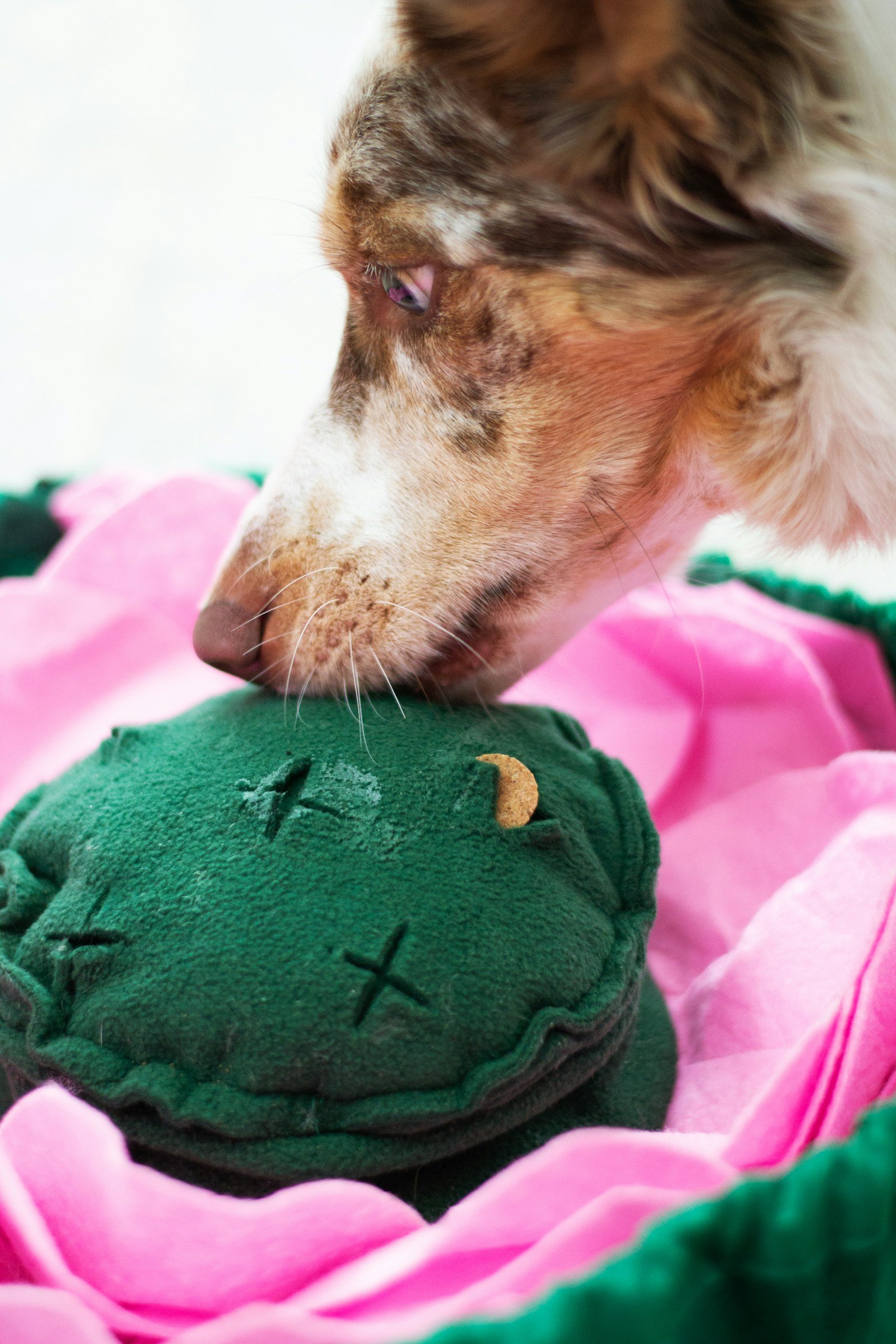
Offer a snuffle mat
Hide dry food among the fabric strips and allow your dog to search. Remove the mat when the food is gone if your dog starts pulling or chewing the material.
Make a beginner cup search
Place a treat under one sturdy cup while your dog watches. Let them indicate the cup with their nose or paw. Add a second empty cup only after the one-cup version is easy.
Food safety note: Check every ingredient. Some peanut butters and other human products contain xylitol, which is toxic to dogs. Avoid chocolate, grapes, raisins, onions and other unsafe foods. When uncertain, ask your veterinarian before using a human food in a toy.
Commercial puzzles are optional. If you want one, our dog puzzle toy guide explains sizing, difficulty and frustration prevention.
Add safe indoor movement and interactive play
Indoor movement should fit the space and the dog. Avoid turning a small room into a high-speed course. Puppies, senior dogs, dogs recovering from injury and dogs with heart, breathing or orthopedic conditions need individual guidance from a veterinarian.
Play controlled tug
Use a suitable tug toy with enough length to keep hands away from teeth. Build in cues for starting, releasing and pausing. Keep movements mostly side-to-side at the dog’s level rather than lifting the dog or jerking upward.
Practice recall between two people
Stand a short distance apart on a non-slip surface. Take turns calling and rewarding the dog. Keep the pace controlled and stop before the dog begins sliding, jumping on people or losing focus.
Create a low-risk obstacle route
Use stable objects for walk-arounds, low step-overs and stationing on a mat. Avoid stacks of books, unstable furniture, tight weaving and high jumps. The course should reward controlled movement, not speed.
Try toy-choice play
Present two appropriate toys and let the dog choose. Play briefly, pause, then offer the choice again. This creates interaction while giving the dog some control over the game.
Modify fetch for indoors
If the room is genuinely safe, roll a soft toy along the floor rather than throwing a ball through the air. Use only a few repetitions and avoid narrow spaces where the dog must brake sharply.
If your dog needs a larger movement outlet, indoor games should complement—not automatically replace—appropriate outdoor exercise. Adjust walks for weather and safety, and seek veterinary advice when illness or mobility limits normal activity.
Include calm and independent activities
To keep your dog entertained indoors without constantly increasing excitement, include activities that do not require direct human participation or high energy. Dogs also benefit from safe opportunities to relax, observe and engage quietly.
Rotate familiar toys
Keep a few toys available and store the rest. Swap the selection every several days. Rotation can renew interest without requiring you to buy something new each week.
Set up a safe observation spot
If watching outside helps your dog relax, provide a secure bed or mat away from an open window. Window access is not calming for every dog. If passing people, dogs or vehicles trigger barking, lunging or prolonged vigilance, use curtains or privacy film and choose a quieter activity.
Practice mat settling
Reward your dog for stepping onto a mat, lying down and remaining relaxed. Deliver rewards calmly and gradually increase the time between them. Mat work can become a useful transition after a more active game.
Offer an appropriate chew
Choose a chew suited to the dog’s size, dental health and chewing style. Supervise unfamiliar products, remove pieces that become small enough to swallow and ask your veterinarian about suitable options.
Protect genuine rest
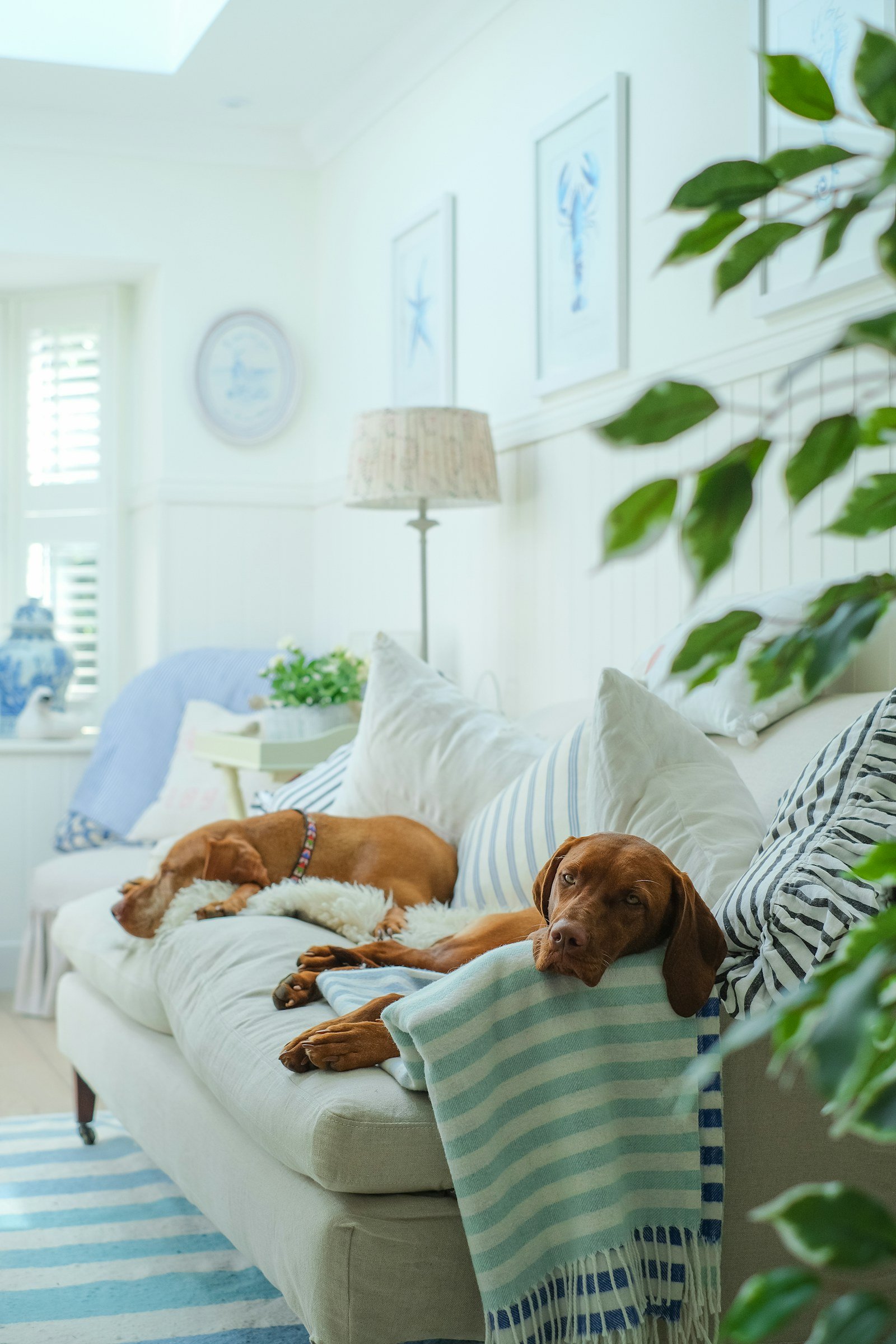
A dog who walks away, lies down or goes to a quiet bed may be finished. Respecting that choice is part of a healthy indoor routine. Puppies in particular need substantial sleep and can become wilder when overtired.
Ready-made indoor entertainment plans
These flexible plans make it easier to keep your dog entertained indoors without filling every minute or relying on high-impact exercise.
A 15-minute plan for a busy day
- Five minutes of easy “find it.”
- Five minutes practicing one familiar cue and one new step.
- Five minutes of mat settling or quiet chewing.
A work-from-home rotation
- Before work: short sniff walk or one-room search.
- Mid-morning: part of breakfast in an easy puzzle.
- Lunch break: five minutes of training and controlled play.
- Afternoon: rest with toys stored away.
- After work: appropriate outdoor activity when conditions allow.
A small-apartment plan
- Hand target or toy-name training.
- Snuffle mat using part of a meal.
- Low-volume tug on a rug.
- Mat settle away from the door and window.
A plan for a dog who becomes overexcited
- Skip chase and rapid recall games.
- Use an easy scent search with a small search area.
- Follow with licking, chewing or mat work.
- Reduce noise, visitors and visual triggers.
- Stop if the dog cannot disengage or settle.
Adjust indoor activities for your dog’s life stage
Puppies
Use very short sessions, simple searches and low-impact movement. Protect sleep and supervise every material. Avoid repetitive jumping, forced exercise and difficult frozen puzzles. A puppy who becomes mouthy or frantic may need rest rather than another game.
Healthy adult dogs
Adults may enjoy a broad mix of scent work, training, controlled play and food puzzles. Match the intensity to the individual rather than assuming every high-energy breed needs nonstop speed. Mental work and sniffing can add quality without increasing physical impact.
Senior dogs
Prioritize traction, comfortable working positions and easy access to rewards. Scent games, gentle training and simple puzzles can remain enjoyable when mobility changes. Consider vision, hearing, dental health and cognitive changes, and ask your veterinarian for individualized advice.
Dogs on restricted activity
If a veterinarian has prescribed rest after illness or surgery, follow those restrictions. “Indoor” does not automatically mean safe: tug, stairs, jumping and sharp turns may still be prohibited. Ask which forms of mental enrichment are appropriate during recovery.
How to tell whether the activity is working
A suitable activity usually produces relaxed interest: the dog investigates, makes progress, accepts help and can stop afterward. Make it easier or discontinue it if the dog repeatedly walks away, freezes, becomes tense, barks at the equipment, bites it frantically, guards the item or swallows non-food material.
Destructive behavior, restlessness or barking can have several causes, including unmet needs, anxiety, fear, pain or a learned response to triggers. Enrichment may help with boredom, but it is not a diagnosis or a complete treatment plan. Sudden or severe behavior changes should be discussed with a veterinarian.
Indoor dog entertainment safety checklist
- Clear cables, breakables, sharp objects and small swallowable items.
- Provide traction before movement games.
- Supervise cardboard, fabric, food toys and new chews.
- Choose equipment that is appropriately sized and in good condition.
- Measure food used during games as part of the daily intake.
- Check all human-food ingredients and avoid xylitol.
- Do not force a dog to interact with an activity.
- Stop when the dog shows stress, pain, fatigue or frustration.
- Adapt intensity for age, health, mobility and breathing ability.
- Include quiet rest between stimulating sessions.
A realistic indoor routine is better than constant activity
To keep your dog entertained indoors, prioritize activities that are understandable, safe and easy to repeat. Rotate sniffing, learning, controlled movement and calm engagement, then protect enough time for genuine rest. The best plan is not the busiest one—it is the plan your individual dog can enjoy and recover from comfortably.
Frequently asked questions
How many indoor activities does my dog need each day?
There is no universal number. Start with one or two short, purposeful sessions and observe whether your dog can engage and settle. Normal walks, rest, social time and individual health needs still matter.
Can indoor games replace a walk?
They can provide valuable mental and physical activity when outdoor time is temporarily limited, but they do not automatically replace the sensory exploration, toileting and movement available outside. Adjust outdoor plans safely rather than assuming the two are identical.
How can I entertain my dog indoors without food?
Try hide-and-seek, toy-name training, controlled tug, hand targeting, toy searches, mat work or choosing between two toys. Our broader mental stimulation guide includes additional non-food options.
What is the easiest indoor game for a beginner?
A one-room “find it” game is easy to explain and adjust. Begin with food or a toy in plain sight, then use slightly less obvious placements as the dog learns the cue.
Why does my dog get frustrated with puzzle toys?
The puzzle may be too difficult, unfamiliar, unstable or not rewarding enough. Reveal part of the food, reduce the number of moving pieces or return to a simpler search game. Difficulty should increase only after repeated success.
Is watching through a window enrichment?
It can be interesting for a relaxed dog, but it may increase stress or barking in dogs who react to people, animals or vehicles. Judge the effect on the individual dog and block the view if it promotes prolonged vigilance.
Sources and further reading
- Small Door Veterinary: How to Keep Your Dog Entertained Indoors
- Dogs Trust: Enrichment activities for dogs
- American Kennel Club: Indoor scent games for dogs
- U.S. Food and Drug Administration: Xylitol is dangerous for dogs
Editorial note: This article offers general educational ideas, not individualized veterinary or behavior advice. Choose activities that are safe for your dog and consult your veterinarian or a qualified behavior professional when health, mobility, anxiety or safety is a concern.