
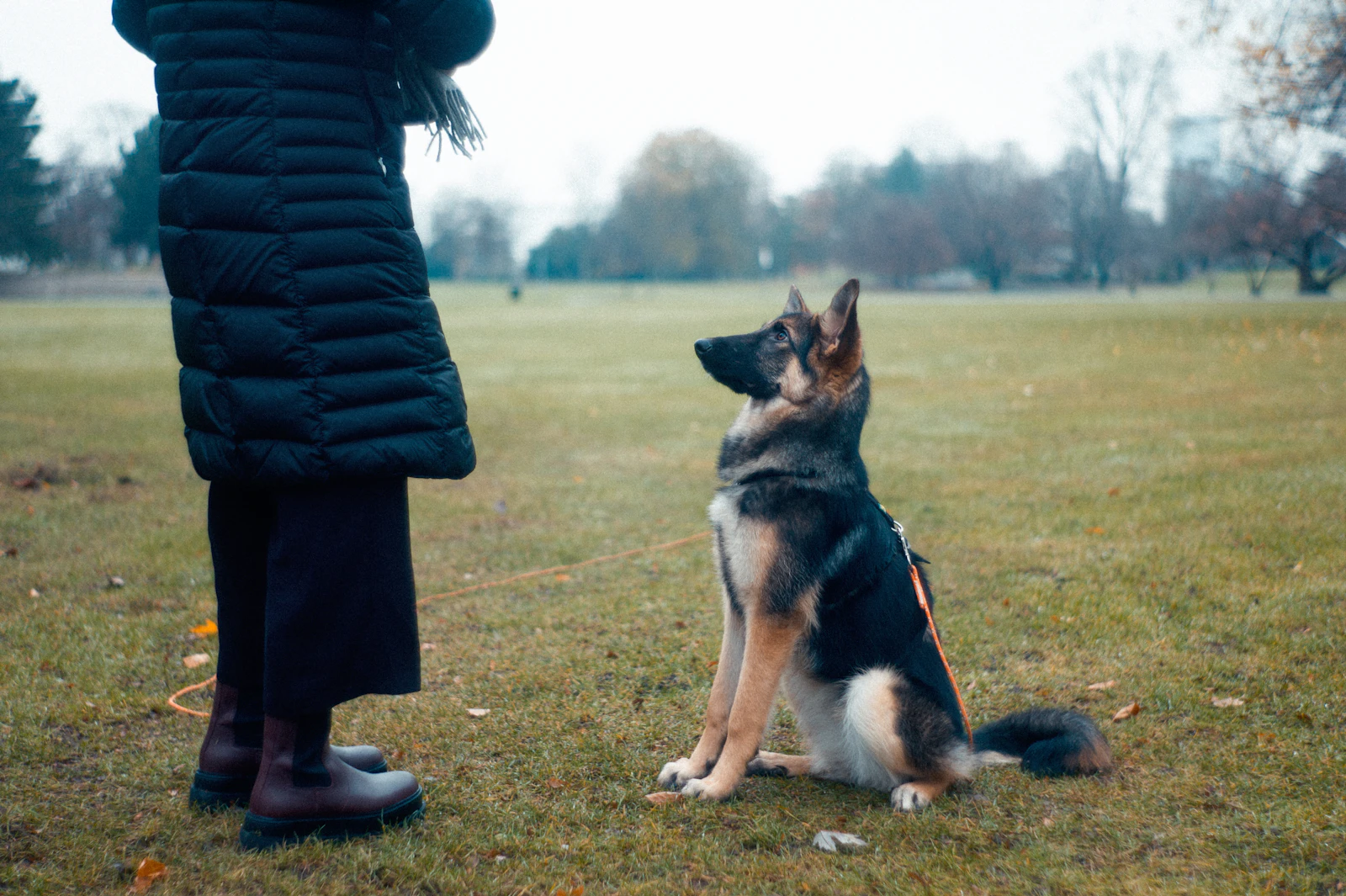

Quick answer: Mental stimulation for puppies works best in short, easy sessions that combine reward-based training, sniffing, safe problem-solving, gentle exploration and plenty of uninterrupted sleep. A two-minute name game, a simple food search or a calm investigation of a new surface can be more useful than a complicated puzzle that causes frustration.
You do not need to keep a puppy busy every waking minute. Good mental stimulation for puppies does not mean constant entertainment. Young dogs are learning from almost everything around them, and too much novelty can produce a tired, mouthy or frantic puppy. The goal is a healthy rhythm: offer one achievable challenge, help the puppy succeed, then make space for calm and rest.
The puppy enrichment formula
- Keep it easy: begin where success is obvious.
- Keep it brief: stop before concentration disappears.
- Use rewards: reinforce the behavior you want repeated.
- Protect rest: stimulation and sleep belong in the same routine.
A good session should leave your puppy settled or pleasantly satisfied—not overwhelmed.
Why appropriate mental work matters for puppies
Puppies are not miniature adult dogs. They are developing coordination, confidence, communication skills, habits and expectations about the world. Age-appropriate mental activity gives them safe opportunities to notice information, make choices and learn what works.
That can happen during formal training, but it also happens when a puppy follows a short scent trail, works out how to reach a visible piece of kibble, walks across a different texture or learns to relax on a mat. These experiences can support useful life skills while giving the puppy an acceptable outlet for curiosity.
Mental work should complement physical activity, not replace it. A growing puppy still needs suitable movement and opportunities to explore. At the same time, trying to solve every burst of energy with faster play or a longer walk can create an overtired puppy and may add unnecessary physical strain. Balance gentle movement with learning, sniffing and recovery.
The American Veterinary Society of Animal Behavior encourages safe, positive exposure to people, animals, environments and varied stimuli during the early socialization period. It also recommends positive-reinforcement training and opportunities for puppies to play independently or rest in secure spaces. That is a helpful framework for enrichment: exposure should be safe, gradual and voluntary rather than forced.
Before you start: five rules for safe puppy enrichment
1. Use reward-based teaching
Reward behaviors you want to see again with food, play, praise or access to something the puppy values. Avoid shouting, intimidation, physical corrections and tools designed to cause discomfort. The AVSAB humane training statement recommends reward-based methods for canine training and behavior work.
2. Supervise the materials
Cardboard, towels, food toys and household objects can become swallowing hazards. Remove staples, tape, loose thread and small pieces. Choose toys too large to swallow and appropriate for your puppy’s chewing strength. Stop an activity if the puppy begins tearing off and eating material.
3. Count enrichment food
Use part of the puppy’s measured daily food when possible. If you add treats, reduce food elsewhere as appropriate and ask your veterinarian about nutrition if you are unsure. Puppies need a complete, balanced growth diet; a puzzle should not turn snacks into a large share of daily calories.
4. Check every food label
If you use peanut butter or another human food, confirm that it is safe for dogs and contains no xylitol. The U.S. Food and Drug Administration warns that xylitol is poisonous to dogs. When in doubt, use the puppy’s normal food or a veterinarian-approved option.
5. Ask your veterinarian about public exposure
Safe socialization does not require dropping a young puppy into a busy dog park. Disease risk varies by location, vaccination status and the puppy’s health. Ask your veterinarian which classes, walking areas and social contacts are appropriate. Avoid highly trafficked dog areas with unknown health status, and never force a fearful puppy to approach.
| If your puppy is… | Try… | Keep it… |
|---|---|---|
| Curious and focused | Name game, hand target or easy puzzle | Brief and successful |
| Restless but able to think | Food search or sniff walk | Slow and low-pressure |
| Mouthy and frantic | Potty break, water and quiet rest | Calm, not more exciting |
| Worried by something new | Increase distance and reward observation | Optional and gradual |
| Chewing household items | Safe chew plus closer management | Supervised |
Mental stimulation for puppies: 21 easy, safe games
These puppy brain games are starting points, not a daily checklist. Choose one or two that fit your puppy’s age, health, confidence and current energy. Repeat familiar games often; learning does not require constant novelty.
1. Play the name-and-check-in game
Say your puppy’s name once in a cheerful voice. When they turn toward you, mark the moment with “yes” or a click and give a reward. Begin in a quiet room. After several successful repetitions, try from a slightly different position rather than adding major distractions.
This game teaches that noticing you is worthwhile. It can become a foundation for recall, leash skills and redirecting attention. Do not repeat the name over and over; make the setup easier if the puppy cannot respond.
2. Teach a hand target
Hold an open palm a few inches from the puppy’s nose. Most puppies will investigate. Mark and reward the instant their nose touches your hand. Once the behavior is predictable, add a cue such as “touch.” A hand target can later help you guide the puppy without pushing or pulling.
3. Build a tiny recall
From one or two steps away, say the puppy’s name and your recall cue, then move backward slightly. Reward generously when they reach you. Practice between two people in a safe room before increasing distance. Never use the recall cue to scold the puppy or immediately end every enjoyable activity.
4. Introduce mat settling
Place a small non-slip mat on the floor. Mark and reward any voluntary look, step or movement toward it. Deliver treats low between the puppy’s paws so the activity remains calm. Over time, reward standing, sitting or lying on the mat. The goal is a positive resting station, not forced stillness.
5. Teach “drop” through trading
Offer a toy, then present a treat near the puppy’s nose. When the toy falls from their mouth, mark, reward and often return the toy. Trading teaches cooperation and can reduce conflict around objects. Do not chase the puppy or pry items from their mouth unless there is an immediate emergency.
6. Start an obvious “find it” search
Let your puppy watch you place one piece of kibble on the floor. Say “find it” and release them to eat it. Repeat, then place the food beside a chair leg or at the edge of a rug. The first searches should be almost impossible to get wrong.
7. Make a short kibble trail
Set down a spaced line of five or six pieces of kibble leading to a small reward at the end. Use a clean, non-slip surface. As the puppy understands the game, make the line gently curve. Avoid hiding food in places that encourage future scavenging around hazards.
8. Try a one-room treasure hunt
With the puppy outside the room or safely held by another person, place three pieces of food in visible locations. Release them to search. Increase the challenge by moving one reward partly behind a furniture leg—not by scattering dozens of treats throughout the house.
9. Search an open box
Put a few pieces of food in a clean, shallow cardboard box with all tape and staples removed. Let the puppy approach and investigate without being pushed into it. Later, add a loosely crumpled sheet of plain paper if the puppy does not eat paper. Skip this activity for determined cardboard shredders.
10. Find a familiar toy
Show the puppy a favorite toy, place it partly behind a cushion while they watch, and invite them to find it. Reward discovery with a brief game. Gradually make the hiding place less obvious. This is a good non-food alternative for puppies who value play.
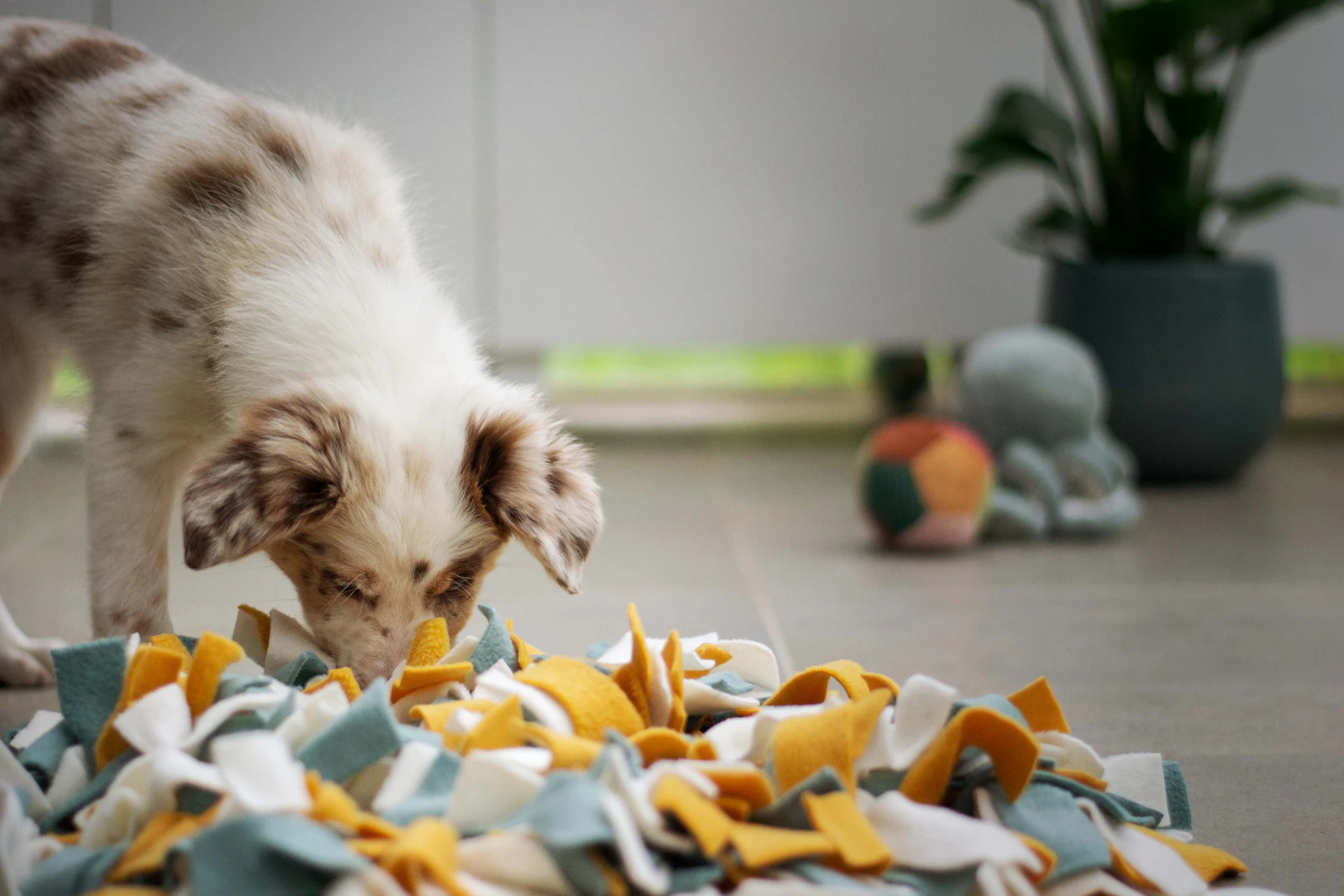
For more step-by-step scent activities, use our guide to 15 sniffing games for dogs.
11. Scatter part of a meal
On a clean rug, grass patch or snuffle mat, scatter a small portion of measured kibble where every piece is easy to reach. Start with a tight area so the puppy learns to use their nose. Supervise closely and pick up leftovers. Avoid unknown lawns that may contain chemicals, feces or unsafe plants.
12. Use a beginner food toy
Choose a durable toy designed for dogs and large enough for your puppy. Load it loosely so food falls out with simple movement. A beginner should not need to bite frantically, throw the toy or work through a densely frozen filling. You can make the activity harder later, after the puppy shows a relaxed understanding of the solution.
13. Roll kibble in a towel—loosely
Spread a towel flat, place a few pieces of kibble across it and make one loose fold. Let the puppy uncover the food. Add another fold only if the puppy succeeds calmly. Supervise throughout, and stop if they chew fabric or pull threads. Our DIY dog enrichment guide includes more household-material safety notes.
14. Make a simple muffin-tin search
Place food in several cups of a clean muffin tin and leave them uncovered for the first attempt. Once the puppy understands, cover one or two cups with dog-safe balls too large to swallow. Do not use hard objects the puppy may bite and damage their teeth on.
15. Explore a texture path
Arrange two or three stable surfaces—such as a rubber mat, a folded blanket and a piece of cardboard—on a non-slip floor. Scatter food nearby and let the puppy choose whether to step on them. Never drag the puppy across a surface. Confidence grows from safe choice and successful investigation.
16. Practice gentle cooperative handling
Touch the puppy briefly on a comfortable area such as the shoulder, then reward. Over multiple sessions, work gradually toward paws, ears, collar and mouth only while the puppy remains relaxed. One calm touch is enough at first. This activity can build positive associations with routine care, but it is not a substitute for professional help if the puppy is frightened or defensive.
17. Watch the world from a safe distance
Sit with your puppy where they can observe a person, bicycle, calm dog or household event without being overwhelmed. Reward relaxed looking and voluntary check-ins. Distance is your friend. Socialization means helping the puppy feel safe around the world; it does not mean greeting everyone.
18. Take a puppy-paced sniff walk
In a veterinarian-approved location, allow time to sniff instead of measuring success by distance. Keep the outing short, choose suitable terrain and avoid repeated jumping, forced running or crowded dog areas. A few minutes of calm investigation can provide physical movement, sensory information and confidence practice together.
19. Rotate, do not flood, the toy collection
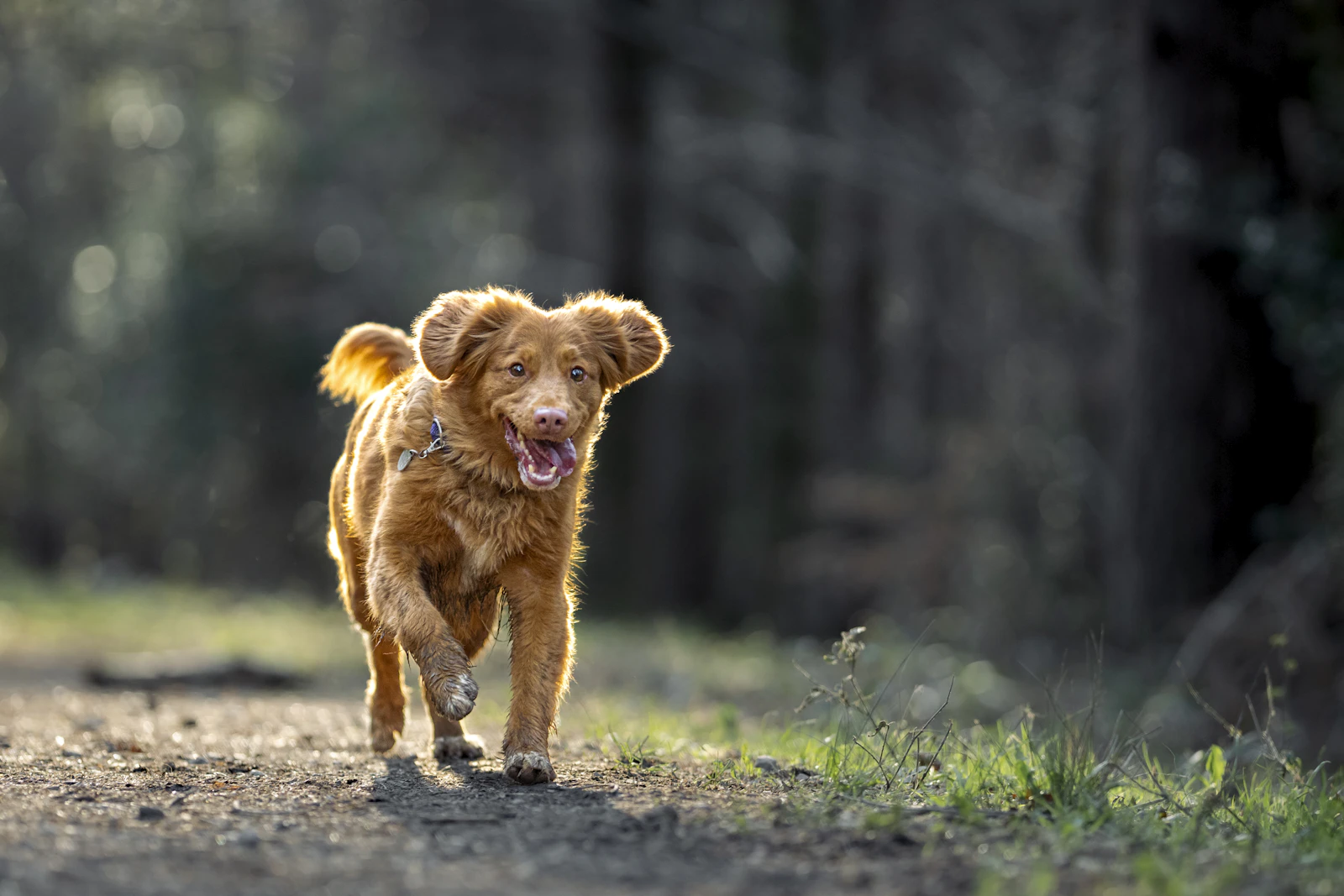
Leave out a small selection of appropriate toys and store the rest. Swap one or two every few days. Rotation can renew interest without continually buying new products. Keep a favorite comfort item available, and inspect every toy for loose pieces, sharp damage or an unsafe size.
20. Offer a safe independent activity
In a puppy-proof pen or other comfortable area, offer a safe chew or easy food toy while you remain nearby. Begin with very short periods so independence does not feel like sudden isolation. The aim is to help the puppy learn that calm solo time can be pleasant.
21. Play a calm choice game
Present two safe toys several feet apart and allow the puppy to approach either one. Join them briefly with the chosen toy. Choice itself is mentally engaging and gives you information about current preferences. Do not repeatedly remove the selected item to force a different decision.
How to plan mental stimulation for puppies each day
There is no universal number of enrichment minutes for every puppy. A realistic plan for mental stimulation for puppies depends on age, breed tendencies, health, sleep quality, previous experience and the intensity of the activity. Many young puppies learn well in sessions lasting only one to three minutes. An older puppy may enjoy several minutes, but concentration—not the clock—should decide when you stop.
Instead of scheduling a long “brain workout,” attach tiny activities to things that already happen:
| Part of the day | Simple activity | Purpose |
|---|---|---|
| After the morning potty break | Five name responses or hand targets | Connection and attention |
| Breakfast | Easy scatter or beginner food toy | Sniffing and problem-solving |
| Mid-morning | Nap in a quiet, safe space | Recovery and learning |
| Afternoon | Texture exploration or short sniff outing | Confidence and sensory novelty |
| Evening | Mat settling, trade game or toy search | Life skills and calm engagement |
| After activity | Potty, water and uninterrupted rest | Decompression |
On a busy day, a 10-minute dog enrichment game can be divided into two or three puppy-sized sessions. Consistency is more valuable than creating a spectacular setup once a week.
How to make puppy brain games easier or harder
The right difficulty produces investigation and progress. Too easy may hold little interest; too hard may produce frantic behavior, repeated failure or avoidance. Adjust one variable at a time.
- Make it easier: use visible food, reduce distance, remove distractions, uncover the puzzle or reward a smaller step.
- Make it harder: add one partly hidden item, increase distance slightly, introduce a familiar cue in a new room or wait one extra second.
- Change the reward: try kibble, a higher-value dog-safe treat, a favorite toy or access to sniffing.
- Change the environment: move between familiar rooms before attempting a busy outdoor setting.
- End early: finish after a good repetition instead of waiting for the puppy to fail.
A puppy who needs help has not “lost” the game. Resetting the task so they can succeed is good teaching. If a puzzle repeatedly creates distress or guarding, put it away and seek guidance rather than escalating the challenge.
Is your puppy bored, frustrated or simply tired?
Barking, chewing, zooming and grabbing clothing are often described as boredom, but those behaviors do not diagnose a single cause. A puppy might need a toilet break, food, water, safe chewing, relief from an overwhelming environment, more appropriate activity, medical attention—or sleep.
Pause the session if you see repeated disengagement, avoidance, sudden frantic biting, hard grabbing, barking at the puzzle, inability to take food normally, tucked posture or attempts to escape. Remove the challenge, meet immediate needs and offer a quiet environment. If behavior changes suddenly or is accompanied by pain, appetite changes, digestive problems, lethargy or other health concerns, contact your veterinarian.
Our broader mental stimulation for dogs guide explains how training, sensory exploration and problem-solving fit together across life stages. For a simple weekly structure, use the dog enrichment routine guide.
Frequently asked questions
How much mental stimulation does a puppy need?
There is no reliable one-size-fits-all daily quota. When planning mental stimulation for puppies, start with several very short opportunities built into normal care and watch the puppy’s response. One to three focused minutes may be plenty for a young puppy. Quality, success and recovery matter more than accumulating minutes.
Can mental stimulation tire out a puppy?
Concentrating, sniffing and learning can contribute to healthy satisfaction, but “tiring out” should not mean pushing until the puppy is exhausted. The best routine alternates suitable physical activity, mental engagement, calm connection, toilet breaks and sleep.
What is the easiest mental game for a puppy?
An obvious “find it” game is a strong starting point. Place one piece of kibble where the puppy can see it, say the cue and let them collect it. A name response or hand target is equally simple and builds a useful training foundation.
Are puzzle toys safe for puppies?
They can be when correctly sized, durable, easy enough for a beginner and closely supervised. Inspect the toy before every use, follow the manufacturer’s age and size guidance, and remove it if the puppy damages it or tries to swallow pieces. See our guide to choosing dog puzzle difficulty.
Can I use my puppy’s meals for enrichment?
Often, yes. Part of a measured meal can be used for training, scattering or an appropriate food toy. Keep nutrition balanced and account for all treats. Ask your veterinarian for advice if the puppy has dietary restrictions, grows poorly, eats too fast or has digestive concerns.
Should I socialize my puppy before vaccinations are complete?
Early socialization is important, but it should be planned around local disease risk and your veterinarian’s guidance. Safe options may include controlled exposure at home, being carried in public, meeting healthy known dogs or attending a well-run class with health requirements. Avoid unsanitized, heavily trafficked dog areas with unknown vaccination status.
What if my puppy is afraid of a game or new object?
Increase distance, reduce intensity and allow the puppy to opt out. Reward calm observation without luring them into a frightening situation. Persistent or intense fear deserves guidance from a veterinarian or qualified reward-based behavior professional.
Sources and further reading
- Pine Creek Animal Hospital: Puppy Training and Mental Stimulation
- Small Door Veterinary: How to Keep Your Dog Entertained Indoors
- American Veterinary Society of Animal Behavior: Puppy Socialization Position Statement
- American Veterinary Society of Animal Behavior: Humane Dog Training Position Statement
- U.S. Food and Drug Administration: Xylitol is dangerous for dogs
Editorial note: This article provides general educational information, not individualized veterinary, nutrition or behavior advice. Choose activities that suit your puppy’s age, health and behavior, supervise materials, and consult your veterinarian when health, vaccination, fear or safety is a concern.