
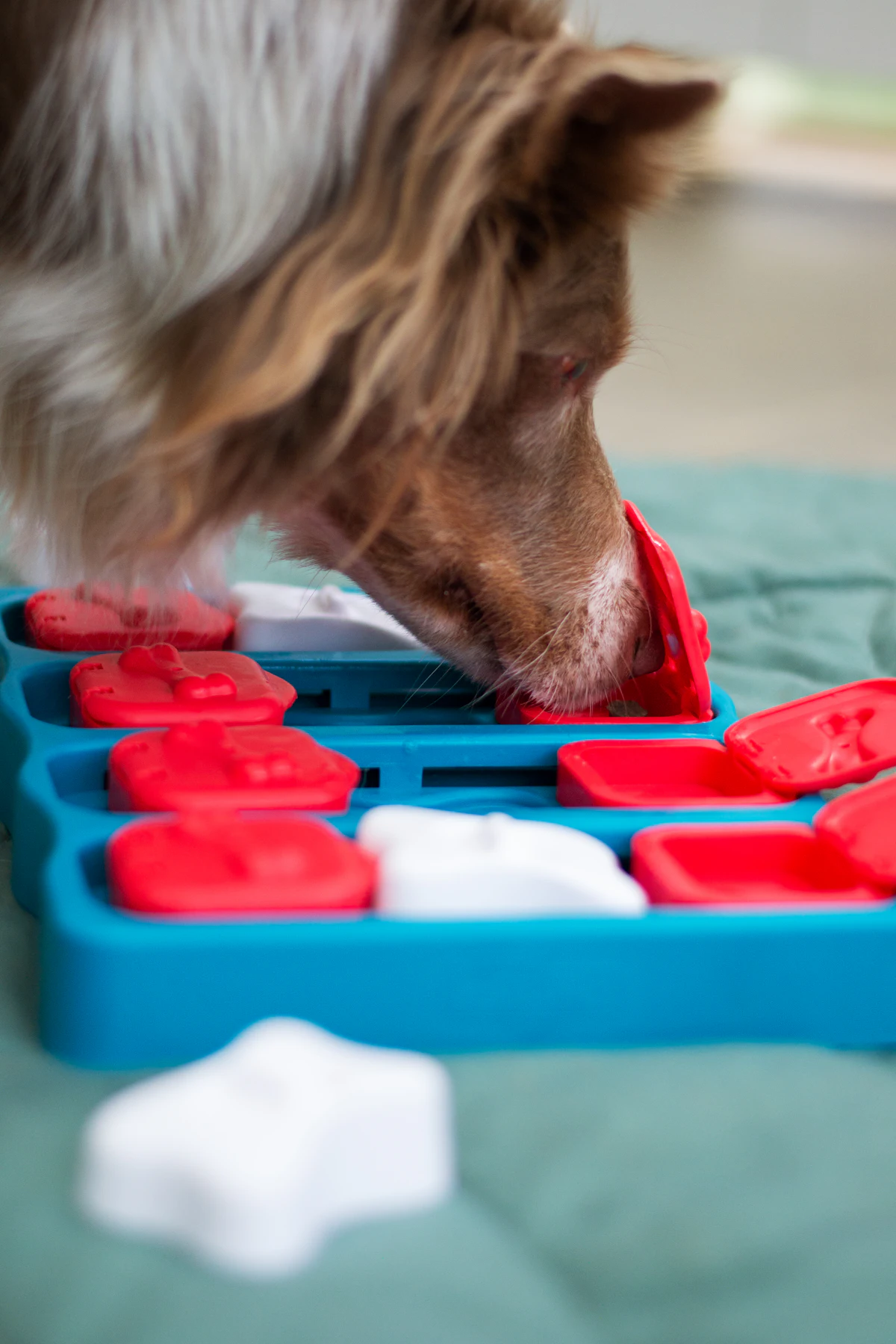

Quick answer: mental stimulation for dogs comes from activities that require attention, choice, memory, problem-solving or sensory processing. Sniffing, training, food puzzles, object games and exploring new environments can all provide useful mental work.
You do not need complicated equipment. In many homes, small changes to meals, walks and training are enough to create a much richer routine.

Why mental stimulation matters
Dogs spend much of their lives in predictable human environments. Mental stimulation adds manageable novelty and gives them opportunities to make decisions rather than passively waiting for the next routine event.
It may help reduce everyday boredom, but it should not be treated as a cure for anxiety, pain, aggression or other medical and behavioral concerns.
1. Let walks include sniffing
A walk is not only physical exercise. Give your dog time to investigate safe scents rather than asking for continuous forward movement.
2. Hide part of a meal
Use a few easy hiding spots around a room or secure yard. Start where food is visible and gradually increase difficulty.
3. Teach a new cue in tiny steps
Short training sessions require attention and memory. Work on one small step at a time instead of drilling a full behavior repeatedly.
4. Offer simple choices
Present two toys or two familiar activities and let your dog choose. Choice can add meaningful control to a dog’s routine.
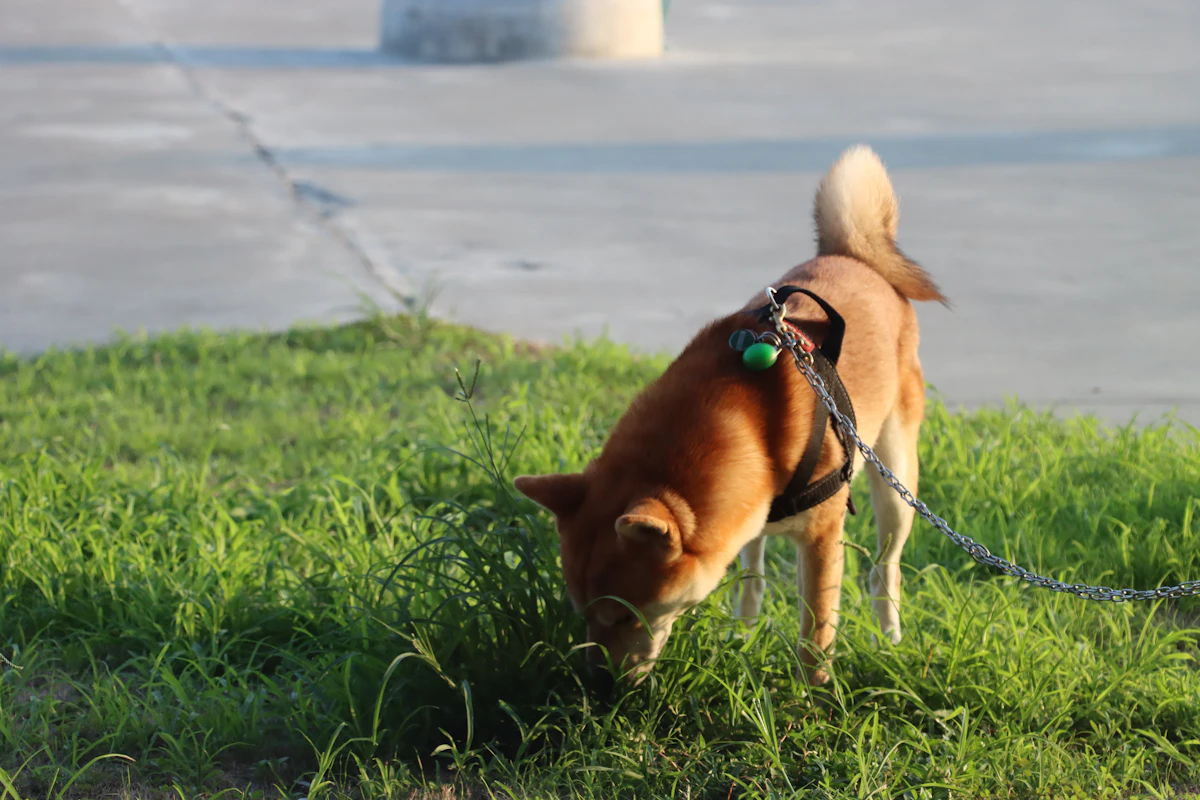
5. Rotate walking routes
New streets, paths and directions provide different scent and visual information even when the walk is similar in length.

6. Use beginner puzzle feeders
Choose a simple puzzle first. A dog that understands the mechanism is more likely to engage confidently than a dog facing a frustrating advanced puzzle.
7. Practice scent games
Search games ask the dog to use attention and smell together. Start with our 15 Sniffing Games for Dogs.
8. Teach toy names
Work with one item name until the dog reliably identifies it, then add a second. This creates a simple discrimination task.
9. Try shaping
Reward small voluntary actions toward a goal, such as touching a box or stepping onto a mat. Shaping encourages experimentation rather than waiting for physical guidance.
10. Change how food is delivered
Scatter feeding, snuffle mats, lick mats and food toys can turn part of a normal meal into an activity. Use measured portions rather than extra calories when possible.
11. Add safe novelty
A new walking surface, a cardboard box to investigate, a different room setup or a novel but calm environment can all create fresh sensory information.
12. Practice settling
Mental work is not only about stimulation. Learning to relax on a mat or bed around mild distractions requires attention and self-control.
How to tell if your dog needs more mental stimulation
Possible signs of everyday boredom can include persistent attention-seeking, repeatedly inventing activities, difficulty settling after basic needs are met or over-investing in small environmental events. These signs are not diagnostic and can also occur for medical or behavioral reasons.
Can a dog get too much mental stimulation?
Yes. Constant novelty, difficult puzzles and high-arousal games can leave some dogs more wired rather than calmer. Good routines include rest, predictable downtime and easy activities alongside harder ones.
How much mental stimulation is enough?
There is no universal number of minutes. A practical approach is to include several short opportunities throughout the day: a sniff-focused walk, five minutes of training, part of one meal in a search activity and some quiet chewing or licking.
A simple mental-stimulation routine
| Time of day | Example |
|---|---|
| Morning | Scatter part of breakfast |
| Midday | 5-minute training session |
| Afternoon | Sniff-focused walk |
| Evening | Easy food toy or lick mat |
Mental stimulation for different dogs
Puppies
Use very short sessions and easy success. Avoid turning every interaction into formal training.
Senior dogs
Low-impact scent searches and simple puzzles can provide useful engagement without demanding fast movement.
High-energy dogs
Do not rely only on physical exhaustion. Mix appropriate exercise with sniffing, problem-solving and calm routines.
Common mistakes
- Making every puzzle harder.
- Using too many food rewards without adjusting meals.
- Assuming a restless dog always needs more activity.
- Ignoring rest and sleep.
- Using enrichment as a substitute for medical or behavior assessment.
Frequently asked questions
Is training mentally stimulating?
Yes. Learning and practicing behaviors can require attention, memory and problem-solving, especially when sessions stay short and varied.
Are walks mentally stimulating?
They can be, particularly when dogs are allowed appropriate time to sniff and process their environment.
Do puzzle toys provide enough mental stimulation?
They can be one useful tool, but a varied routine usually includes scent, training, exploration, play and social interaction too.
Related guides
Continue with 30 Dog Enrichment Ideas, 15 Sniffing Games and our Dog Puzzle Toy Guide.
Frequently asked questions
How do I know if my dog is bored or just energetic?
You cannot diagnose boredom from one behavior. Look at the whole routine: exercise, sleep, social contact, health, age and opportunities to sniff and explore. Persistent behavior changes deserve professional assessment rather than simply adding more puzzles.
Is chewing mentally stimulating?
Chewing can be an enriching natural behavior when the item is safe and appropriate for the dog. It provides a different kind of engagement than training or puzzle solving.
Is watching out the window enrichment?
For some dogs, calm observation can provide sensory information. For others it increases barking or arousal. Judge the activity by the individual dog’s response.
What is the easiest mental game to start with?
A simple treat search is hard to beat: place a few rewards where the dog can see them, then gradually use easier hidden spots.
Mental stimulation without buying anything
Use walking-route changes, household-object searches, hide-and-seek, toy-name training, hand targets and choice games. The quality of the task matters more than the price of the equipment.
Mental stimulation is not a substitute for physical needs
One of the most misleading ideas in dog content is that a “brain game” can automatically replace exercise. Mental stimulation for dogs and physical activity overlap, but they are not identical. A scent search may satisfy curiosity and concentration; a walk may provide movement, environmental information and toileting; play may support social interaction and physical coordination.
PetMD’s guide to mental stimulation treats mental work as one part of a broader care routine, while the AKC brain-game guide uses training, route changes and object games to create cognitive variety. That is a useful model: mix several kinds of work instead of relying on one puzzle toy.
How to build difficulty without creating frustration
Progress should be small and observable. Add one more hiding spot, increase distance slightly, introduce one new object or move a familiar game to a new room. If your dog becomes less successful after a change, return to the easier version. Progress is not linear, and there is no benefit in forcing a dog to “solve” an advanced task they no longer enjoy.
Measure success by behavior, not duration
A useful session often ends with the dog able to transition back to normal life. If an activity leaves your dog frantic, guarding equipment or unable to settle, it may be too difficult or too arousing for that moment. Mental exercise should add quality to the day, not simply keep the dog occupied for as long as possible.