

Quick answer: the best indoor dog activities on rainy days mix sniffing, problem-solving, short training sessions, controlled movement and calm food enrichment. You do not need to recreate a full outdoor walk in your living room.
A useful rainy-day routine is several short jobs with rest between them—not one long, frantic session designed to exhaust your dog at any cost.
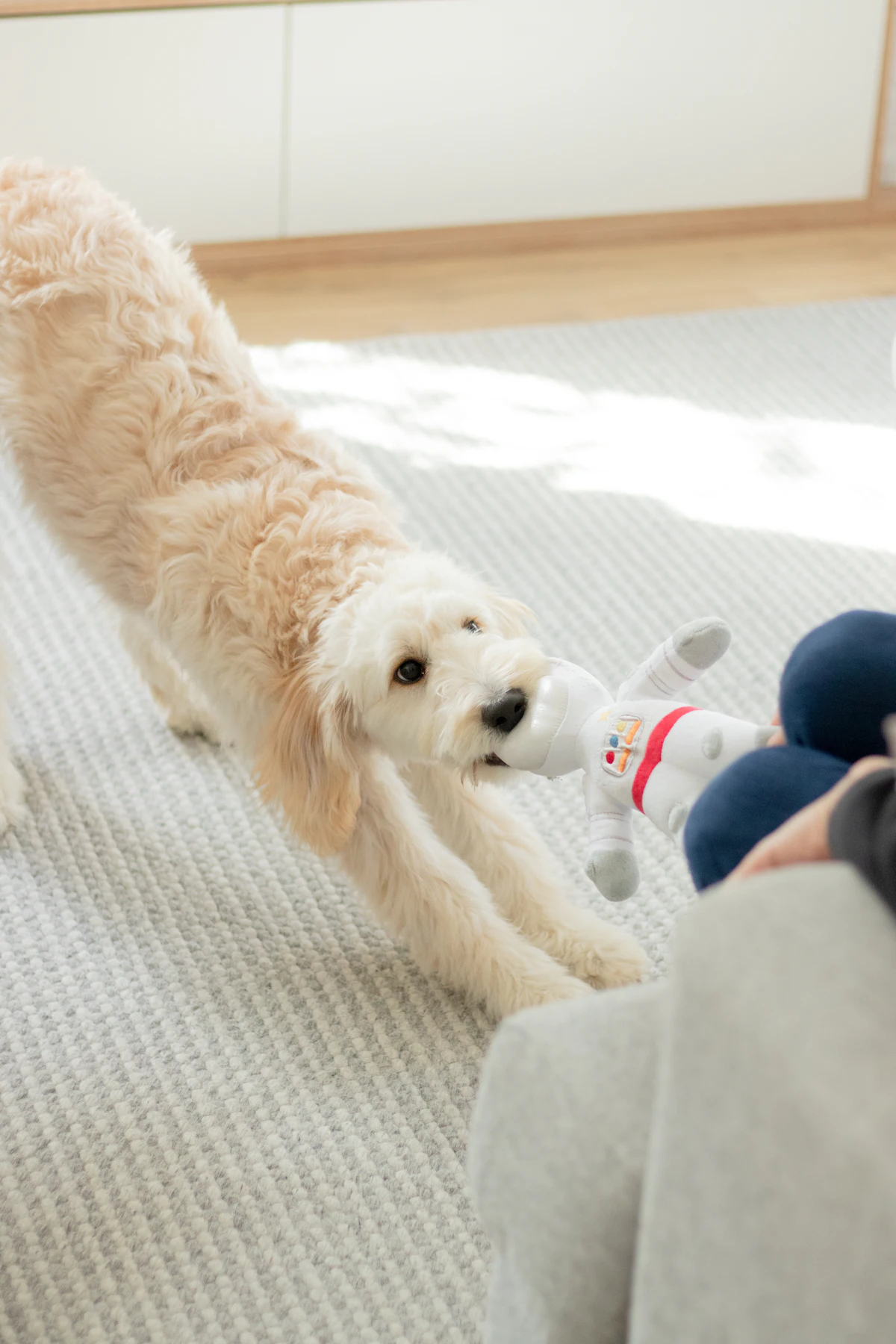
Before you start: make the room safe
- Use non-slip rugs or mats on slick floors.
- Move breakable objects out of the play area.
- Keep high-speed games away from stairs and furniture edges.
- Supervise cardboard, fabric and food puzzles.
- Use part of normal food portions when possible.
- Adjust activity for puppies, seniors and dogs with medical limitations.
1. Play “find it”
Show your dog one treat, toss it a short distance and say “find it.” After a few easy repetitions, hide rewards in obvious locations around one room. This is an excellent first scent game because the dog learns the rules quickly.
2. Scatter part of a meal
Instead of serving all food in a bowl, scatter part of it across a snuffle mat, clean rug or several safe locations. Keep the first search area small.
3. Hide-and-seek with a person
Have one person hide behind a door or around a corner while another releases the dog. Keep early hiding spots simple and reward the dog for finding the person.
4. Teach a hand target
Present an open palm a few inches from your dog’s nose. Mark and reward when the dog touches it. Once understood, move your hand slightly to create a tiny indoor movement game.
5. Cardboard box search
Place a few open boxes around the room and put food in one or two. This works best for dogs that investigate cardboard without eating it. If your dog swallows cardboard, use sturdy reusable containers instead.
6. Towel roll
Scatter a few pieces of dry food over a towel and roll it loosely. Let your dog unroll it. Skip this game for fabric chewers.
7. Muffin-tin puzzle
Place food in several wells and cover a few with dog-safe balls or sturdy objects too large to swallow. Leave some wells uncovered for a beginner.
8. Teach a toy name
Use one familiar toy. Say the name, present it and reward your dog for touching or picking it up. Once the association is strong, place it beside another object and ask for the named toy.
9. Build a low-risk obstacle route
Create a path around chairs, over a low stable pole, onto a mat and around a cone. The goal is controlled movement and body awareness, not jumping height.
10. Play controlled tug
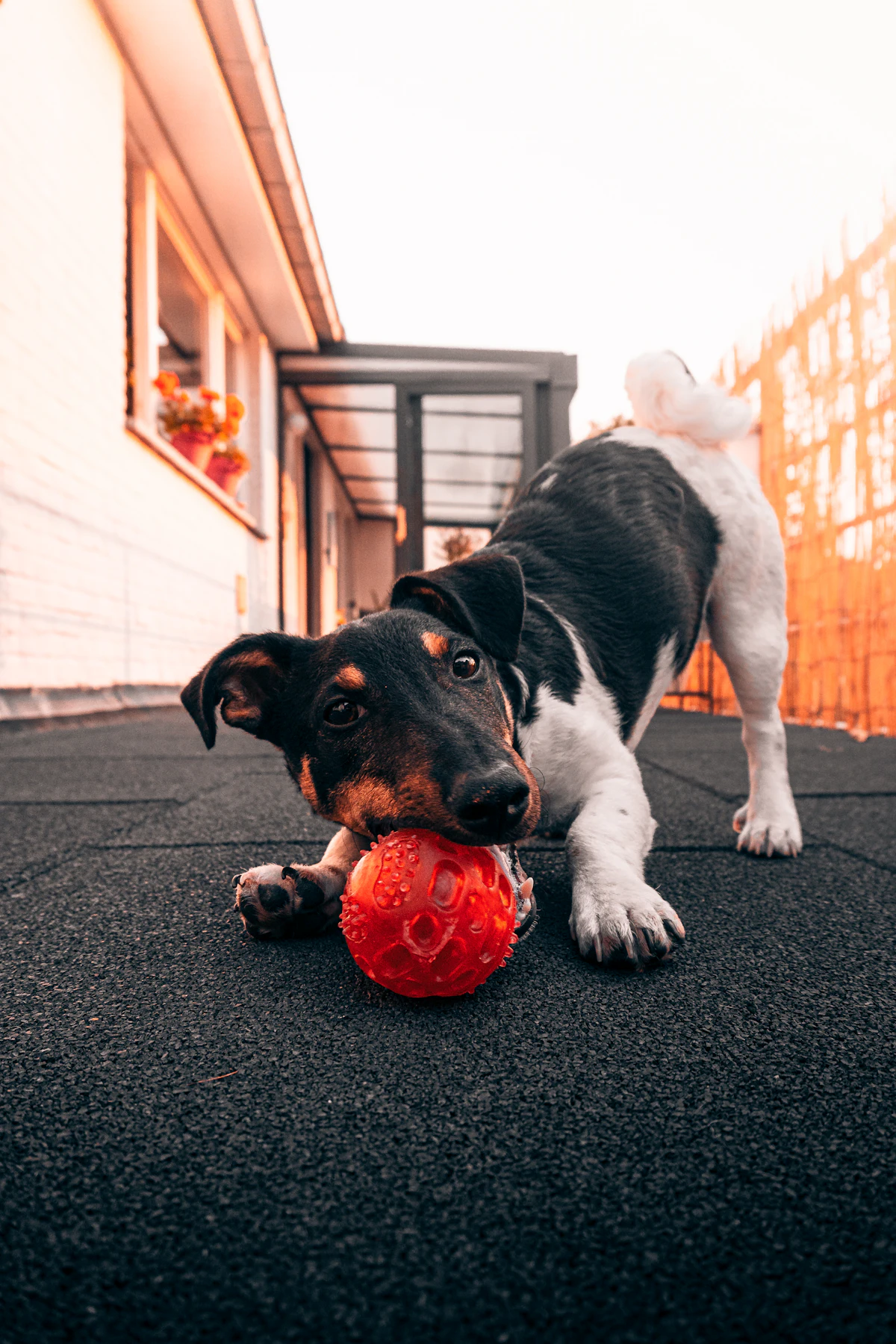
Use a suitable tug toy and practice start, pause and release cues. Keep sessions short, particularly on slippery floors.
11. Rotate toys
Put some familiar toys away for several days and reintroduce them later. Rotation can add novelty without constantly buying new products.
12. Use a simple food toy
Pack an appropriate food toy loosely with part of a normal meal. A beginner should be able to remove food quickly enough to understand the game.
13. Try a lick mat
Spread a thin layer of dog-appropriate soft food across the surface. A lick mat is useful when you want quieter engagement rather than running or chasing.
14. Run a five-minute training circuit
Rotate through easy cues such as touch, sit, down, place and recall. Changing the task every few repetitions keeps the session more interesting than drilling one behavior.
15. Practice calm mat work
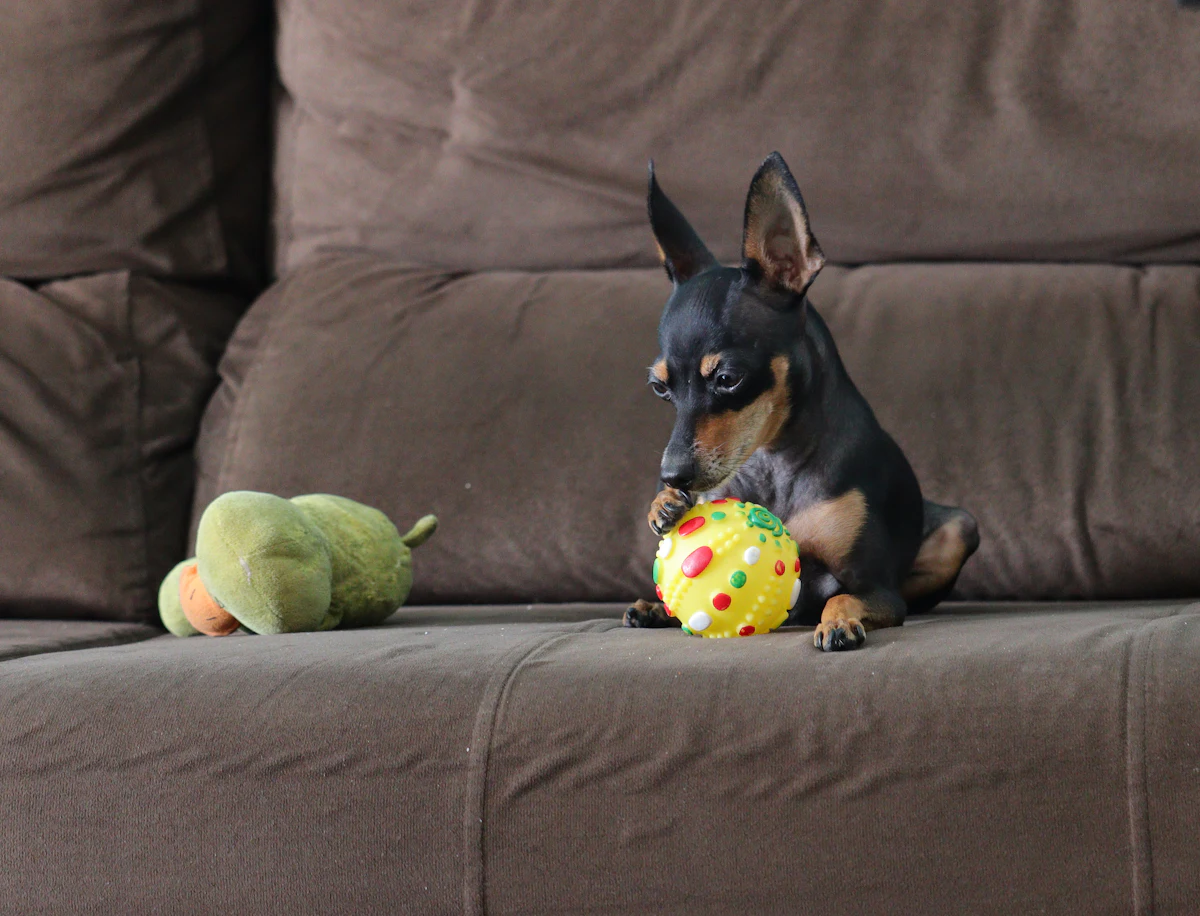
Reward relaxed behavior on a bed or mat. Rainy-day enrichment should teach both engagement and the ability to switch off.
16. Make a short scent trail
Create a trail with a few food rewards or the scent of a favorite toy, ending in a small jackpot. Keep the first trail straight and easy.
17. Let your dog choose
Present two familiar safe options—a toy and a scent game, for example—and let your dog select one. Choice can make an enrichment routine feel less repetitive.
A 45-minute rainy-day plan
You do not need to keep your dog active for 45 continuous minutes. Try a spaced routine:
| Time | Activity |
|---|---|
| 0–5 min | Easy scent search |
| 5–20 min | Rest while you continue your routine |
| 20–25 min | Short training circuit |
| 25–40 min | Rest |
| 40–45 min | Lick mat or calm mat work |
Best indoor activities by dog type
High-energy dogs
Use a mix of nose work, controlled tug, recall games and training rather than trying to create endless indoor sprinting.
Puppies
Keep sessions very short, prioritize easy success and avoid repetitive jumping on developing joints.
Senior dogs
Low-impact scent searches, simple food puzzles and calm training can provide engagement without demanding high-speed movement.
Dogs that are not food-motivated
Use toy searches, tug, hide-and-seek with people, exploration of safe objects and training with play as the reward.
How long should indoor enrichment last?
Short sessions are often enough. Five to fifteen focused minutes can provide meaningful engagement, especially for scent and problem-solving activities. End while the dog is still successful rather than waiting for frustration.
Can indoor games replace a walk?
Indoor activities can help on bad-weather days, but they do not automatically replace toileting, appropriate physical exercise or outdoor sensory exposure. When conditions are safe, even a shorter sniff-focused outdoor break can complement indoor enrichment.
Signs your dog needs a break
Stop or simplify if your dog becomes frantic, starts grabbing objects indiscriminately, repeatedly barks at the activity, avoids it, guards it or cannot settle afterward.
More rainy-day ideas
For additional options, browse 30 Dog Enrichment Ideas, 10-Minute Dog Enrichment Games and 15 Sniffing Games for Dogs.
Further reading
The American Kennel Club’s indoor games guide and its indoor scent-game guide are useful references for building safe, varied indoor sessions.
How to choose indoor dog activities by goal
| Goal | Good indoor choices | What to avoid |
|---|---|---|
| Use the nose | Find it, box search, scent trail | Making the first search too difficult |
| Move safely | Recall game, low obstacle route, controlled tug | High-speed turns on slippery floors |
| Think and learn | Hand target, toy names, short training circuit | Long repetitive drilling |
| Settle | Mat work, lick mat, easy food toy | Adding more arousal when the dog is already tired |
High-ranking indoor-activity guides tend to combine movement with thinking rather than presenting the day as a choice between exercise and mental stimulation. The AKC indoor activity guide, for example, mixes games, training and physical activity. That same balance is useful at home: a short scent search can be followed by movement, then quiet settling instead of one continuous high-energy session.
Common rainy-day mistakes
One common mistake is trying to “wear the dog out” indoors with nonstop fetch or chase. Another is making food puzzles progressively harder every time. A better approach is to use several different types of activity across the day and to keep each one easy enough that the dog understands how to participate. If weather conditions improve, a short outdoor sniff break can add sensory variety that indoor games cannot fully replace.
One final rule for indoor activity days
Do not judge success by how exhausted your dog looks. A good indoor routine should leave the dog able to settle and return to normal behavior. If an activity repeatedly creates frantic behavior, shorten it, simplify it or choose a calmer alternative.