
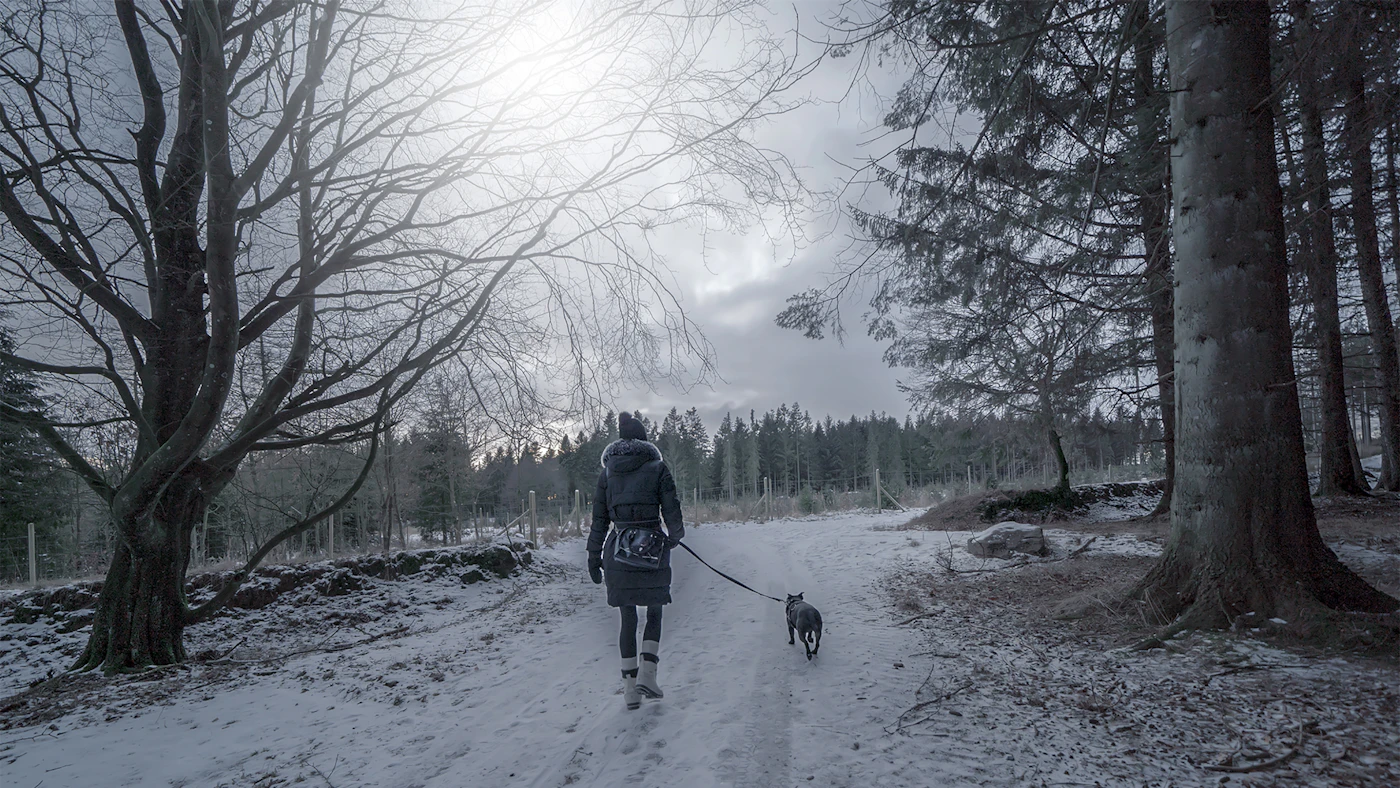

Quick answer: Safer winter dog walks depend on the dog, the surface and the weather—not one universal temperature rule. Choose a short, low-risk route, watch for discomfort, protect and clean paws, and return home before your dog struggles. Use sniffing and simple choices to make a modest outing interesting, then add indoor enrichment when conditions are unsuitable.
Winter can mean snow and ice, but it can also mean cold rain, wind, darkness and heavily treated sidewalks. A useful plan covers all of those. You do not need to turn every walk into an endurance event to give your dog something worthwhile to investigate.
There is no single cold-weather limit for every dog
A thick-coated adult used to cold weather and a small, short-coated senior may respond very differently to the same day. Age, body condition, health, coat, acclimatization, wind and wetness all matter. The ground may also be unsafe even when the air feels tolerable.
The Cornell veterinary winter-safety resource describes winter hazards and practical precautions. It is a better starting point than assuming a social-media temperature chart can provide an individualized answer.
Ask your veterinarian about your dog’s specific risks, especially for puppies, older dogs and individuals with medical or mobility concerns. Do not use breed appearance alone to decide that a dog is comfortable.
The aim of winter dog walks is to provide suitable movement, toilet access and exploration while managing exposure. If the surface is icy, visibility is poor or your dog shows discomfort, shortening or replacing the outing is a sensible adjustment.
10 ways to make winter dog walks safer and more enriching
These ideas emphasize planning, choice and observation. They are not a promise that equipment can make any weather safe. When conditions exceed your dog’s comfort or your ability to manage footing, change the plan.
1. Check the whole forecast and the ground
Look at wind, precipitation, visibility and recent freezing conditions as well as temperature. Rain followed by a freeze can leave difficult surfaces on a familiar route. A clear sky does not tell you whether a shaded sidewalk is icy.
Check the first few steps before committing to a longer route. If your dog or you cannot walk securely, choose another surface or return home. Do not pull a reluctant dog across ice to complete the normal circuit.
A quick condition check at the door can prevent a much harder decision halfway around a loop. Keep a short backup route available for toilet needs when the longer walk is unsuitable.
2. Choose routes with easy exits
Prefer familiar, sheltered routes where you can return quickly. Several short loops near home may be easier to adapt than a single long route with no convenient way back. Avoid exposed paths, steep icy slopes and areas where traffic leaves little room to maneuver.
Check whether snowbanks block sightlines or force pedestrians into roads. A usual path may function differently after snow removal. Choose safety over an attractive destination.
For unfamiliar trails, verify current access and conditions with the land manager. Winter enrichment does not require a remote location; a modest neighborhood route can still offer fresh smells.
3. Use sniff stops instead of chasing distance
Let your dog investigate safe spots while remaining on a controlled leash. A brief pause beside a clean verge or sheltered tree can add interest without covering more ground. Avoid encouraging sniffing or licking near road chemicals, trash or antifreeze spills.
Choice can be small: which safe side of the path to investigate, whether to pause or when to turn toward home. It does not require off-leash freedom or access to hazards.
Our sniff-walk guide explains this style of exploration. In winter, the key is balancing investigation with exposure; standing still in cold wind may become uncomfortable even if the dog is interested.
4. Introduce coats and boots before relying on them
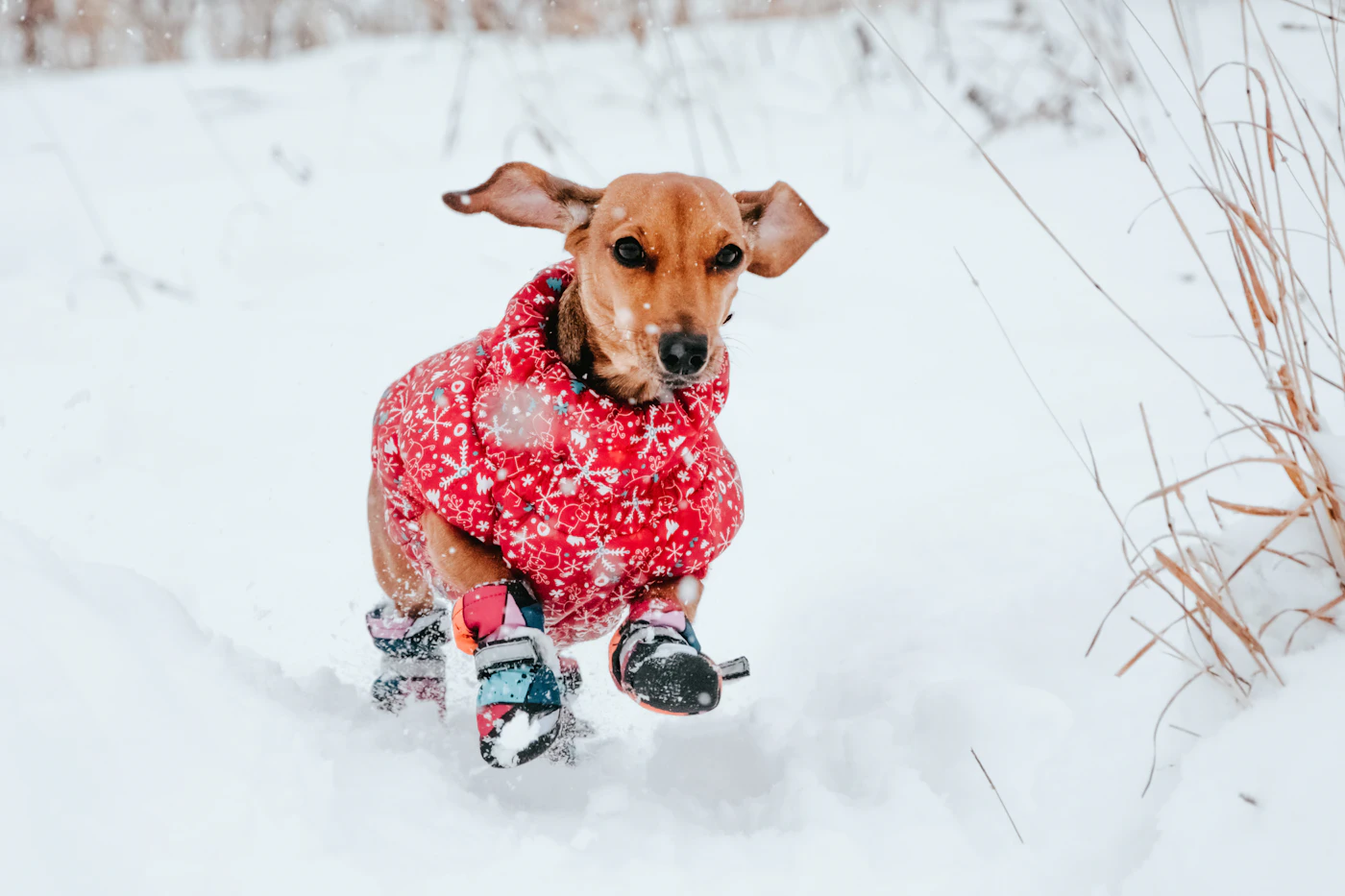
Some dogs may benefit from suitable clothing or paw protection, but fit and tolerance matter. Practice wearing equipment indoors in short, rewarded sessions. Check that the dog can walk normally and that straps do not rub or restrict movement.
A coat should stay secure without tangling the leash or covering areas that make toileting difficult. Wet clothing may need changing. Boots need a secure fit and should be checked during the walk.
Equipment does not remove the need to observe the dog. If they freeze in place, repeatedly remove a boot or move awkwardly, return to a simpler setup and seek advice rather than insisting they continue.
5. Keep leash control and identification current
Use a dependable leash and well-fitted equipment. Check clips and straps, especially if gloves make handling less precise. Keep identification up to date. Darkness, snow and unfamiliar noise can make an ordinary route more demanding.
Do not let a dog off leash simply because a snowy field appears empty. Hidden hazards, wildlife and access rules still apply. Maintain enough control to prevent the dog reaching a road, frozen water or another animal.
Avoid attaching multiple dangling items that catch on vegetation or equipment. Choose visibility features proportionate to the route, and check that they do not distract or worry the dog.
6. Plan for darkness and reduced visibility
Use appropriate reflective or lighted equipment for both person and dog, while remembering that visibility aids do not create a safe walking space where none exists. Choose lit routes and cross roads where drivers can see you.
Keep your hands available for leash management rather than balancing a phone, coffee and spare equipment. A small, organized walking kit can make a short winter outing easier to manage.
If visibility deteriorates in fog, heavy snow or rain, shorten the walk. You should be able to judge footing and see approaching people, dogs and vehicles with enough time to respond calmly.
7. Avoid chemicals, spills and unsafe water
Steer away from road-treatment piles, garage spills and unknown puddles. Prevent licking treated surfaces or drinking runoff. Frozen ponds and lakes are not play areas; keep your dog away even when the surface appears solid.
The ASPCA cold-weather safety guidance warns about de-icing chemicals and antifreeze. If you suspect a dog has ingested a toxin, contact a veterinarian or appropriate animal poison service promptly. Do not wait for symptoms before seeking instructions.
Use pet-appropriate products on your own property according to their labels, but do not assume “pet-friendly” means harmless if swallowed. Manage access and clean paws after exposure.
8. Watch the dog throughout the outing
Repeated paw lifting, shivering, reluctance, slowing or seeking shelter can indicate that the outing needs to end. Watch for changes from your dog’s usual behavior. Do not dismiss discomfort because a dog of the same breed seems fine nearby.
Cornell’s cold-weather advice notes that lifting feet or reluctance to walk can be a warning. Respond by moving toward safety, not by adding encouragement to push farther.
Weakness, collapse, marked confusion, breathing difficulty or suspected cold injury require urgent veterinary attention. Move the dog to a safe environment and contact a veterinarian for instructions. A winter walk should never become an experiment in tolerance.
9. Clean and dry after the walk
Check paws, legs and the underside of the body for snow, salt, grit and irritation. Clean appropriately and dry thoroughly, including between toes. Remove wet clothing and check equipment-contact areas.
If you see persistent limping, cracks, redness or pain, ask your veterinarian about care. Do not apply human medicines or unfamiliar products without guidance. Prevent licking of residue while you organize cleanup.
Set up a simple return station near the door: towel, suitable cleaning supplies and a place for wet gear. A repeatable routine is more useful than an elaborate kit you rarely use.
10. Replace lost outdoor time thoughtfully
When a walk must be shorter, offer an appropriate indoor activity rather than an intense substitute workout. Try an easy food search, familiar training, toy choice or a safe supervised food toy. Match the activity to what the dog needs afterward.
A dog who is physically energetic may enjoy a controlled movement game on non-slip flooring. A dog who has just experienced noisy wind and traffic may prefer quiet rest. Shorter outdoor time does not mean every remaining hour must be filled.
Our indoor activities guide includes options for different needs. Keep the dog’s whole day balanced with social contact, appropriate movement, mental engagement and recovery.
Choose a winter plan by conditions
The table below is a planning aid, not a veterinary clearance chart. If your dog’s needs or local conditions make a row unsuitable, use a safer alternative.
| Conditions you notice | Practical adjustment | Useful enrichment |
|---|---|---|
| Cold but secure footing | Short familiar loop | Safe sniff stops |
| Wind and cold rain | More sheltered, shorter route | Quiet search afterward |
| Ice on usual paths | Avoid the surface or postpone | Low-speed indoor games |
| Dark, poor visibility | Well-lit route close to home | Brief training before or after |
| Dog reluctant or uncomfortable | End the outing | Rest and assessment |
| Possible illness or injury | Contact your veterinarian | Follow individualized advice |
Set a turnaround point before you leave, but remain willing to turn sooner. A plan is a ceiling, not an obligation. The return journey counts toward exposure and effort.
Keep notes when you are learning your dog’s preferences: weather, surface, clothing, length and how they behaved afterward. Those observations can help a veterinarian advise you and make future outings more predictable.
Adapt for puppies, seniors and dogs with health concerns
Puppies may need frequent, brief toilet opportunities without a long recreational walk. Ask your veterinarian about vaccination and local disease risks as well as cold exposure. Keep early outings simple and positive.
Senior dogs may have reduced mobility or other health changes that make icy ground and long standing periods uncomfortable. Choose level surfaces and easy exits. A familiar short route with good footing may be more useful than a novel but difficult trail.
Dogs with breathing, heart, endocrine, orthopedic or other concerns need individualized guidance. Do not infer a safe activity level from an online breed list. If behavior or endurance changes suddenly, seek veterinary advice.
Clothing and enthusiasm should not override those limitations. A dog can be eager to leave home but still need you to make the decision to return.
Food, hydration and recovery still matter
Carry water when the outing warrants it and ensure fresh drinking water is available at home. Snow is not a planned replacement for water. Observe drinking and general health as part of the whole routine.
Do not automatically add food because the season is cold. Some dogs expend more energy outdoors; others become less active. Ask your veterinarian about suitable portions and body condition rather than making a blanket seasonal increase.
After a walk, provide a dry, comfortable place to rest. A dog who has had an exciting outing may not need an immediate puzzle. Our daily enrichment routine can help you alternate activity and recovery without filling every quiet moment.
Common winter-walk mistakes
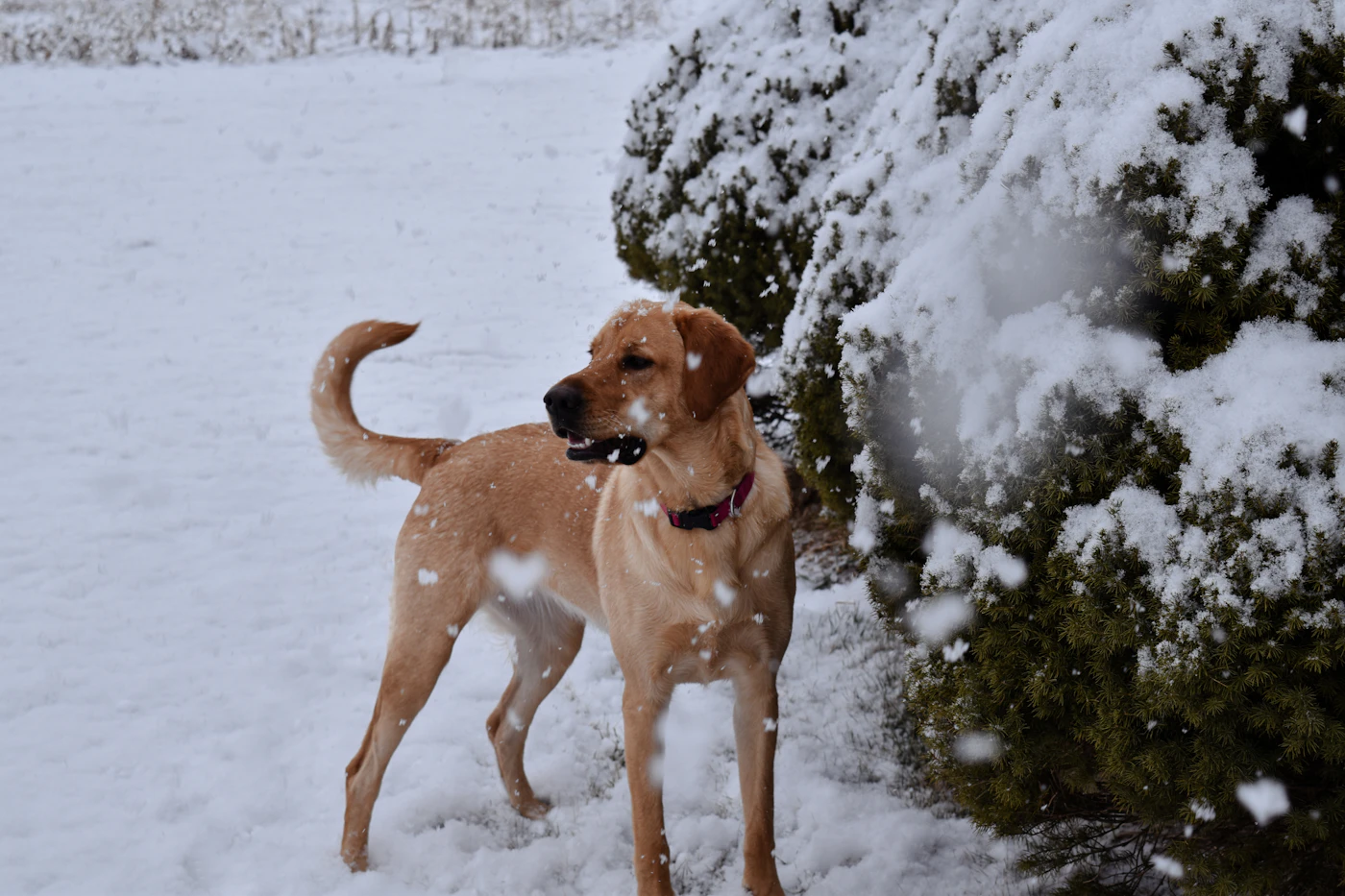
One mistake is treating a dog’s coat as complete protection. Another is focusing on air temperature while ignoring ice, chemicals or darkness. All can make an otherwise familiar walk unsuitable.
A third is demanding the normal distance because routine feels important. Routine can preserve its useful parts—leaving calmly, toileting, sniffing and returning—while becoming shorter. Consistency does not require identical mileage.
Finally, avoid making every cold-weather outing a high-excitement snow game. Repeated fast turns on unstable ground or chasing near frozen water adds risk without being necessary for enrichment.
Frequently asked questions
How cold is too cold to walk a dog?
There is no universal cutoff that safely covers every dog and condition. Health, coat, size, age, wind, wetness and footing matter. Ask your veterinarian about your dog and shorten the outing whenever you notice discomfort.
Do all dogs need winter coats?
No. Some benefit from an appropriate coat; others may not. Fit, movement and comfort matter, and equipment should be introduced gradually. A coat is not permission to stay outside indefinitely.
Are dog boots essential?
Not for every dog or route. They may help with particular surfaces or paw protection, but they need proper fit and practice. Avoid hazardous ground when possible and inspect paws regardless of whether boots are used.
Can I skip a walk in dangerous weather?
You should adapt to unsafe conditions while still planning appropriate toilet access and care. Use short safe opportunities where possible and suitable indoor enrichment. A veterinarian can help plan around a dog’s medical or mobility needs.
Does a short sniff walk count as enrichment?
Yes, safe exploration can be a useful part of a dog’s day. It does not need to cover a large distance. Balance it with appropriate physical activity and other needs across the routine.
Keep winter outings flexible
A successful winter walk ends with a dog who is safe, comfortable and able to recover normally. Check conditions, choose an easy exit and let the dog’s responses guide you. The best winter dog walks are not always the longest; they are the ones that fit today’s dog and today’s weather.
Editorial note: This article provides general seasonal planning information, not individualized medical advice. Seek prompt veterinary guidance for suspected toxin exposure, cold injury, breathing problems or other health concerns.