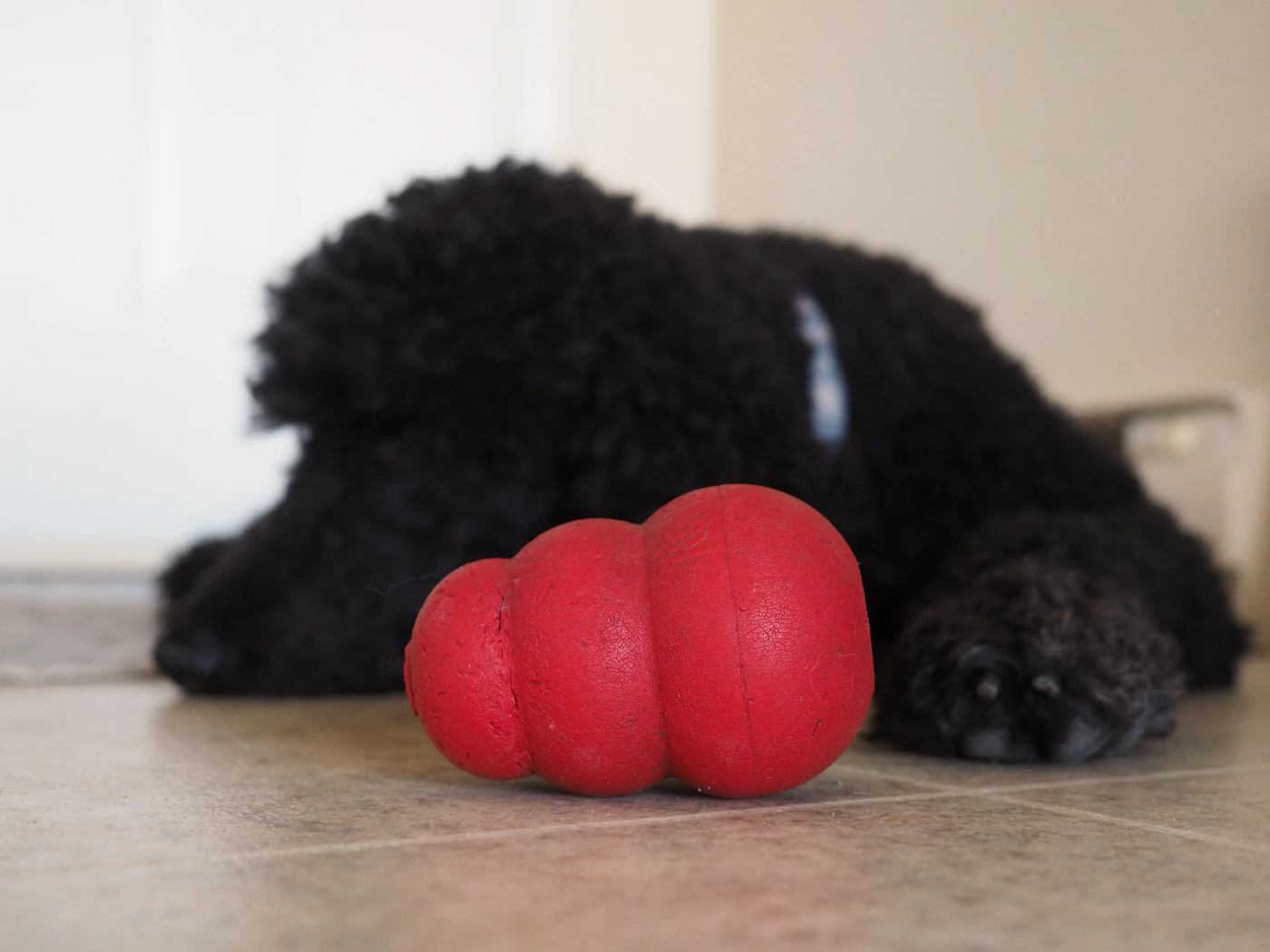

Quick answer: To learn how to stuff a KONG, start with a correctly sized, intact food-stuffable toy and loose pieces of your dog’s normal food. Make the first rewards easy to remove, supervise and increase difficulty gradually. Wet food or a small suitable topping can change the texture, but dense packing and freezing are not necessary for a beginner.
A stuffed toy is most useful when the dog understands how to access the food and can do so comfortably. A mixture that looks impressive in a recipe video may be too rich, too difficult or unsuitable for your dog’s diet. This guide prioritizes easy starts, measured portions and practical cleanup over elaborate fillings.
Choose the right toy before choosing a recipe
KONG is a brand with different product types, materials and sizes. This article concerns toys specifically designed to be stuffed with food, not every item carrying the brand name. Check the instructions for your exact model.
Use the manufacturer’s size and chewing-strength guidance, then observe your dog with the toy. It should not be small enough to swallow or become lodged in the mouth. Inspect for cracks, missing pieces and damage before every use. A previous gentle session does not make future supervision unnecessary.
The KONG FAQ includes sizing, inspection, stuffing and cleaning advice, and states that no dog toy is completely indestructible. Manufacturer guidance is useful for handling the product; it is not a substitute for assessing your dog’s behavior.
Dogs who rapidly dismantle toys, swallow rubber or guard food need a different safety plan. Ask your veterinarian or a qualified reward-based professional when medical or behavior concerns affect feeding activities.
How to stuff a KONG for a beginner
Begin with familiar food and a quiet setting. Prepare the toy while the dog is elsewhere so they do not have to wait beside a growing food display. Put it on a clean, suitable surface and let the dog approach voluntarily.
Use these stages as options, not deadlines. A dog can stay with loose food indefinitely if that is the version they enjoy safely.
Stage 1: Loose, easy rewards
Put a small number of suitable dry food pieces inside. Show the dog that food can fall out with a simple nudge. Avoid wedging large pieces into the opening. The first attempt should produce a quick, clear success.
A beginner does not need the cavity full. A tiny portion lets you observe how the dog uses the toy and makes it easy to stop before frustration or rough chewing begins.
Stage 2: A little familiar soft food
If loose pieces are easy, add a small amount of the dog’s usual wet food or another suitable familiar binder near accessible food. Keep the mixture loose enough that the dog can make progress.
Do not pack a whole meal tightly just because the previous attempt finished quickly. Change texture in small increments. A longer task is not automatically more satisfying.
Stage 3: A modest increase in challenge
After comfortable use, slightly increase the food amount or change the distribution. If the exact product permits freezing and it suits your dog, a partially chilled or modestly frozen filling may be an option later.
Watch the response rather than the clock. If the dog repeatedly throws the toy, bites it forcefully, barks or leaves most food behind, return to an easier setup. The goal is successful engagement, not winning a struggle against a frozen block.
The manufacturer’s stuffing guide describes combining foods and adjusting challenge. Use the part that suits your dog, not the most difficult version available.
9 easy filling ideas
These ideas describe combinations and textures, not nutritionally complete recipes. Base the serving on the dog’s usual diet whenever possible and keep any extras small. An ingredient suitable for one dog may be inappropriate for another.
1. Plain loose kibble
Use a small portion of the dog’s measured dry food. Choose pieces that can exit easily without becoming wedged. This is the simplest way to discover whether the dog understands moving the toy to release food.
For a first introduction, place a few pieces just inside the larger opening. You can also put one piece beside the toy to encourage a relaxed approach. Do not add a complicated filling until this interaction is comfortable.
2. Kibble with a small wet-food finish
Add a little of the dog’s normal complete wet food near the accessible opening, leaving the interior mostly loose. The familiar smell can help some dogs investigate while keeping most rewards easy to release.
This is a texture change, not a reason to increase calories. Measure both foods and adjust the meal appropriately. Ask your veterinarian if combining products complicates a prescribed diet.
3. Usual complete wet food
For dogs who normally eat wet food, a small, loosely placed serving can be enough. Avoid pressing it firmly into every corner. Leave accessible food near the opening so the dog does not have to work through a difficult surface first.
Choose food already tolerated by the dog. The toy itself is new; adding several new ingredients at the same time makes it harder to understand any digestive or behavioral response.
4. Properly softened normal kibble
If suitable under the food’s preparation guidance, soften a measured portion with water and use a small amount once the texture is appropriate. Keep it easy to access and follow safe handling and storage directions.
Do not leave moist food sitting in a toy for hours before use. Prepare a modest portion and deal with leftovers promptly. Softened food may be useful for texture variety, but dental or swallowing concerns still need veterinary advice.
5. Kibble with a little plain pumpkin puree
A small amount of plain pumpkin puree can add moisture if your dog tolerates it. Confirm that it is not sweetened or spiced pie filling. Use normal food as the main component rather than making pumpkin the whole meal.
Start with less than you think you need. You can change consistency without creating a large serving. Pumpkin is an optional ingredient here, not a treatment recommendation for digestive problems.

6. Usual wet food with soft cooked carrot
A small amount of plain, soft cooked carrot can provide another texture for dogs who tolerate it. Cut or mash it to suit the dog and avoid large, hard pieces. Do not use seasoned leftovers or foods cooked with onion or garlic.
The complete food remains the base. If your dog is prone to swallowing chunks, use a simpler smooth texture or ask your veterinarian whether food toys are appropriate.
7. A little mashed banana with normal food
Mash a small amount of plain banana and combine it with familiar food if it fits your dog’s diet. Remove the peel and avoid adding sweetened spreads. The purpose is a small flavor change, not a fruit-filled replacement meal.
Because dogs differ in tolerance and calorie needs, no single spoonful is right for every size. Keep portions modest and introduce only one new ingredient at a time.
8. Plain unsweetened yogurt with familiar food
For a dog who tolerates dairy and has no relevant dietary restriction, a small amount of plain unsweetened yogurt may work as a binder. Read the full ingredient list and avoid sweeteners or flavored desserts.
Skip dairy if it causes digestive trouble or conflicts with veterinary advice. A dog does not need yogurt to enjoy a food toy; usual wet food often provides a simpler alternative.
9. A tiny xylitol-free peanut-butter topping
If appropriate for the dog’s health and diet, a very small amount can add interest near accessible normal food. Check the label every time you buy a product. Avoid xylitol and do not assume a familiar brand’s ingredients never change.
Peanut butter is calorie-dense and often high in fat, so it should not become the main filling. The FDA warns that xylitol is poisonous to dogs. If you suspect ingestion, seek veterinary advice promptly.
Build portions around the diet, not the toy’s capacity
A large toy does not need to be filled to the top. Decide the food allowance first, then choose how much of that portion goes inside. If the toy requires too much food to create an easy task, use a different format.
The WSAVA treat guidance recommends keeping treats within 10 percent of daily calories. A complete meal portion used in a toy is different from additional toppings, but the total diet still needs to remain appropriate.
| Filling approach | Main advantage | Main caution |
|---|---|---|
| Loose normal food | Simple beginner success | Pieces must release easily |
| Normal wet food | Familiar, spreadable texture | Leftovers and cleaning |
| Kibble plus a little binder | Adjustable difficulty | Do not pack densely too soon |
| Small optional topping | Adds variety | Calories, ingredients and tolerance |
| Frozen suitable filling | Optional later challenge | Not every dog or product suits it |
For dogs on prescribed diets, use approved food only unless your veterinarian advises otherwise. Avoid internet recipes with many ingredients because they look healthy. “Natural,” “homemade” and “human-grade” do not establish suitability.
Keep the activity safe and easy to end
Follow the exact toy’s filling instructions and do not use improvised plugs, sticks, bottle caps or other loose household items inside it. Avoid packing that makes food inaccessible. Check all openings and the toy’s condition before serving.
Give dogs separate spaces for food toys. Do not let another dog or child approach a dog working on a valuable filling. At the finish, invite the dog away and collect the toy safely rather than pulling it from their mouth.
Do not use a food toy to push a dog through panic, pain or a frightening procedure. It may help create a pleasant activity, but it does not treat separation anxiety or replace a behavior plan.
For a puppy, choose age-appropriate equipment and an easy, supervised portion. Recheck sizing as they grow. Our puppy mental-stimulation guide includes options that do not depend on a food toy.
Troubleshoot common stuffing problems
When learning how to stuff a KONG, a simpler filling is often the best adjustment. Change one feature so you can see whether access, reward value or the environment was the issue.
My dog gives up with food inside
Use less food, leave it looser and place accessible pieces near the opening. Remove freezing from the setup. A dog leaving food may be frustrated, full or uninterested; it is not automatically a need for a richer topping.
My dog bites or damages the rubber
End the activity and remove damaged equipment safely. Review size and chewing suitability with the manufacturer or your veterinarian as appropriate. Do not keep using a toy because only a small piece is missing.
The filling falls out immediately
For a beginner, that may be useful. If the dog is comfortable and you want a small change, add a little familiar wet food rather than packing everything tightly. Easy success is not wasted enrichment.
My dog guards the toy
Give space and avoid forcing removal. Seek advice from a veterinarian or qualified reward-based behavior professional. Separate feeding areas are sensible prevention, but established guarding requires an individual plan.
My dog has an upset stomach
Stop the new ingredients and contact your veterinarian as warranted, especially for persistent signs or other illness. Do not cycle through more recipes in an attempt to find a quick fix. Return to approved feeding guidance.
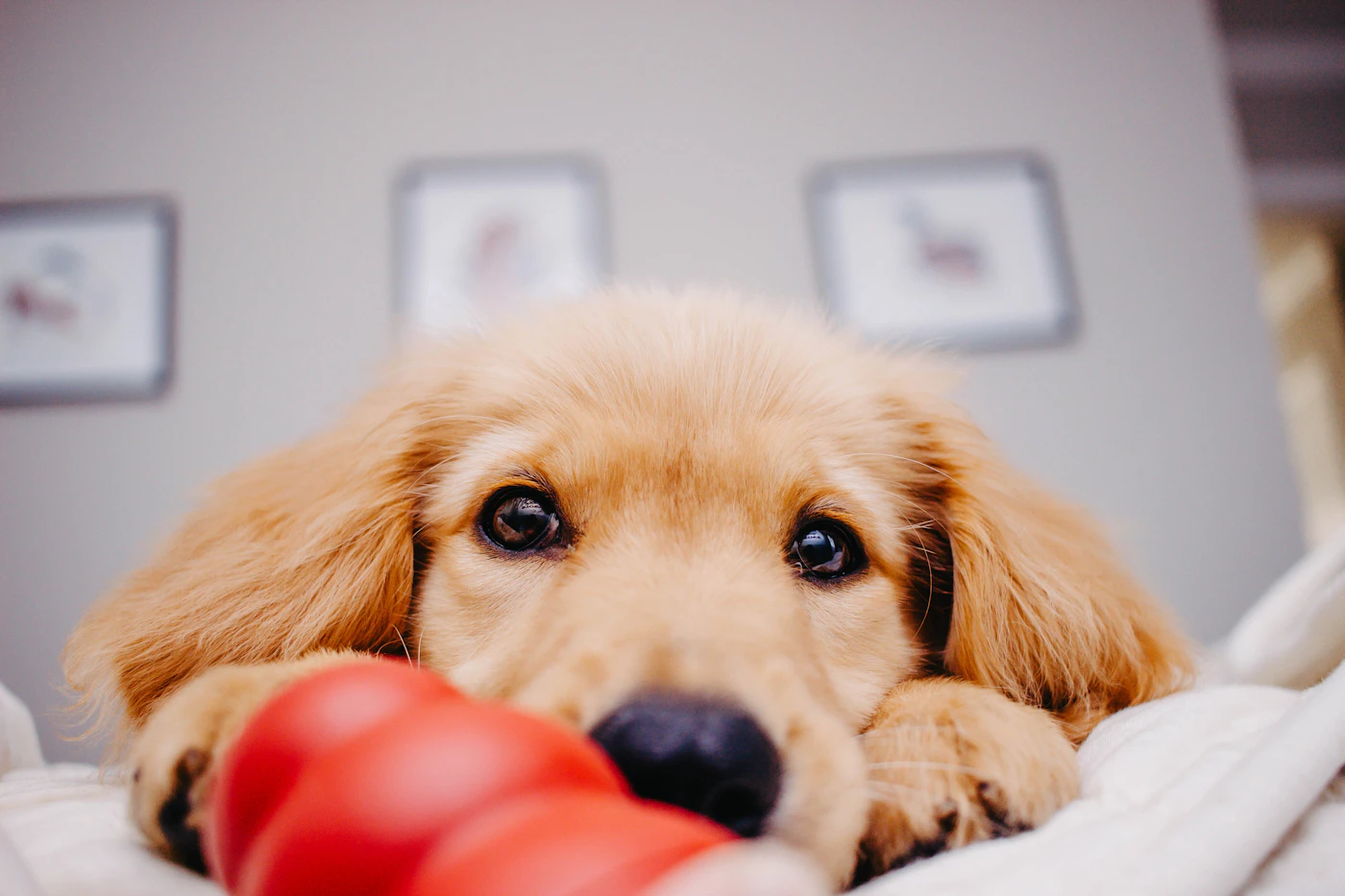
Cleaning and preparing ahead
Empty leftovers promptly. Clean the toy according to the product instructions, reaching the internal surfaces with appropriate equipment. Rinse well and inspect once food no longer hides the rubber. Dry before storage where appropriate.
KONG’s care guidance describes washing suitable rubber products with warm soapy water and a brush, while dishwasher instructions depend on the model. Do not assume fabric, rope and rubber items share the same care requirements.
The FDA pet-food handling advice recommends clean preparation and prompt handling of leftover canned food. Follow food labels when refrigerating or freezing prepared portions. Freezing does not repair spoiled food or remove an ingredient hazard.
Frequently asked questions
Do I have to freeze a stuffed KONG?
No. Begin with easy unfrozen food. Freezing can add challenge for some experienced dogs and suitable products, but it is optional. If it produces frustration or excessive chewing, return to a simpler version.
Can I use it for a whole meal?
Possibly, if the food and toy suit the dog and the portion is appropriate. Some meals may work better divided between a toy and a normal feeder. Ask your veterinarian about medical, dental or swallowing concerns.
How long should it keep my dog occupied?
There is no ideal duration for every dog. Focus on comfortable interaction and safe food access rather than minutes. A quick success can be useful; a long session of struggling is not a quality target.
Is a stronger toy safe to leave with any dog?
No. Chewing behavior, size and inspection still matter. This guide recommends supervised introduction and use. Do not treat a material rating or brand reputation as a universal guarantee.
What if my dog prefers a different feeder?
Use the option that fits. A lick mat, simple search or suitable puzzle toy may be more appealing. A balanced routine does not require one particular product.
Begin with familiar food and a simple win
Knowing how to stuff a KONG is less about a complicated recipe than a good match between dog, toy, food and difficulty. Measure the portion, make it easy, supervise and clean afterward. Add variety only when it improves the dog’s experience.
Editorial note: This is an educational usage guide, not a hands-on product review or individualized nutrition plan. Brand information supports handling instructions; no personal testing or manufacturer endorsement is claimed.