


Quick answer: To keep your dog busy while working from home, plan a manageable rhythm of toilet breaks, sniffing or play, simple enrichment and comfortable rest. Prepare activities before meetings, supervise anything your dog could chew or swallow, and make the work area predictable. A dog who cannot settle may need help, not a harder puzzle.
Working beside your dog sounds idyllic until a video call starts at the same moment as a barking session. The solution is rarely an entire day of entertainment. It is a routine that meets your dog’s needs while leaving room for both focused work and ordinary downtime.
What a realistic work-from-home routine should achieve
Your dog does not need to be occupied throughout every working hour. Rest is part of a balanced day, and the amount and pattern vary with age, health and the individual. Aim for comfortable downtime between opportunities to move, investigate, eat, drink and go outside.
Dogs Trust’s work-from-home advice emphasizes a routine, suitable activities and teaching a dog to settle. The practical plan below applies those principles to meetings, deadlines and changing schedules. It is not a treatment for separation-related distress or a replacement for walks, companionship or veterinary care.
Before buying another toy, observe a few ordinary workdays. Write down when your dog asks to go out, becomes restless or settles naturally. Check whether interruptions follow a long gap without a break, an exciting delivery or a visible trigger outside. That information is more useful than assuming every interruption means boredom.
9 ways to keep your dog busy while working from home
1. Meet the immediate need before opening your laptop
Start with a toilet opportunity, access to fresh water and whatever morning activity suits your dog. For some dogs, that is a relaxed sniffing walk. For others, a short outing plus gentle play is a better fit. Follow any exercise restrictions given by your veterinarian.
Allow time to come down from the outing before the first important call. Rushing directly from an exciting game into an expectation of silence can create an unnecessarily difficult transition. A familiar resting place helps make the change clear.
Avoid using exhausting exercise as a strategy to make your dog disappear for the day. Physical activity and mental engagement serve different purposes. Our guide to sniffing walks offers an approach that prioritizes exploration instead of distance or pace.
2. Make a comfortable resting area part of the workspace
Put a suitable bed or mat somewhere your dog already feels comfortable. Check temperature, drafts, slippery flooring and whether cables or office supplies are accessible. Your dog should be able to change position and reach water without navigating a tangle of equipment.
Proximity is a starting point, not a rule. Some dogs relax beside a desk; others sleep better away from chair movements and calls. Watch where your dog chooses to rest when nothing is being requested.
A barrier can protect a workspace if your dog is already comfortable with it. Do not suddenly shut a dog behind a gate or in a crate for a long meeting and call the result settling practice. Confinement needs its own gradual, positive introduction, and distress means the setup needs changing.
3. Schedule breaks around your dog, then your calendar
Place brief dog-care breaks in your calendar alongside meetings. Use the gaps to offer a toilet trip, a little sniffing, a drink check or a short interaction. Puppies, older dogs and dogs with health conditions may need substantially different arrangements.
Predictability matters more than an exact timetable. On a difficult day, a trusted helper may be more realistic than trying to stretch your dog’s comfortable interval to fit consecutive calls. Working at home does not automatically mean all their needs can be met without support.
Make a backup plan for unexpected overtime. Decide who can help, where supplies live and which simple activities your dog already understands. An unfamiliar puzzle is not a reliable emergency solution when you cannot watch it.
4. Prepare one easy enrichment activity before a meeting
Choose a familiar activity that your dog can manage without becoming frustrated. That might be a suitable food toy, a small scatter of their normal meal on a clean surface or an easy toy search before the call begins.
Use food from the day’s allowance where appropriate, and discuss dietary restrictions with your veterinarian. Extra snacks are not necessary for every work block. Our lick-mat guide explains setup and supervision; enrichment without food offers alternatives.
Keep safety separate from convenience. A toy that is suitable during a watched session is not automatically suitable while you are absorbed in a presentation. If your dog might tear off pieces or swallow material, choose a different setup or arrange supervision.
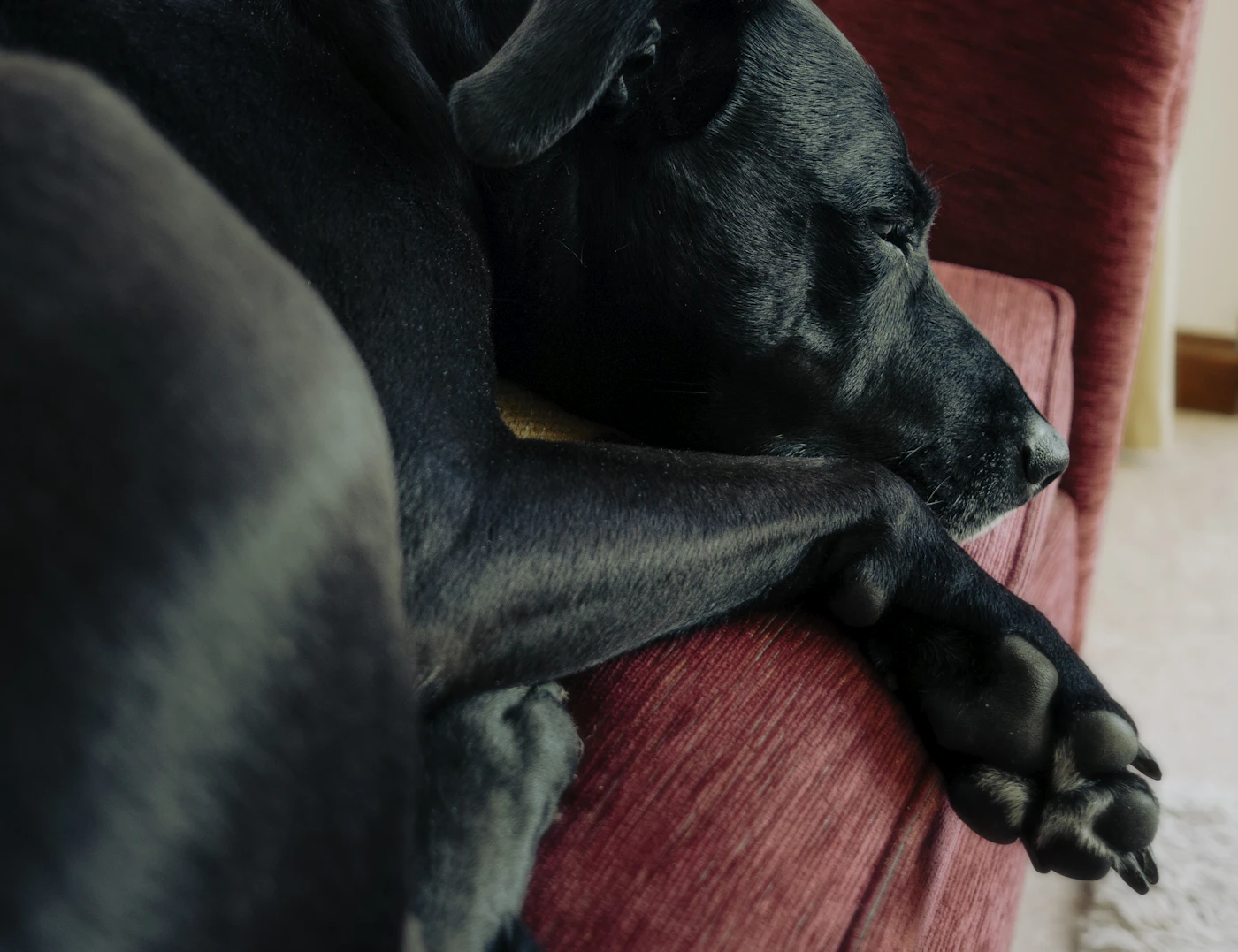
5. Teach settling away from urgent work moments
Practice when you have attention to spare. Place the bed in a quiet area and reward small, relaxed choices your dog makes there. Begin with easy moments: approaching, standing on the bed or lying down voluntarily. Build only as your dog becomes comfortable.
Keep rewards calm enough for the individual. A highly exciting game may not help communicate that this is a place for rest. Avoid continuously cueing “stay” or repeatedly returning a worried dog to the mat.
Gradually add ordinary desk movements, a short period of typing or the sound of a call at low intensity. Change one thing at a time. If your dog gets up, check what happened and make the next practice easier. This is teaching a skill, not testing whether they can tolerate a full meeting.
6. Use tiny training breaks for useful interaction
A short training session can provide shared attention without turning lunch into a complicated lesson. Practice one familiar skill, such as a hand target, finding a toy or moving onto a mat. Finish while your dog is still interested.
AVSAB’s position statements support reward-based training. Do not use startling noises, leash corrections or punishment to suppress interruptions. They can obscure why your dog is struggling and make the work environment less comfortable.
For an easy starting menu, see our 10-minute enrichment games. Ten minutes is an organizational idea, not a minimum requirement. A shorter successful interaction can be more useful than extending a session after your dog has disengaged.
7. Reduce the triggers competing with rest
Look at the room from your dog’s position. Is a low window framing every passing dog? Does a speaker sit beside the bed? Do delivery notifications predict someone coming to the door?
Move the bed, reduce the view or adjust ordinary household noise where practical. Avoid using a window station as enrichment if it produces repeated barking, pacing or tense watching. More stimulation is not always more helpful.
Plan for visitors and deliveries before they arrive. A familiar comfortable area with a safe activity can help, but it is not a substitute for supervision if your dog becomes distressed or reacts strongly. Persistent difficulties deserve an individualized plan with a qualified reward-based professional.
8. Keep normal absences gentle and separate from entertainment
A dog who sees you every day may still need practice with the ordinary situations in which you are unavailable. Start with situations they already handle comfortably, such as resting while you move a short distance away. Increase separation gradually rather than abruptly testing a long absence.
Watch the dog, not just the clock. Following you is not by itself a diagnosis, but repeated distress, vocalizing, pacing or difficulty eating when separated warrants professional advice. If your dog cannot cope, return to an easier arrangement and seek help.
Do not rely on a food toy to conceal an absence that is otherwise frightening. A dog can finish the food and still be distressed. For suspected separation-related problems, contact your veterinarian and an appropriately qualified behavior professional.
9. End the workday with a recognizable transition
Close the laptop, put work equipment away and offer a suitable shared activity. It might be a walk, play, training or a quiet sit outside. A consistent transition can make it easier for you to notice whether the workday has crowded out your dog’s care.
Avoid compensating for a demanding day with an unusually strenuous outing. Choose according to the dog’s condition, weather and normal activity level. Recovery, company and choice can matter as much as adding another challenge.
The long-term goal is a day with dependable opportunities, not a dog who waits for one huge event at the end. Our daily enrichment routine can help you spread activities across ordinary life.
A flexible example schedule
This example is a planning tool, not a prescription. Shift the timing and frequency to match your dog’s toilet needs, meals, health and ability to rest. If the gaps are too long for your dog, add support rather than treating the schedule as a target.
| Workday moment | Practical option | What to check |
|---|---|---|
| Before the first work block | Toilet trip and appropriate exploration | Has your dog had time to settle afterward? |
| Before a meeting | Familiar easy activity, then a comfortable bed | Can you supervise safely during the call? |
| A gap between work blocks | Toilet opportunity or brief interaction | Does your dog need movement, rest or company? |
| Lunch break | Suitable outing, play or a small training session | Are weather and energy level appropriate? |
| Later work block | Calm rest with water available | Is the area comfortable and free of triggers? |
| End of work | Shared activity and normal evening care | Have essential needs actually been met? |
If you work shifts, use the sequence rather than conventional office hours. A predictable transition into work and regular care opportunities can still be useful. Consider household members’ schedules so that everyone knows who is responsible for each break.

Choose activities that match the level of supervision
Think in three categories: activities you do together, activities you can monitor nearby, and ordinary rest. Do not quietly move a DIY activity into the third category because your inbox is full.
Shared activities include toy searches, short training and cooperative play. They offer interaction, but they require you to participate. Nearby activities might include an appropriate food toy that your individual dog uses safely while you actively check them.
Rest does not require an object in your dog’s mouth. A comfortable space, water and a dog whose needs are met may be the safest choice during an attention-intensive call. If they cannot rest comfortably for that period, adjust the work arrangement rather than adding riskier entertainment.
Avoid leaving towels, cardboard, fabric puzzles or unfamiliar chews with a dog who may ingest them. Also check small office hazards: elastic bands, medication, charging cables and dropped food. A tidy desk is useful; a dog-safe floor matters too.
When interruptions need a different response
First check basic care. A dog may be asking for a toilet break, water, help with discomfort or access to a resting place. Do not assume a request is manipulation simply because it arrives at an inconvenient moment.
If needs are met, look for patterns. Barking at the window calls for a different response from repeatedly bringing a toy. You might change the room setup in the first case and make play opportunities more predictable in the second.
Sudden changes, persistent restlessness, pain signs, changes in appetite or unusual sleep disruption should be discussed with a veterinarian. This article cannot diagnose whether behavior is caused by boredom, anxiety or illness.
If your workload repeatedly prevents necessary care, consider a suitable walker, sitter or other trusted support. Choose arrangements that fit your dog rather than assuming group daycare is the right answer for every personality.
Frequently asked questions
Can I leave my dog with a puzzle during every meeting?
Not automatically. Choose an appropriate size and difficulty, inspect it and supervise according to the dog and product instructions. Rotate options thoughtfully, account for food intake and do not use puzzles to postpone necessary toilet or movement breaks.
How do I stop my dog bringing toys to my desk?
Provide predictable play opportunities and put away toys that make working difficult when you are not available. Reward comfortable settling during practice. If you occasionally launch a long game after persistent nudging, the pattern may be confusing; make the start and finish of play clearer.
Should my dog sleep beside me all day?
The location depends on comfort and preference. Your dog may choose another room. What matters is that they can rest safely and receive appropriate care throughout the day. New excessive sleepiness or difficulty settling deserves veterinary attention rather than a productivity workaround.
Is this routine suitable for a puppy?
The broad principles apply, but puppies need age-appropriate toilet opportunities, social experiences, training and rest. They cannot be expected to follow an adult work schedule. Read our puppy mental-stimulation guide and arrange help when your meetings exceed what your puppy can comfortably manage.
What if my dog cries whenever I close the office door?
Do not leave them to struggle as a training experiment. Keep separation within what they can manage and seek veterinary or qualified behavioral guidance. Door-related distress is not solved simply by buying a more difficult toy.
Start with tomorrow’s hardest work block
Choose one meeting and plan backward. What care does your dog need beforehand? Where will they rest? What can you safely supervise, and who can help if the meeting runs over?
Make that block easier before attempting a complete routine overhaul. A successful workday is not measured by uninterrupted silence. It is one in which your work and your dog’s welfare both receive realistic attention.
Editorial note: This guide draws on the linked welfare and training sources. It offers general household planning, not veterinary diagnosis or an individualized behavior program. The photographs are illustrative rather than records of testing.
Featured photograph: Illustrative photograph by Tomas Bankauskas on Unsplash.