


Quick answer: The best indoor activities for high-energy dogs combine controlled movement, sniffing, short learning tasks and a clear finish. Use non-slip surfaces, keep games within the space you actually have, and adjust the intensity to your dog’s health. A lively dog needs appropriate outlets, not a living room obstacle race or constant entertainment.
Rain, dark evenings or a busy day can make an active dog difficult to occupy. The useful question is not “How can I exhaust this dog?” It is “Which need is still unmet, and what can we do safely here?” This guide focuses on that decision, with twelve practical games and routines you can adapt to an apartment or a larger home.
Start by separating energy from overexcitement
A dog can be physically active yet mentally ready for a quiet search. Another may pace because they need a toilet break, dislike a household sound or have been awake too long. Barking, chewing and zooming do not identify a single cause. Look at the whole day before choosing the next game.
Consider sleep, opportunities to sniff, social interaction, food, comfortable resting places and suitable exercise. If restlessness is new, persistent or accompanied by pain, altered appetite or other health changes, speak to your veterinarian. Enrichment is not a diagnosis or a substitute for medical care.
For indoor activities for high-energy dogs, a useful sequence is move, think, then downshift. That does not mean every dog needs all three stages every time. It means you plan how the activity will end instead of escalating excitement until the room or the dog becomes unmanageable.
The AKC indoor activity guide includes training and scent-based options alongside movement. Our broader indoor entertainment guide explains the activity types; this article concentrates on controlling intensity for particularly active dogs.
Prepare a room where success is safe
Clear cables, breakable objects, small toys and furniture that might tip. Block access to stairs if a game could encourage rushing. Lay non-slip mats along the entire movement route, not just at the start. A dog should not accelerate on a rug and brake on polished flooring.
Keep children and other animals outside the play lane. Feed dogs separately when rewards or food toys are involved. Have the food portion ready before releasing the dog so you do not create a long, frustrating wait. Use a familiar resting station nearby, but do not force the dog onto it.
Choose rewards that suit the game. Small pieces from a measured meal work for repeated training; a toy may suit a dog who enjoys tug. Reward-based methods are the approach recommended by AVSAB. Avoid corrections or intimidation when excitement makes a task harder.
12 indoor activities for high-energy dogs
These games are alternatives, not a twelve-item workout. Start with one movement option and one thinking option. Use easy versions first, and stop while the dog can still respond and move comfortably.
1. Controlled tug with built-in pauses
Use a suitable tug toy with enough distance between your hands and the dog’s mouth. Keep play low and avoid lifting, swinging or jerking the dog. After a brief exchange, pause and offer a practiced trade. Restarting the game can reward a calm release.
If your dog grabs clothing or cannot re-engage calmly after a pause, lower the intensity or choose another activity. Tug should remain cooperative. A successful short game is better than repeated attempts to recover control.
2. Two-person short recalls
Stand only a few steps apart on a clear, non-slip route. Take turns calling the dog, rewarding arrival near you rather than throwing food across the room. Begin at walking pace. Increase attention demands before increasing speed or distance.
Avoid calling simultaneously or drilling until the dog is panting heavily. This is a connection game with a little movement, not an indoor sprint session. For one person, alternate a hand target with a nearby mat.
3. A walk-through furniture route
Create a wide route around two stable chairs or floor markers. Guide the dog through it slowly using a familiar hand target. Keep all four paws on the floor. Change your direction or the starting point to create a small learning challenge.
Skip unstable tunnels, stacked cushions and jumping over broomsticks. The interesting part can be following a route accurately, not crossing higher barriers. Dogs with mobility concerns need a veterinarian-approved version.
4. One-room food searches
Let the dog watch you place three rewards in obvious, reachable locations. Release them with a consistent search cue. When that is easy, partially conceal one reward beside a furniture leg while keeping the others straightforward.
Count the rewards so you know when the search is finished. Do not hide food near outlets, cleaning products, houseplants or anywhere that encourages climbing. Use our sniffing games guide for additional progressions.
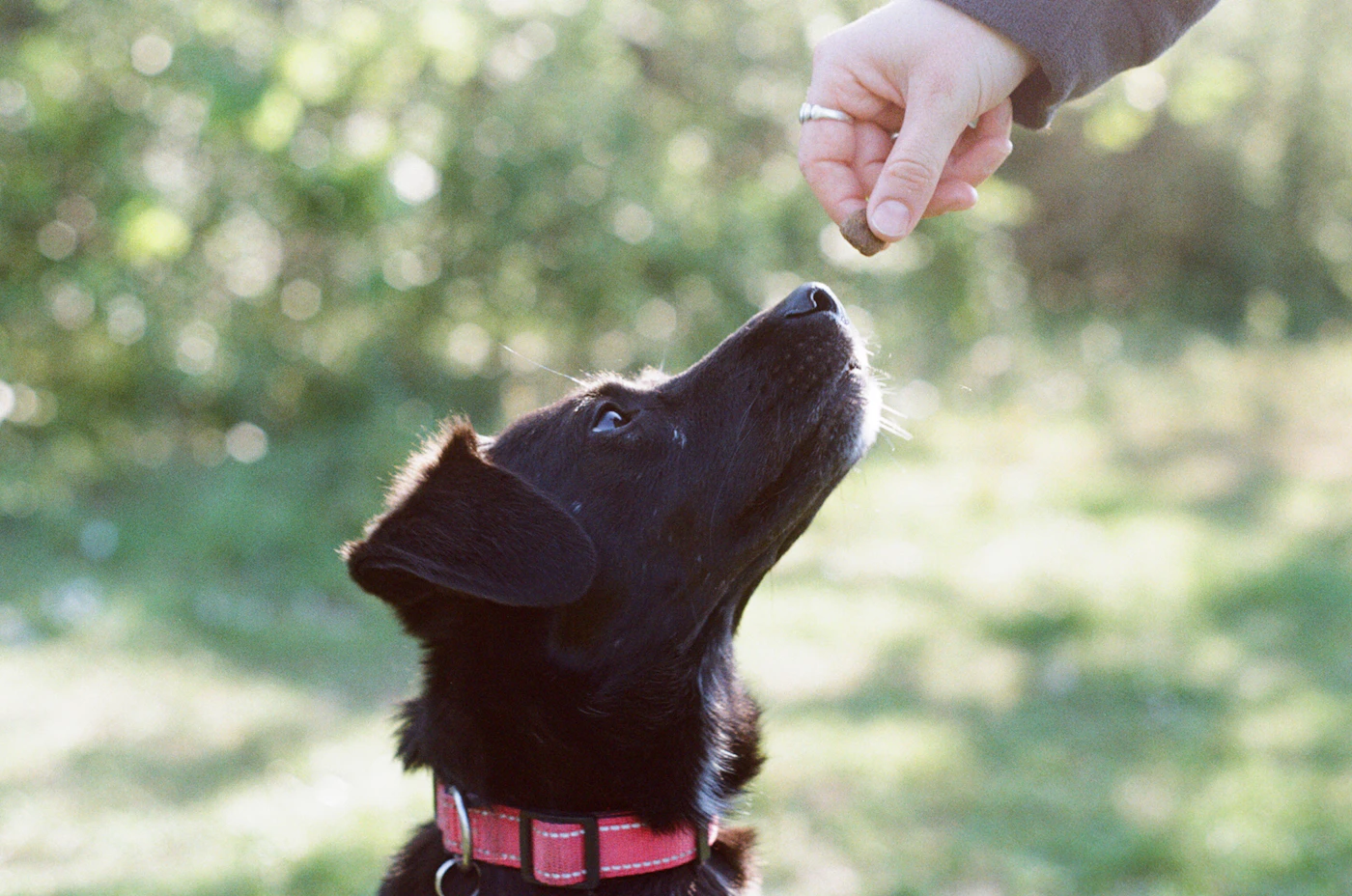
5. Open-box scent choices
Place two clean, shallow boxes on the floor with food in one. Remove staples, tape and loose labels. Allow investigation without directing the dog’s nose to the answer. Later, switch the food to the other box or add an empty box.
Avoid this game if your dog eats cardboard. You can create the same simple choice with suitable washable containers that cannot trap a muzzle. Put everything away as soon as the food is gone.
6. Hand-target direction changes
Teach a nose touch to your open palm, then present your hand a small distance to the left or right. Reward each successful touch. Work at a comfortable height and keep turns broad. A few accurate repetitions can be surprisingly engaging.
This is useful when you need an activity that takes little floor space. Do not lure repeated spins or force the dog into awkward positions. Add variety through your location rather than rapid movement.
7. Toy identification
Present one familiar toy, say its name and reward the dog for touching or picking it up. Keep the first task simple: no large pile of toys and no demand for a perfect retrieve. Later, introduce a second object in separate practice.
Object-name learning varies between dogs. Treat it as a playful learning opportunity, not an intelligence test. A dog who enjoys targeting one toy is already participating successfully.
8. A low-frustration food puzzle
Choose a dog-safe puzzle with an obvious solution. Leave compartments open or load a food-dispensing toy loosely. Watch how the dog solves it. Sniffing and deliberate investigation are different from repeated barking, biting or throwing the object.
Help by revealing the food if needed. Difficulty is a setting you control, not a challenge the dog must overcome at any cost. See our puzzle difficulty guide for choosing an appropriate starting point.
9. Find a person
Have a helper stay with the dog while you step just outside an open doorway. Call once and reward the dog for finding you. Remain partly visible at first. Return together to the starting place before changing your location.
Do not hide behind closed doors or use darkness to make the task “advanced.” For dogs distressed by a person disappearing, stay visible and use simple recall games instead.
10. A supervised fabric search
Sprinkle a little measured kibble on a flat towel, then make one loose fold. Let the dog investigate. Unfold it if they are confused. You are offering a nose-and-paw problem, not asking the dog to rip fabric apart.
Stop if the dog chews or swallows material. Skip knots, tight rolls and fabric strips for dogs who mouth objects intensely. A plain scatter on a washable surface is a perfectly useful alternative.
11. Capture calm on a mat
During an already quiet moment, place a reward gently between the paws when the dog chooses to rest on a mat. Keep your voice low and movements unhurried. Reward a brief pause without asking for prolonged stillness immediately.
Avoid turning the mat into a station where the dog constantly performs for food. Over time, space out rewards when the dog remains comfortable. Calm practice works best alongside a routine that meets other needs.
12. A quiet chew or licking activity
Offer an appropriate chew, food toy or lick mat in a comfortable, supervised space. Check size, condition, food suitability and the manufacturer’s instructions. These can provide a gentle finish, but no item is safe for every chewing style.
Put it away after use. If your dog becomes frantic, guards it or starts dismantling it, change the setup and seek help where needed. A toy should not be used to cover up separation distress or significant anxiety.
Choose a routine that matches today’s dog
The examples below are flexible structures, not medical exercise prescriptions. Shorten every stage for puppies, seniors, dogs returning from illness or individuals who lose focus quickly. Preserve normal toilet breaks and suitable outdoor access whenever conditions permit.
| Situation | Try this sequence | Watch for |
|---|---|---|
| Active but able to focus | Brief tug, hand targets, easy search | Smooth pauses and comfortable movement |
| Small apartment | Toy targeting, two-box choice, mat time | Clutter and tight turns |
| Already overexcited | Easy sniffing, quiet connection, rest | Difficulty eating or responding normally |
| Busy workday | Two short learning breaks and a food search | Unrealistic expectations of independent play |
| Unsafe outdoor weather | Several modest indoor sessions | Attempting one exhausting replacement workout |
A ten-minute window might contain two minutes of gentle play, three minutes of searching, a couple of familiar training repetitions and a calm finish. Your dog may need less. Let their responses decide, rather than trying to fill every minute.
On a full indoor day, distribute opportunities instead of stacking them together. A breakfast search, a midday training break and an evening toy game can be easier to manage than a long session after hours of inactivity. Our routine guide helps organize that pattern.
Adapt for puppies, seniors and small spaces
Puppies need easy problems, safe chewing opportunities and substantial rest. Avoid repeated jumping, sharp turns and forced exercise. A puppy becoming increasingly bitey may need a toilet break and sleep rather than another stimulating game. Our puppy guide covers early learning in more detail.
For senior dogs, keep searches at a comfortable height and use familiar surfaces. Changes in movement, willingness or endurance deserve attention rather than a harder challenge. A dog can enjoy finding visible food or choosing a toy without covering much distance.
In an apartment, prioritize precision and sniffing over speed. Use the room’s perimeter for a slow route and put rugs where the dog will stand, turn and stop. Avoid noisy bouncing toys if they create stress for the dog or neighbors. The best indoor activities for high-energy dogs are those you can repeat comfortably.
Know when to stop or change the game
Pause if movement becomes clumsy, the dog slips, grabs roughly, repeatedly barks at the task or disengages. Check temperature, water, toilet needs and whether the reward is suitable. Reduce one demand: fewer hiding places, shorter distance, easier access or less excitement.
A dog who cannot settle after activity does not automatically need more activity. Review the sequence and amount of stimulation. Try ending with an easy search and a quiet environment rather than adding another chase game.
Persistent pacing, distress when alone, guarding or abrupt behavior changes deserve professional assessment. The VCA indoor activity resource offers additional exercise ideas, but individual limitations should be discussed with your veterinarian.
Frequently asked questions
Can I tire out a high-energy dog without walking?
You can provide useful mental engagement and some controlled movement indoors, but enrichment does not erase a dog’s need for suitable physical exercise, toilet access and environmental exploration. Use indoor options when appropriate, then return to a balanced routine when conditions allow.
Is fetch a good indoor activity?
Only if the space, floor, dog and speed make it safe. Fast fetch often encourages abrupt braking and tight turns, so it is not our default recommendation. Short recalls, gentle toy carrying and floor-level searches are easier to control in many homes.
How long should indoor games last?
There is no universal duration. Start with a short session and stop before accuracy, coordination or interest deteriorates. Several comfortable breaks can be more manageable than a single long workout. Medical conditions or rehabilitation require individualized veterinary guidance.
What if my dog ignores puzzles?
Make the first reward obvious, change the reward or choose a different activity. Some dogs prefer social play, sniffing or movement. A dog does not need to enjoy every puzzle for enrichment to be successful.
Make the next indoor day easier
Pick one safe movement game, one easy thinking task and one calm finish. Prepare the room and rewards, then note which sequence helped your dog engage and recover comfortably. Keep what worked and simplify what did not. A repeatable plan beats a constantly expanding toy collection.
Editorial note: These are general enrichment ideas, not individualized exercise or behavior treatment. Consult your veterinarian about health and mobility concerns, and a qualified reward-based professional for persistent fear, distress or unsafe behavior.